

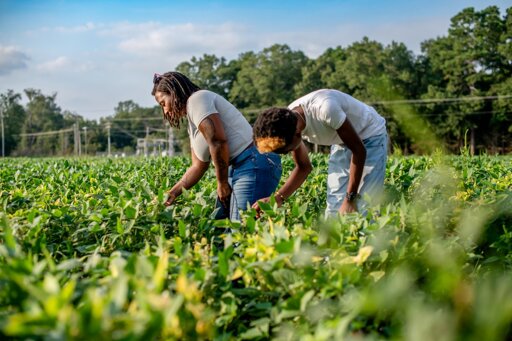
In 2023, the U.S. Department of Agriculture (USDA) awarded $300 million to 50 community-based, locally led projects in an effort to support small farmers.
The funding came through the Increasing Land, Capital, and Market Access Program (ILCM), the result of years of advocacy. It was the federal government’s most ambitious effort to address the compounding barriers that young, underserved, and first-generation producers face in starting and sustaining a farm.
In March, the USDA ended those projects, terminating the ILCMA contracts and effectively abandoning the next generation of farmers.
I have spent nearly a decade fighting for that generation, while trying to realize my own farm dreams. I’m the manager of the Land, Capital, and Market Access Network, so the USDA’s decision to end the contracts hits me twice: as an advocate and as a farmer.
I own and operate Maple Urban Farm in Saint Paul, Minnesota, producing eggs, vegetables, fruits, and herbs to feed my family and my neighbors. I’m a homeowner, the owner and operator of two successful businesses, and a graduate of a farm business management course. I have the skills, drive, and commitment to grow my urban farm into a robust, profitable operation.
“The USDA’s decision to end the contracts hits me twice: as an advocate and as a farmer.”
Despite all of the advantages I have, I don’t have the capital to purchase farmland. Across the country, including here in Minnesota, that barrier is nearly insurmountable without help. And I am far from alone.
It provided grants and low-interest loans for farmland down payments, on-farm infrastructure, and agricultural equipment; farm business management training and technical assistance; programming to build relationships between retiring landowners and new farmers seeking access to land; and more.
The program served farmers and ranchers facing the steepest barriers: Black, brown, Indigenous, immigrant, refugee, LGBTQ+, limited-resource, women, and veteran producers. People without inheritable land or generational wealth.
The need was overwhelming. According to the National Young Farmers Coalition, applications submitted in 2022 totaled over $2.5 billion in requested funding—more than eight times what was awarded, proving how real and widespread the crisis is.
On March 23, the USDA sent termination notices to 49 of 50 ILCMA projects, with just two business days’ notice. Termination letters cited a lack of progress, “DEI preferences,” and accusations of waste, though without evidence.
The termination letters omitted how USDA leadership, under the Trump administration, spent over a year systematically undermining the program. They froze funding for nearly four months in 2025. Even after funds were unfrozen, USDA Farm Service Agency (FSA) program officers were unable to respond to awardees’ inquiries for several months, stating that they were awaiting further guidance from leadership. And most impactfully, USDA stalled providing required pre-approvals for awardees to move forward with planned land acquisitions, micro-grants to producers, low-interest loans, and other core project activities.
“The termination letters omitted how USDA leadership, under the Trump administration, spent over a year systematically undermining the program.”
Over the past year, I witnessed this play out first-hand as I have provided grant management, advocacy, communications support, and guidance to a cohort of most of the program’s awardees across the country. Awardees didn’t fail to make progress. The USDA prevented them from making progress, then cited the absence of progress as grounds for termination.
In termination letters, USDA called the projects wasteful, but the waste here was theirs. As a brand new program, the USDA Farm Service Agency (FSA) staff—funded by taxpayer dollars—took a couple of years to properly design, fund, and launch the ILCMA program. Awardees also spent years building partnerships, hiring staff, and laying the groundwork—work that will now go unrealized.
Moreover, a leaked internal USDA memo revealed that staff were given a list of banned words, including “Black,” “Indigenous,” “underserved,” and “equity,” that would flag a grant for cancellation. But labeling it a DEI issue masks how widespread the consequences are.
Consequences Across Communities
According to the USDA’s 2022 Census of Agriculture, the average age of U.S. farmers is just over 58. Over a third of all farmland in the U.S. is estimated to change hands in the next two decades, according to American Farmland Trust. The average farm costs close to $2 million—just for the land. Land access is already the number one reason young people are leaving agriculture, according to the 2022 National Young Farmers Survey, and Black and Indigenous farmers in particular have been systematically locked out of land ownership for generations.
ILCMA was the only federal program specifically designed to meaningfully address these challenges.
“The terminations don’t just cut off individual grants, they sever relationships built over years between farmers, landowners, lenders, and the community organizations that made those connections possible.”
Terminating it now, in the midst of record farmland costs, a gutted USDA workforce, and an extremely fragile farm economy without a single meaningful alternative plan isn’t fiscal responsibility. It is abandonment. The consequences ripple across our communities and economies: farmland consolidating into fewer and fewer hands, a farming workforce aging out with few people able to replace it, and communities losing access to local food. The consequences are already being felt by real farmers and real communities across all 40 states and territories where ILCMA projects operated.
“We have six farmers who were waiting for down payment assistance to purchase small farms, and now that opportunity may never come to fruition,” said JohnElla Holmes, who is the CEO and president of the Kansas Black Farmers Association and an ILCMA awardee who received a termination letter. “We come from a legacy of resilience forged through hardship—generations who endured injustice and yet still built, cultivated, and contributed so much to this country. Still, we find ourselves fighting for access to the very opportunities that others are encouraged to pursue freely.”
Her words belong to farmers in nearly every state where these projects operated. The terminations don’t just cut off individual grants, they sever relationships built over years between farmers, landowners, lenders, and the community organizations that made those connections possible.
Projects held up their end of the bargain. They built the partnerships, hired the staff, laid the groundwork. The federal government signed the contracts. Taxpayer dollars were already invested. Cancelling mid-project doesn’t save money, it wastes everything that came before and puts our entire future in jeopardy.
Congress has the power to act, and the responsibility to do so. Members of Congress, regardless of party or geography, should step up by exercising their full oversight authority and demand that USDA honor its signed contracts.
Congress should pass the Honor Farmer Contracts Act, which would require USDA to honor all signed agreements and prohibit the agency from unlawfully terminating contracts. They should also pass the bipartisan New Producer Economic Security Act, which would codify a pilot version of the ILCMA program and protect this work going forward.
We are still here, farming, dreaming, and fighting for young, underserved, and first-generation producers. But we’re running out of time.
The post Op-ed: USDA Canceled $300 Million in Contracts to Support First-Generation Farmers. What a Waste. appeared first on Civil Eats.
From Civil Eats via This RSS Feed.