

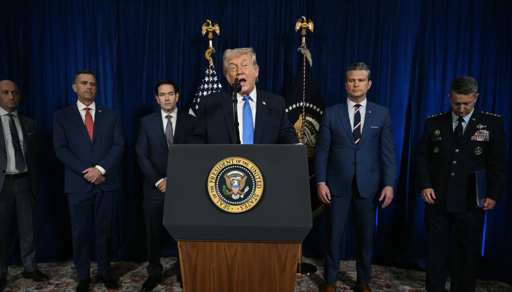
On March 27, Trump spoke with reporters about the state of the U.S. relationship with Venezuela. “We receive a lot, but they are taking in much more than they were getting until now,” Trump asserted, adding that with the money the U.S. government has obtained from Venezuelan oil, they have “many times over recouped the cost of the operation” in which Maduro was kidnapped.
These remarks reflect that in Venezuela, we are seeing U.S. imperialism administer the national income generated by our country’s resources: our oil and mining revenues no longer go directly into the national treasury, but instead end up in accounts controlled by the U.S. Treasury. At the same time, U.S. “experts” in economics and finance are not only scrutinizing the Central Bank of Venezuela, but are also “advising” on the decisions to be made.
Let’s recall what Trump said to oil magnates and representatives of major companies on January 10, when they were discussing which transnational corporations would invest in the country: “You’re negotiating with us directly, you’re not negotiating with Venezuela at all.” This demonstrated Trump’s control over the country. Things have reached the point where the decision-maker regarding who Venezuela trades its energy and mineral resources with is located in Washington. This direct management of oil and mineral revenues, along with financial and political control, represents one of the key mechanisms of the protectorate that Trump is imposing on the country
Venezuela’s state-owned oil company, PDVSA, has continued selling crude oil to international markets through the United States, but only a portion of those proceeds reaches Venezuela, under strict control and through accounts overseen by Washington. Officials within the Venezuelan financial system itself have acknowledged that a significant portion of the revenue doesn’t even fully enter the Central Bank. With gold, control is even tighter. The corresponding license authorizes the import of Venezuelan gold to the United States, its refining there, and its resale or re-export, but imposes the same conditions on contracts and payments.
The mechanisms of control within Venezuela and abroad
This mechanism has been established through various licenses issued by the U.S. Office of Foreign Assets Control (OFAC) since January. These measures correspond to legal reforms in Venezuela, such as the Organic Hydrocarbons Law and, soon, the Mining Law. These laws are fast-tracked every time a cabinet secretary from Donald Trump’s administration arrives, as was the case with the Secretary of Energy and the Secretary of the Interior. This occurs within the context of the national surrender by the administration of Delcy Rodríguez, which has complied with Washington’s demands to open the Venezuelan energy and mining sector to U.S. companies.
For example, General License 50A (February 2026) authorizes transactions related to oil and gas sector operations for specific entities: Chevron, BP, Eni, Repsol, Shell, and Maurel & Prom. However, it stipulates that most monetary payments be deposited into accounts authorized by the U.S. Treasury. Initially, these accounts were established in Qatar, but the Treasury Department later authorized them to be made in the United States.
General License 52 (March 2026) authorizes U.S. entities (and only U.S. entities) to conduct business directly with PDVSA and its subsidiaries, but stipulates that contracts must be governed by U.S. law and any disputes must be resolved in the United States. The same applies to mining, governed by General Licenses 54 (March 6) and 55 (March 27), which impose stricter controls by considering gold to be “more sensitive” and require that payments for gold purchases be made to authorized accounts in U.S. banks or in third countries that have supervisory agreements with the U.S. Treasury.
With the license issued on March 27, Trump paved the way for U.S. companies to sign contracts and invest in Venezuela’s mining sector. These ventures can include mining, mineral processing and refining, and the creation of joint ventures. However, the United States makes clear that the authorization explicitly prohibits transactions with individuals or entities linked to Russia, Iran, North Korea, Cuba, and China — a perverse mechanism designed to facilitate the participation of only U.S. companies in Venezuelan territory.
Furthermore, there is the presence in the country of a U.S. Technical and Financial Mission that audits and conducts an “evaluation” of state assets, international reserves, and accounts. These U.S. financial “experts,” under the coordination of the State Department and the Office of Foreign Assets Control (OFAC), have initiated “technical evaluation” processes of the Central Bank of Venezuela (BCV) to determine the state of international reserves and the flow of foreign currency. From there, they also control what the United States authorizes from the oil and mining revenues entering Venezuela, and discussions are beginning on the restructuring of the external debt.
But these “experts” not only audit, they also “advise” on macroeconomic decision-making. The arrival of U.S. investors in Venezuela, facilitated by the State Department, suggests a scheme where the country’s natural resources fall under the control of U.S. companies. All of this implies profound external control, since the Venezuelan state does not have full autonomy over its state assets and liquid reserves without the approval of the OFAC, resulting in a near-total loss of sovereignty.
The humiliation of surrender under the imposed neocolonial protectorate
The situation we have reached is humiliating. This is the concrete political and economic result of the U.S. military intervention; it is the crystallization of the imperialist strategy in crisis that seeks to reorganize its hemispheric hegemony through bloodshed and violence, as we saw with the bombings of Caracas and other parts of the country.
This neocolonial protectorate imposed by the United States is implemented on Venezuelan territory by the government of Delcy Rodríguez, in full agreement and with groveling servility, where the terms of the political and economic arrangement are dictated by the White House. The Venezuelan government may continue to exist, but it has relinquished control over its own key economic levers, such as fundamental strategic resources. This is the sad face of national surrender.
Delcy Rodríguez is the embodiment of the bourgeois nationalist project of Chavismo, which has ultimately managed the restoration — doubly intensified — of imperialist domination in the country. Not a hint of resistance was offered by those who once proclaimed themselves “anti-imperialists,” enlisting “millions of militiamen” and threatening to create “the Latin American Vietnam” should the United States attack. The new laws dictated by Washington are implemented by the Venezuelan government itself. The ruling Chavismo has become a transformative elite, completely subservient to imperialist power. They do not resist the protectorate, they manage it.
“Our relationship is [great]. My popularity there is astounding,” Trump insisted in reference to Venezuela, in a mockingly arrogant and imperial tone. The audacity has reached such a level that his Secretary of the Interior, Doug Burgum, who recently visited Caracas, asserted that “the affection for Trump” in the country is equivalent “to that for Simón Bolívar,” the independence liberator. These statements can only be taken literally as expressions of contempt from someone who believes he came to “liberate” Venezuela, when in reality, he seeks to transform it into his 51st state.
Donald Trump made these statements in the context of the war he is waging alongside the state of Israel against Iran. Trump indicated that he has not ruled out the possibility of eventually controlling Iranian oil if he prevails in the war or reaches some kind of agreement with the Islamic Republic — a solution similar to the one he imposed after the military intervention in Venezuela. “It’s an option. Like in Venezuela,” he declared.
Since the intervention and the beginning of U.S. control over Venezuela, Trump has asserted that the country “is achieving better results than ever before in its history.”
“We did very well in Venezuela […] it’s like a kind of joint venture” to exploit the oil, he commented, alluding to the kidnapping of Maduro and his wife Cilia Flores and the new neocolonial regime imposed. But this “joint venture” is commanded and determined down to the last detail by the White House, where Venezuela’s role is nothing more than to allow its resources to be plundered.
Trump: “Venezuela is better than ever.” The workers: “Things are worse than before January 3rd.”
Nearly three months into this new period of national subjugation, the regime backed by Trump has failed to deliver on its own demagoguery, which claimed that after the attacks of January 3, it would begin to improve “the well-being of the Venezuelan people.” This shouldn’t be difficult, given the extremely low starting point of workers’ incomes. The country went from a partial oil blockade (including a naval blockade in late December, which severely limited its ability to sell oil, even if it did so conditionally with transnational corporations like Chevron) to the series of authorizations we’ve been discussing, which are generating significant and more robust economic resources. But these resources are destined for another purpose, as Trump himself has openly stated.
Venezuelan workers come from extreme poverty in terms of income, a consequence of the brutal economic measures implemented by the Maduro government for many years. This government became one of the most anti-worker, repressive, and subservient to foreign interests in the world, thanks to its negotiations with imperialism and transnational corporations authorized for trade by the United States. The oil revenues that did reach the working people were instead used to enrich private banks and benefit powerful economic groups, both from the old Venezuelan bourgeoisie and the new one that emerged under Chavismo.
“We’re going to extract a tremendous amount of wealth from the soil, and that wealth will go to the people of Venezuela… and also to the United States as repayment for the damage that country caused us,” declared Trump. But ordinary people haven’t seen any such “wealth,” only the plundering of our resources. “We’ve received billions of dollars from Venezuela,” Trump emphasized, but not even crumbs have reached the Venezuelan people, who haven’t seen even the slightest improvement in their living conditions. On the contrary, the general feeling and what’s being said on the street is that things are worse. This stands in stark contrast to the despicable statements of the U.S. president, who claimed that “Venezuela is better than ever in the history of the country.”
We have pointed out that journalistic reports reveal that Venezuela is not even receiving what was promised through the control mechanisms exercised by the United States. What Washington is delivering to the national government is more like a trickle and has been limited as part of its imperialist policy to ensure that the Venezuelan government makes every decision the United States desires. Contrary to the expectation of the stabilization of the national currency in the face of the rising value of the dollar, this increase has continued unabated, and inflation in Venezuela has accelerated, reaching 618 percent, according to data from the Central Bank of Venezuela (BCV).
The two major political players are vying to see who can best manage subordination.
The neocolonial policy being imposed on Venezuela in the form of a protectorate has the support of the country’s major political power sectors: both the one currently in government, headed by Delcy Rodríguez, and the one led by María Corina Machado, who has not ceased for a single day to reaffirm Venezuela’s offer to Washington. At a recent event in Houston, María Corina told U.S. oil companies that Venezuela will become a “beacon of hope and wealth creation for this hemisphere,” while also asserting that the country will soon be “a key contributor to American prosperity.”
Despite initially being dismissed by Trump (who declared she lacked the “sufficient support” to govern), María Corina Machado has intensified her campaign in Washington to prove her worth. In this endeavor, she has increased her public appearances abroad in recent days, preparing for her return to Venezuela.
We are facing a brutal imperialist domination where all sectors of power — whether the ruling Chavismo with Delcy’s faction in government or María Corina Machado — endorse the theft and plunder of national resources by imperialism. The great dispute revolves around who can best guarantee the country’s subservience and the Trumpist protectorate. The issue is not subordination itself, but who administers it.
A neocolonial regime is consolidating itself and must be resisted.
If this protectorate regime consolidates in Venezuela, Latin America could enter a stage of administered semi-colonialism, where formal sovereignty coexists with direct external control over strategic resources. The most dramatic element of the current process is the absence of an independent political force, comprised of workers and popular sectors, to resist the neocolonial regime. Anti-imperialism is more crucial than ever. We must mount a fierce resistance to the tutelage and surrender that Delcy Rodríguez and María Corina Machado condone and collaborate with.
Fighting against imperialism and its neocolonial plan, and against its agents who implement it on the national stage (today Delcy Rodríguez or tomorrow María Corina Machado) is one of the battles that must be fought in Venezuela today, alongside the fight for our fundamental demands: economic vindication, expressed in the fight for a salary equal to the basic food basket; against the elimination of social benefits; and our democratic freedoms in the face of a government that prevents us from expressing ourselves in the streets.
This article was first published in Spanish on March 30 in La Izquierda Diario.
The post Placing Strategic Resources under Trump’s Control Risks Total Imperialist Submission in Venezuela appeared first on Left Voice.
From Left Voice via This RSS Feed.