

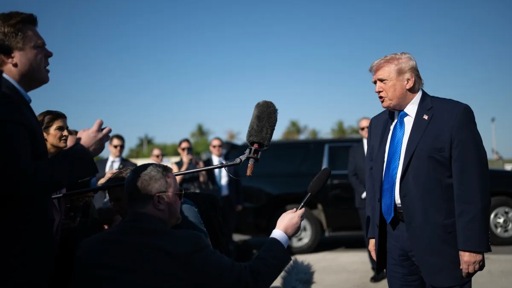
US President Donald Trump has become increasingly unhinged as the war on Iran has not gone as he imagined. Both the United States and Israel felt that a series of domination strikes against Iran would decapitate the leadership of the country and force the remaining mid-level leaders into surrender. The miscalculation of the Trump-Netanyahu agenda has been total: a depth of wartime leadership has emerged within Iran, the public stands united to defend their homeland, and because of Iran’s strategic use of the Strait of Hormuz, it is the United States, and not Iran, that is now suing for peace.
In the midst of all this, on Easter, the day of the Christian resurrection, Trump put out a poston Truth Social that mixed the rhetoric of a B-grade Cowboy movie with examples for an International Court of Justice indictment for genocide: “Tuesday will be Power Plant Day, and Bridge Day, all wrapped in one, in Iran. There will be nothing like it!!! Open the Fuckin’ Strait, you crazy bastards, or you’ll be living in Hell – JUST WATCH!” The first sentence is genocidal, making the claim that the United States intends to bomb civilian infrastructure and therefore putting the Iranian people into a condition of hell, namely death. The middle of the post, on the Strait of Hormuz, demonstrates Trump’s absolute frustration and the John Wayne bombast only illustrates the failure to move a real agenda. Just watch. But what is there to watch: the US and Israel continue to bomb civilian infrastructure (including bridges and health care centers) viciously, the Iranians able to fire ballistic missiles and to bring down US aircraft, and the Strait of Hormuz closed for traffic to US and Israeli allies.
The genocidal evidence is unabashedly all over Truth Social and X, but also in Trump’s public statements. He threatenedto bomb Iran “back to the Stone Age,” a statement that was then juvenilely tweeted by his Minister of War Pete Hegseth, “Back to the Stone Age.” This is a common phrase in US war rhetoric, having been used by General Curtis LeMay when he executed the fire-bombing of Japanese cities in World War II and then in the bombing campaigns in the northern half of Korea and in Vietnam. During the Global War on Terror, the United States threatened to bomb Afghanistan and Iraq “back to the Stone Age,” a threat that is by itself a war crime but given that there has never been an indictment against a US official, there is total impunity amongst leaders of the United States to say such things and then to act upon them. In the first month of the US-Israeli bombing of Iran, with 11,000 targets struck and with bombs in the range of 250lb to 2,000lb, almost one Hiroshima bomb worth of explosives have been dropped on the country – with a civilian death count that is at least several thousand.
Strait of Hormuz
Despite the ferocity of the language and the actions, neither the US nor the Israelis have been able to declare victory. Iran retains military options, including further attacks on US infrastructure in Iraq and elsewhere in West Asia, and Iran has not yet fully deployed its small boat array into the waters of the Gulf. Able to absorb the vicious US-Israeli strikes and to continue to respond, Iran has no reason to negotiate with the ten or fifteen points that the US puts on the table that effectively demand an Iranian surrender. That is why Iran continues to say that it will only allow ships to transit the Strait of Hormuz if they carry flags of countries that are not supporting the illegal war on Iran. Since these ships must transit Iranian and Omani waters, and since there is no real international water corridor through the strait, Iran is within its rights (with Oman) to decide who gets passage through the waters. What was not a problem for Washington before it launched its illegal war has now become one of the key war aims of Washington – namely to open the strait outside Iranian control.
Read more: Ending the war on Iran is the only way to open Strait of Hormuz, says China
Vital parts of the United States alliance system, both in the North Atlantic Treaty Organization (NATO) in Europe and in the NATO+ section in Asia, are negatively impacted by the near closure of the Strait of Hormuz. Both Japan and the Republic of Korea (South Korea) are almost entirely reliant upon Gulf Arab oil that traffics through the strait, and since they are dependent on the US alliance system, they cannot break with the US and condemn its war. This means that both Japan and Korea are rattled, with Japan having opened its 250-day strategic reserve of oil and trying to maintain its three-week supply of Liquified Natural Gas feedstock. Meanwhile, six NATO members (France, Germany, Greece, Italy, Spain, and the United Kingdom) are struggling, since they too are reliant upon Gulf Arab oil through the strait. The energy price shock from the near closure of the strait is amplified by Europe’s ongoing adjustment to reduced Russian energy supplies since the Ukraine war and the exposure – particularly of southern European countries – to instability in Libyan energy production. This multi-source energy crisis has caused serious industrial strain and inflation across Europe.
NATO plus crisis
The political class in Japan and South Korea cannot imagine themselves outside the US-led strategic system, which has smothered these countries for over 80 years. The same blindness is apparent in Europe amongst the NATO countries, which cannot fully articulate the difference between Washington’s view of the world and their own European view. The essence of Gaullisme, the forced differentiation of France from Washington, has become more a matter of style than substance. But, when Trump asked the Europeans to send their ships to help him “open” the Strait of Hormuz, the European political class said no, the first time that they have disobeyed a direct order from Washington since France and Germany refused to join the war on Iraq in 2003. The reasons given for the European refusal are interesting, and, to put them in order, these include that they do not believe there is foundation for this war (no casus belli), they do not believe that there are defined war aims, they do not feel consulted before the entry into the war, they fear that this war is a distraction from their own war in Ukraine, and they are afraid of the long-term fall-out for their own energy needs.
But even here the double-speak in the NATO capitals is clear. To get that, one must leave the statements of the national leaders since they – Macron, Merz, Starmer – are worried about the inflation crisis and their own domestic problems. It is left to NATO’s Secretary General Mark Rutte to speakout of both sides of his mouth: on the one side, to say that there are “absolutely no plans whatsoever for NATO to get dragged into this” (the word “dragged” needs to be underlined), and on the other side, “It’s really important what the US is doing here, together with Israel, because it is taking out, degrading the capacity of Iran to get its hands on nuclear capability.” So, let the United States and Israel do this “important” work on their own, which Europe does not want to be “dragged” into doing. Japan’s far right-wing Prime Minister Sanae Takaichi told Trump that there are “actions we can and cannot take within the scope of Japanese law,” hiding behind Article 9 against remilitarization in the Japanese Constitution.
There are cracks in the NATO+ alliance with the Europeans, at any rate, unwilling to directly enter the war effort against Iran due to their own future need for the Gulf Arab oil that will transit through the Strait of Hormuz. The only deal that the Iranians would accept to end this war would provide Iran with the right to determine who goes in and out of the strait – a matter of concern for the Europeans and for the US allies in East Asia. Does this hesitancy on the part of the NATO+ allies indicate a fundamental crack in the alliance? There are tactical differences, but nothing strategic – and certainly not anything that would demonstrate total insubordination to Washington, even when Washington is mindless in its actions.
Iran’s lego videos continue to flood the internet, and the X accounts of the Iranian embassies have grown their followings with their ferociously funny tweets. If the war were on social media alone, Trump’s histrionic statements on Truth Social would not match the appearances of Iranian officials on X: the world is laughing with them, even though there is great sadness at the willful destruction of so much of Iran.
Vijay Prashad is an Indian historian and journalist. He is the author of forty books, including Washington Bullets, Red Star Over the Third World, The Darker Nations: A People’s History of the Third World, The Poorer Nations: A Possible History of the Global South, and How the International Monetary Fund Suffocates Africa, written with Grieve Chelwa. He is the executive director of Tricontinental: Institute for Social Research, the chief correspondent for Globetrotter, and the chief editor of LeftWord Books (New Delhi). He also appeared in the films Shadow World (2016) and Two Meetings (2017).
This article was produced by Globetrotter.
The post Trump’s Iran war is not going great for the NATO+ alliance appeared first on Peoples Dispatch.
From Peoples Dispatch via This RSS Feed.