

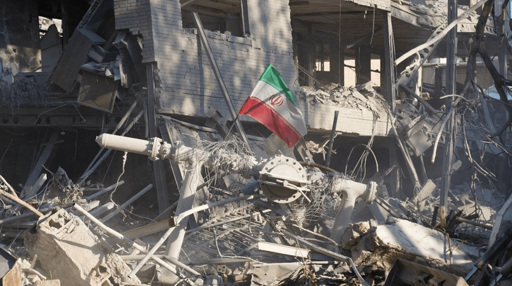
The US and Israel launched airstrikes against Sharif University of Technology in Tehran on Monday, April 6, inviting fresh condemnation and allegations of war crimes and demands for accountability. The early morning attack targeted several buildings inside the prestigious university in the capital.
As of now, no injuries have been reported in the attack. University classes in Iran were already shifted online to avoid harm to students and other staff from indiscriminate bombings.
Condemning the attack, Mohammad Reza Aref, Iran’s first vice president, said in a post on social media that “bunker buster bombs” were used in the attack. He called it a symbol of [US President Donald] Trump’s madness and ignorance.”
Trump had celebrated earlier attacks on Iran’s research centers and universities and has threatened to bomb the country back “to the stone age”.
Despite the fact that attacks on universities are a war crime, according to Iran’s Minister of Science, Research and Technology, Hossein Simaei Sarraf, the US and Israel have targeted over 30 universities in the country since February 28, killing at least five professors and more than 60 students in those attacks, apart from causing significant damage to labs and other research facilities.
Most of these higher learning institutions are crucial for the scientific and cultural development of the country and attacks on them are an attack on the country’s learning and culture, Iran has claimed.
Israel has also been involved in the assassination of several Iranian professors and scientists for years now, in an effort to target its nuclear program.
No temporary ceasefire
Meanwhile, Iran rejected a new plan for a temporary ceasefire on Monday. As per the plan submitted by Pakistan, a 45-day ceasefire would be implemented in return for Iran opening the Strait of Hormuz.
Iran claimed such pauses only allow the US and Israel to “regroup and strategize for future attacks.”
According to Reuters, Pakistan presented the plan of a temporary ceasefire to both Iran and the US on Monday, in which there would be a pause in hostilities for a while after Iran opens the Strait of Hormuz.
The interim period would lead to discussions on a final accord based on the lifting of all sanctions against Iran and unfreezing its assets abroad, in return for Iran giving written assurances that it will not develop nuclear weapons and keep the strait open.
The news of the peace proposal came amidst fresh threats issued by US President Donald Trump. Using abusive language, Trump claimed on Sunday that his country would blow up Iran’s power plants and bridges if it fails to open the strait by 8pm on Tuesday.
Read more: Ending the war on Iran is the only way to open Strait of Hormuz, says China
Iran has rejected the threat and reiterated it will retaliate in kind to all US-Israeli attacks on the country’s civilian infrastructure and target US interests in the region.
Iran’s Deputy Foreign Minister Kazem Gharibabadi replied to Trump’s threats, claiming any attack on Iran’s non-military infrastructure would be tantamount to a “war crime” and will invite a “decisive and immediate response.”
Such retaliation would be a part of Iran’s defense measures and not a willful choice, said spokesperson of Iran’s Ministry of Foreign Affairs Esmail Baghaei, in a video message on Monday.
US-Israel must be held accountable for attacks on nuclear facilities
Mohammad Eslami, head of Atomic Energy Organization of Iran (AEOI), criticized the head of the International Atomic Energy Agency (IAEA), Rafael Grossi, for his inaction and inability to condemn repeated US-Israeli attacks on the country’s nuclear installations.
In a letter to the IAEA, Eslami noted that the US and Israel carried out their fourth attack on Saturday on the Bushehr nuclear power plant since the beginning of the war on February 28. The attack damaged part of the facility and killed one security guard.
Read more: Iran says there is no honesty in US offers for talks, seeks credible guarantees against future aggressions
Eslami warned that such attacks can damage the reactor and release radioactive materials which can cause “severe and irreparable consequences for local populations, the environment and even neighboring countries.”
The attacks on nuclear sites are in complete violation of the IAEA statute, NPT rules, and other international laws and conventions, said Eslami, demanding the responsible parties be held accountable for their criminal acts.
The post US and Israel continue to attack Iran’s educational institutions appeared first on Peoples Dispatch.
From Peoples Dispatch via This RSS Feed.