

Peru is facing a political crisis that has lasted for a decade, a period in which it has had eight presidents. This instability has been marked by figures aligned with the continuance of Fujimorism and the conservative right.
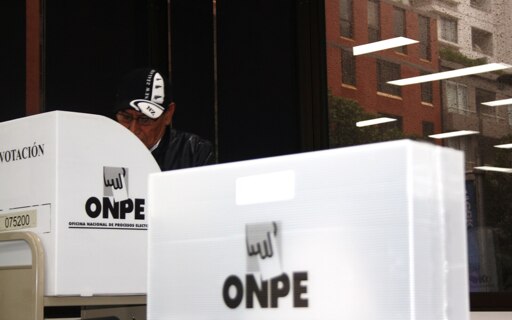
This critical scenario could be redefined on Sunday, April 12, when general elections will be held with a record 37 presidential candidates and the historic return to a bicameral system of the parliament.
The current crisis stems from the constant confrontation between the presidency and the parliament. The Peruvian Congress has extraordinary power through the constitutional figure of “vacancy [of the president] due to permanent moral incapacity.”
This mechanism, which is subjective in nature, allows for the removal of the president without the need to prove a specific crime. It has been applied against presidents such as Pedro Pablo Kuczynski, Martín Vizcarra, Pedro Castillo, and José Jerí.
Polls and profiles in the race
A few days before the first round, pollsters (Ipsos, IEP, CPI) reflect an unprecedented dispersion of voter choice, where no candidate exceeds 13% of voting intention:
• Keiko Fujimori (Fuerza Popular): Occupies first place with 11%. In her fourth candidacy, she represents the extreme right and the continuity of the current model, having promoted legislation from parliament that favored large capital.
• Rafael López Aliaga (Renovación Popular): With 9%, he proposes contracting the government from 18 to 8 ministries and eliminating programs with a gender perspective, following the model of Argentina’s Javier Milei.
• Carlos Álvarez (País para Todos): In third place (7%), he bases his campaign on xenophobia and “iron fist” proposals, such as the death penalty and withdrawal from the San José Pact.
• Roberto Sánchez (Juntos por el Perú): A rising leftist option (4-5%), he supports a pardon for Pedro Castillo and the convening of a Constituent Assembly.
The key to governability will lie in the new bicameral Congress. The Senate, which cannot be dissolved by the president, and a fragmented Chamber of Deputies will condition the administration capacity of any head of state.
An unpredictable electoral scenario
To win in the first round, a candidate requires more than 50% of the valid votes, a threshold almost impossible to reach for any candidate given the current fragmentation. Of the 25 million Peruvians in the electoral roll, 40% remain undecided or plan to vote blank or null, making the final result a mystery.
The complexity is aggravated by a “giant” ballot and the population’s lack of knowledge about the new functions of senators and deputies.
Given this outlook, it is highly likely that the two most-voted candidates will have to face a runoff on June 7, 2026.
(Telesur)
Translation: Orinoco Tribune
OT/JRE/SC
From Orinoco Tribune via This RSS Feed.