

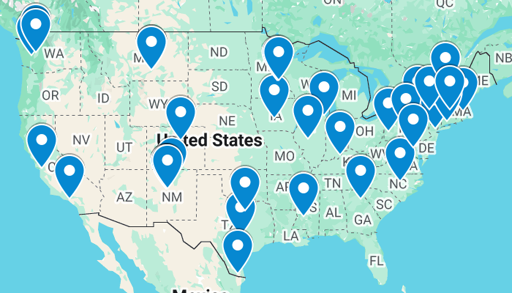
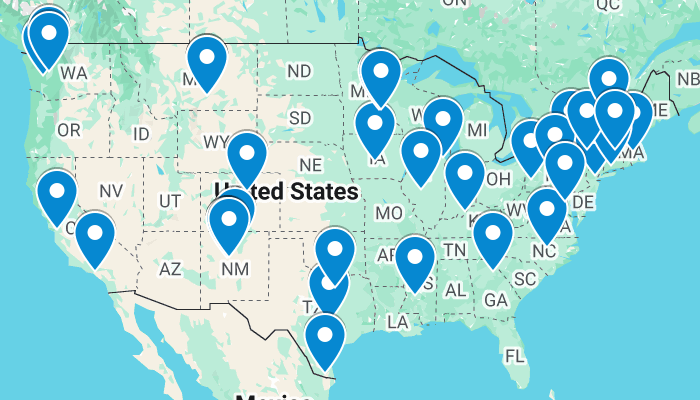
“May Day Strong is something that we are saying as a clarion call to all of our brethren, our union siblings across the nation, so that we can start building up that muscle memory,” says Marcia Howard, the African-American leader of the Minneapolis Federation of Educators.
On Friday, May 1st, many unions across the country intend to flex their muscles with a widespread May Day strike. They say the strike marks a new level of intensity for the labor movement in its fight against Trump.
May Day Strong organizers say it’s a capacity test for the type of strikes Howard says the labor movement will have to carry out to build the “muscle memory” to pull off a strike that would stop Trump from trying to steal the election in November.
“We can start building up that muscle memory. I think the term is lightweight, but heavy, heavy reps over and over again to gain that muscle so that we can do what we need to do at the voting booth come November,” says Howard. “Donald Trump and his minions are going to be at our poll, and they will put loyalists there and try to do the same thing that they did to my mother’s generation.”
May Day general strikes on this scale are typically legal risks for unions that participate. However, following the Minnesota General Strike, unions are feeling more confident.
During the Minnesota General Strike, over 100,000 marched in -30 temperatures as major school districts, and at least 700 businesses closed across Minnesota. More than 300 solidarity actions were held nationwide, according to Payday Report’s strike tracker.
At least 23% of Minnesota voters said either they or a loved one participated in the strike in some way, according to a survey of 1,900 registered Minnesota voters conducted by Blue Rose Research for the May Day Strong coalition, a group of labor and community organizations advocating for a mass nationwide walkout on May 1st.
With workers in Minnesota striking without facing any legal consequences, many unions say they aren’t afraid to back the May Day Strong actions.
“Nurses never back away from a fight,” says National Nurses United President Mary Turner, whose 200,000 union members are backing the May Day strikes. Organizers say the coalition of unions supporting the actions is growing quickly.
Many unions have suffered greatly under Trump. For years, unions like the United Electrical Workers (UE) grew during favorable conditions during the Biden Administration, but under Trump, their unions have been on the defensive as Trump cuts funding for universities that don’t comply with Trump’s right-wing agenda.
Now, UE Local 256 says they are struggling to get MIT to agree to a second-union contract.
“MIT is stalling, they are dragging their feet to come to negotiate with us, only offering us four bargaining session before our contract expires on May 31,” says Chua. “These actions are making clear to our members that MIT is taking advantage of the unfriendly conditions of Trump 2.0 to try and deny our members a fair contract.”
“But our union is not going to back down from this fight,” says Chua. “Higher Education unions within UE are ready to build May Day as a real expression of people’s power across the country. People are talking about escalation, about strikes, about coordinated action, about using our collective power to actually stop Trump’s agenda in its tracks.”
However, Lauren Chua says it’s not just unions like UE. She has spoken to union leaders from over a dozen unions throughout the Boston area who are supportive, and she has heard many responses in getting on the May Day Strike.
“Dozens and dozens of unions and other community organizations are banding together for May Day,” says Chua. “It’s something that we’re all looking towards because people are angry, people are not happy with what they see, and are facing the brunt of the affordability crisis, and so unions are excited to come together on this day to really show the Trump administration.”
Faye Guthner, President of the 50,000-member UFCW Local 3000, says that her union is tabling at workplaces and at community events, getting workers to sign up to participate.
“We expect this May Day to be the biggest May Day participation in the state of Washington,” says Guthner.
Chris Dols of the Federal Unionist Network says that federal workers didn’t typically participate in May Day events, but as they face increasingly frequent attacks, he is seeing a new level of enthusiasm for them.
“From the federal sector, there was little to no participation in previous May Day events, but last year was the first time that I’d seen any kind of widespread participation from federal sector unions in May Day. This year, it’s happening again,” says Dols.
Many public-sector unions in cities with Democratic administrations are expected to participate. This past week, Chicago Mayor Brandon Johnson signaled that he would support the call by the 30,000 members of the Chicago Teachers Union to walk out on May Day.
Much like during the Minnesota General Strike, Minneapolis Federation of Educators President Marcia Howard says that as more unions get on board, she expects momentum to grow quickly.
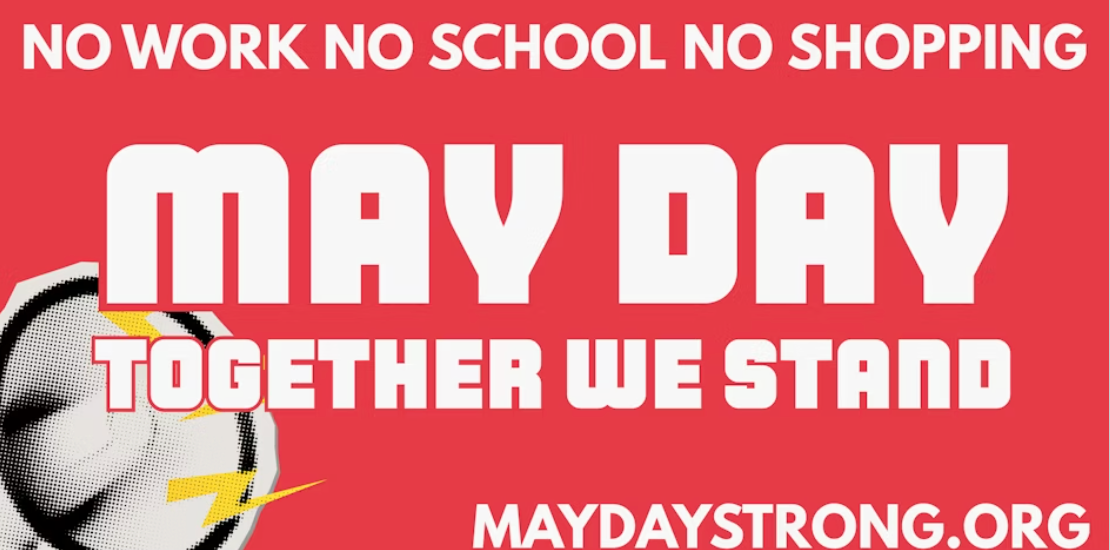
“There are folks who may not think that they’re going to be participating in 'No Shopping, No Work, No School’ on May 1, but we don’t know what’s going to happen at the end of April,” says Howard.
This weekend, Indivisible, the lead organizer of the No Kings protests, instructed its activists to get involved in the strikes.
“Coming off the heels of the massive energy from the No Kings mobilizations, people are ready to take action and keep fighting for a democracy of, by, and for the people,” says Indivisible Co-Founder Leah Greenberg, whose organization started the No Kings protest. “On May 1, Indivisibles will be joining people across the country with a clear message: we demand a government that invests in our communities, not one that enriches billionaires, fuels endless war, or deploys masked agents to intimidate our neighbors.”
However, organizers of the May Day Strong coalition warn that a one-day strike won’t be enough. The May Day Strike will be an opportunity to build power and confidence in the labor movement so it can take bolder actions against the Trump Administration in the future.
“It’s not just enough to show up to May Day, you gotta show up to your workplace and organize your union,” says Faye Guethner. “We have to build power for unions.”
[Donate to Track Growing May Day General Strike Movement
Corporate media is ignoring the growing May Day Strong strike movement, so it’s crucial that a worker-funded outlet like Payday Report change the narrative.
 Payday ReportMike Elk
 ](https://paydayreport.com/help-track-growing-may-day-general-strike-movement/)
From Payday Report via This RSS Feed.