

This article by Isaí Pérez Guarneros originally appeared in the April 2, 2026 issue of La Jornada de Oriente, the Puebla edition of La Jornada, Mexico’s premier left wing daily newspaper.
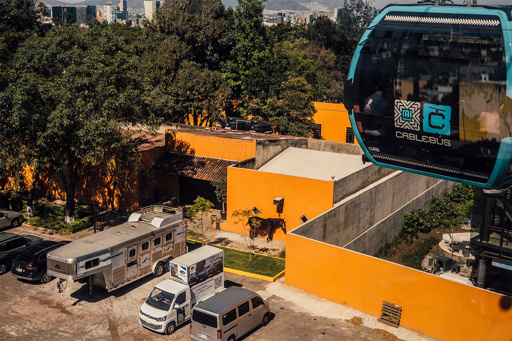
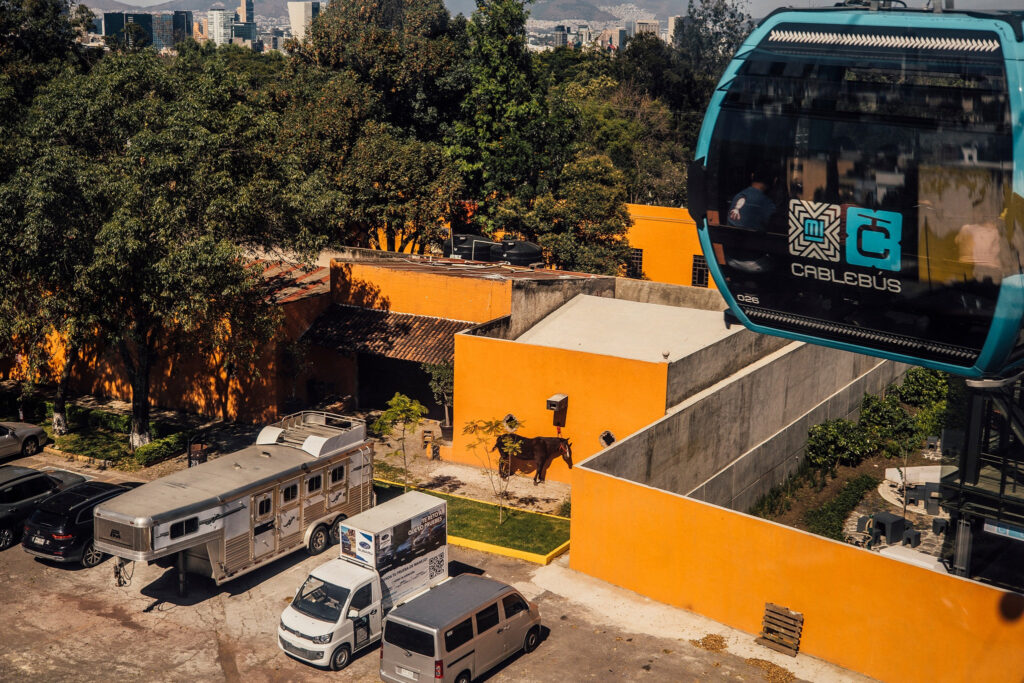
The Seventh District Court for Civil Amparo Matters denied the definitive suspension against the cable car project promoted by the state government, determining that there is no evidence that the work is underway or that any tree felling has taken place.
At the same time, Judge Jorge Arroyo Martínez argued in resolution 362/2026 that the complaining party did not offer sufficient evidence to prove the acts claimed related to the alleged environmental damage that would be committed by state authorities.
“There is no indication that the project known as the cable car is already underway or being carried out. Furthermore, there is no indication of the location or the trees that are intended to be cut down, nor that any cutting, removal, relocation, pruning, or any impairment or damage to the vegetation [trees] has been carried out as a result of the aforementioned planning,” stated Judge Arroyo Martínez.
Regarding the evidence provided by the complaining party, non-governmental organizations that oppose the project, the judge deemed it insufficient, considering that “it does not prove the acts complained of.”
In this regard, the protesters presented studies and academic research on air quality in the metropolitan area of the Valley of Puebla and in municipalities such as Atlixco, San Martín Texmelucan and Tehuacán, corresponding to the period from January 1 to December 31, 2025.
Although the judge acknowledged that these documents prove that the air quality in those regions is poor, he pointed out that they do not demonstrate that this condition derives from the execution of the cable car project or from the felling of trees, since the work is still in the planning stage and not in execution, as the state government maintained.
“These means of proof, at most, would prove that the air quality is bad, but not that this is a consequence of the execution of the work they call Cablebús, therefore, it is insisted, the non-existence of the acts complained of is not disproven,” the court stated.
Furthermore, Judge Arroyo Martínez recalled that the provisional suspension was granted based on the initial elements presented by the complaining party, in accordance with the criteria established by the jurisprudence of the Supreme Court of Justice of the Nation (SCJN).
Following this resolution, non-governmental organizations indicated that they will continue with mobilizations to stop the eventual implementation of the Cablebús project, expressing their rejection of the cable transport model proposed by the state government.
-
Court Denies Injunction Against Puebla Cablebus
April 2, 2026
The judge determined the NGOs did not provide sufficient evidence to prove environmental damage.
-

Mexico Will Bring Death of Mexicans in ICE custody in US Before IACHR
April 2, 2026April 2, 2026
Mexico will not limit itself to a diplomatic note in the face of these serious events, President Sheinbaum indicated.
-

Without a Project & Leadership
April 2, 2026April 2, 2026
Mexico avoids straining relations and, at the same time, avoids pursuing an industrial policy that might affect established interests, particularly those of large transnational corporations. External constraints & internal indecisiveness reinforce each other.
The post Court Denies Injunction Against Puebla Cablebus appeared first on Mexico Solidarity Media.
From Mexico Solidarity Media via This RSS Feed.