

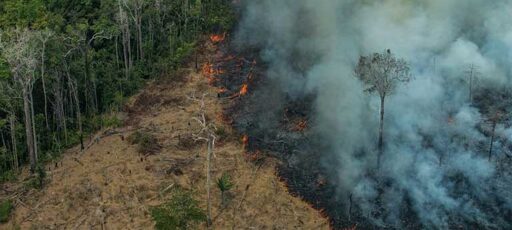
SAO PAULO (AP) — Brazil’s banks will be required to verify official satellite deforestation data before approving rural credit beginning on Wednesday in the South American country. Under the new rule, financial institutions must check whether a property appears in a government registry of areas with potential illegal deforestation after July 31, 2019. The database, maintained by the Ministry of Environment and Climate Change, is based on satellite data from Brazil’s National Institute for Space Research, or INPE. If a property is flagged, farmers may challenge the designation by demonstrating that the deforestation was legal. They can submit authorization documents, restoration plans for altered or degraded areas, or a technical remote‑sensing report. When the resolution was approved in December, the Finance Ministry said that the new requirements were intended to align rural credit with conservation and sustainability policies. Brazil is a global agribusiness powerhouse. The country is the world’s largest exporter of beef and the biggest soybean producer. Agriculture, however, is the leading driver of deforestation across all of Brazil’s biomes, including the Amazon rainforest. The Amazon plays a critical role in regulating the global climate, and scientists warn that continued forest loss could accelerate global warming. The new rule represents a significant step in integrating agricultural policy, the financial system and sustainability, said Paulo Camuri, climate and territorial intelligence manager at Imaflora, a nonprofit that tracks deforestation. Linking access to credit to environmental requirements, Camuri added, encourages more sustainable production and strengthens the agribusiness sector’s environmental responsibility. “It is an intelligent incentive mechanism…This article was originally published on Mongabay
From Conservation news via This RSS Feed.