


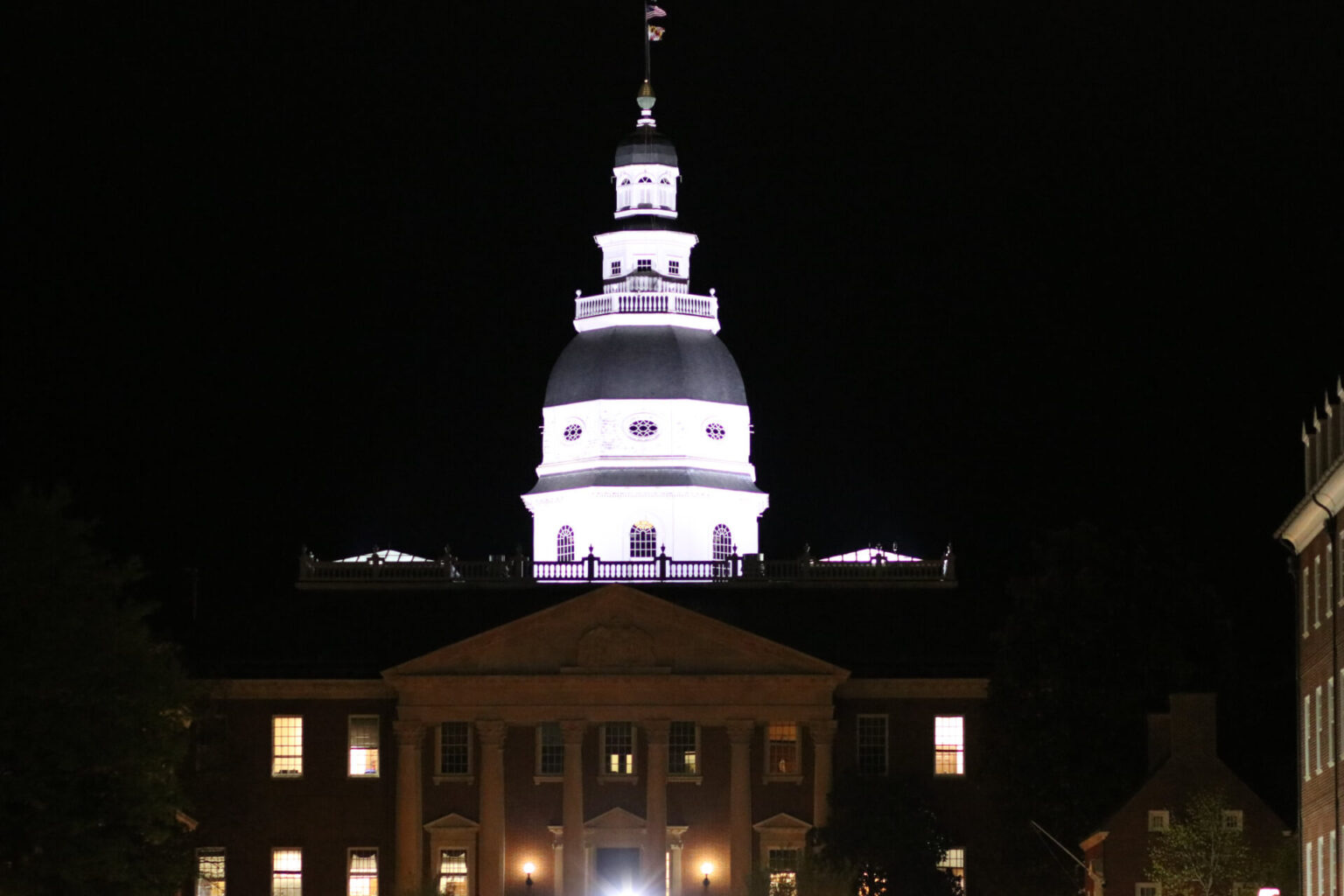
Photo by Danielle E. Gaines.
Erin In The Morning is a reader-supported publication. To receive new posts and support my work, consider becoming a subscriber.
During the Trump administration’s time in power, transgender students have lost the ability to fight for their Title IX protections against schools that discriminate against them. Meanwhile, the Supreme Court has greenlit the targeting of LGBTQ+ students repeatedly this term. Maryland, though, appears poised to push back with a new bill that is rapidly advancing through the state legislature. HB 649, which has already passed the House of Delegates 100-35, would significantly expand protections for transgender students across the state, giving them a private right of action to sue schools that discriminate against them in “any program or activity”—a phrase borrowed directly from Title IX that would explicitly protect participation in sports, admissions, and access to school facilities and programs statewide. The bill was heard in a Senate committee yesterday.
The bill states that “an educational institution may not exclude an individual from participation in, deny a person the benefits of, or subject an individual to discrimination within, any program or activity of the educational institution on the basis of race, color, national origin, ethnicity, ancestry, religion, sex, pregnancy, sexual orientation, gender identity, disability, age, or marital status” (emphasis added). The language is significant and expansive: the bill defines “educational institution” to include both public and nonpublic prekindergarten programs, elementary schools, secondary schools, institutions of postsecondary education, institutions of higher education, and any other educational program leading to a certificate, diploma, or degree—covering virtually every school in the state from pre-K through college.
The bill was brought at the request of Maryland’s own Commission on Civil Rights. In its testimony, the Commission laid out the urgency in stark terms: the federal Office for Civil Rights, which has historically been the primary enforcement mechanism for students facing discrimination, has been gutted under the Trump administration. OCR complaints from Maryland residents surged to 130 in 2024—but after January 2025, the office effectively stopped processing them. Furthermore, when the administration does take action, it is against transgender students, not in favor of their rights. The ACLU of Maryland, which also testified in favor of the bill, noted that when the current president took office, many OCR complaints were dismissed without investigation. “With the dismantling of USDE and OCR, Maryland must fill the gap to ensure that the civil rights of all Maryland students are protected and upheld,” the ACLU wrote.
The bill is notable for two reasons. The first is its use of the phrase “any program or activity” in its protection of transgender students. Maryland’s existing nondiscrimination law, the 2022 Inclusive Schools Act, prohibits schools from "discriminating against” students based on gender identity—but does not explicitly guarantee the right to participate in all school programs and activities. The current vague language can leave room for schools to argue that barring a trans student from a sports team or denying access to facilities does not constitute discrimination. Only a handful of states have closed this gap. California’s landmark 2013 School Success and Opportunity Act explicitly guarantees transgender students the right to “participate in sex-segregated school programs and activities, including athletic teams and competitions, and use facilities consistent with his or her gender identity.” Connecticut similarly requires “equal opportunity to participate in school activities, programs, and courses of study” regardless of gender identity. Maryland’s HB 649, by adopting the Title IX formula—“exclude from participation in, deny the benefits of, or subject to discrimination within any program or activity”—would place the state among this small group.
Secondarily, the bill creates a private right of action. Under Maryland’s current framework, a student alleging discrimination must depend on government agencies acting in their favor. HB 649 changes that. A transgender student experiencing discrimination in bathrooms, sports, dormitories, or any other school program would be able to sue the school directly in state court, without waiting for the state superintendent or the attorney general to act on their behalf. The National Women’s Law Center Action Fund, which testified in support of the bill, called this pathway “critical for student survivors of sexual assault and LGBTQI+ students who may face greater hurdles in obtaining justice on federal civil rights claims.” Any school that capitulates to Trump administration demands to roll back transgender protections may now face lawsuits directly from the students it harms, should this bill pass.
The bill has the support of Maryland’s LGBTQ+ Caucus, which submitted a letter of support calling it a necessary step to close enforcement gaps in civil rights law. “For LGBTQ+ students, actionable nondiscrimination enforcement supports a safer school climate, better academic outcomes, and recognition and respect for gender diversity and sexual orientation as integral parts of students’ identities,” the caucus wrote. “Ensuring that LGBTQ+ students and educators are protected under state civil rights law helps educational environments become more inclusive, safe, and equitable for all.”
The bill passed the House 100-35 on March 23 and has been referred to the Senate Education, Energy, and the Environment Committee, where it was heard yesterday. The Senate must act before the legislative session ends on April 13. If passed, the bill is likely to be signed by Gov. Wes Moore, who has signed the Trans Shield Act, the Trans Health Equity Act expanding Medicaid coverage for gender-affirming care, and declared Maryland a sanctuary state for transgender people.
Erin In The Morning is a reader-supported publication. To receive new posts and support my work, consider becoming a subscriber.
From Erin In The Morning via This RSS Feed.