

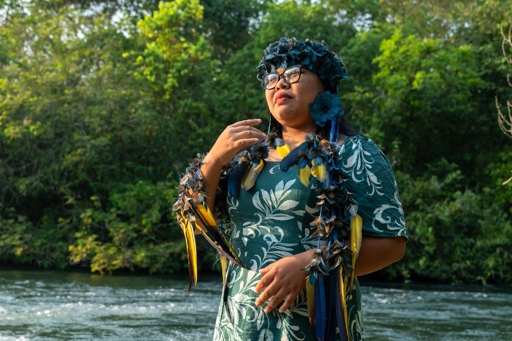
MATO GROSSO, Brazil — In 2025, soy farmers in Brazil saw a new boost caused by the tariff war between the United States and China. Brazilian soy exports to the Chinese market reached a record high: 85.4 million metric tons, almost 80% of total soy shipments. In Mato Grosso, soy production had already seen a boost in 2019, partly due to trade tensions between the Chinese and the first U.S. President Donald Trump administration. In addition to China’s demand for the product, new agricultural frontiers were opened for soy farmers after the BR-163 federal road was paved, connecting them to ports in Pará state. Since then, soy plantations in Mato Grosso have increased by 3.4 million hectares (8.4 million acres), according to Brazil’s National Supply Company (CONAB), while their output went from 33 million metric tons in the 2018-19 harvest to 51 million metric tons in 2024-25 – a 54.5% increase. Soy plantations are advancing mainly in the Cerrado, the most biodiverse savanna on the planet, which is essential to Brazil’s water supply, since its sources provide it to eight of the country’s 12 hydrographic regions. In the Juruena River Basin, in western Mato Grosso, consolidation of monocultures — not only soy but also corn and cotton — is a matter of concern to people in the Tirecatinga Indigenous Land. They report that the surrounding farms have been contaminating water bodies, plants and fruit with pesticides and are blocking the rivers with small hydroelectric plants. Located between the Buriti and…This article was originally published on Mongabay
From Conservation news via This RSS Feed.