


U.S.-Israeli attacks continue to pound Iran. Former Iranian foreign minister wounded in strike on Tehran residence. President Donald Trump discusses Iran war in an address to the nation. Trump threatens to leave NATO over Hormuz. U.S. military briefs Trump on plan to seize Iranian uranium in ground operation. UK to convene talks on Strait of Hormuz reopening with 35 nations. Houthis threaten to close Bab el Mandab strait. Israel kills Hezbollah’s southern front commander in Beirut strike. Israeli airstrike kills family of four in southern Lebanon. Israel privately pressures Christian and Druze towns in southern Lebanon to expel displaced Shiites. House Speaker Mike Johnson buckles under Trump pressure, end to record closure of DHS in sight. Possible Democratic hopefuls say Israel must pay for its own missiles. Top Trump lobbyist testifies in Venezuela lobbying trial. Democratic socialist Claire Valdez reports $750,000 fundraising haul. U.S.-Israeli strike kills three PMF fighters in northwestern Iraq. Magnitude 7.4 earthquake kills at least one in northern Indonesia. Pakistan and Afghanistan hold China-mediated peace talks. Russia claims full control of Luhansk. Ukrainian President Volodymyr Zelenskyy calls Easter ceasefire talks with U.S. envoys “positive.” New UN force leader and Chadian advance troops arrive in Haiti. Washington removes Venezuela’s interim president Delcy Rodríguez from sanctions list. RSF advance drives 10,000 displaced to Sudan’s Blue Nile region. Iran war drives sharp fuel price hikes across Africa.
NEW from Drop Site: Premature babies evacuated amid Israeli attack on Al-Shifa Hospital returned to Gaza after two and a half years
Drop Site is now live on WhatsApp. Get our latest reporting, podcasts, and breaking news, delivered directly. Join the channel here.
This is Drop Site Daily, our free daily news recap. We send it Monday through Friday. Today’s edition is being sent to more than 750,000 subscribers. Help us grow that number by forwarding and recommending this newsletter.
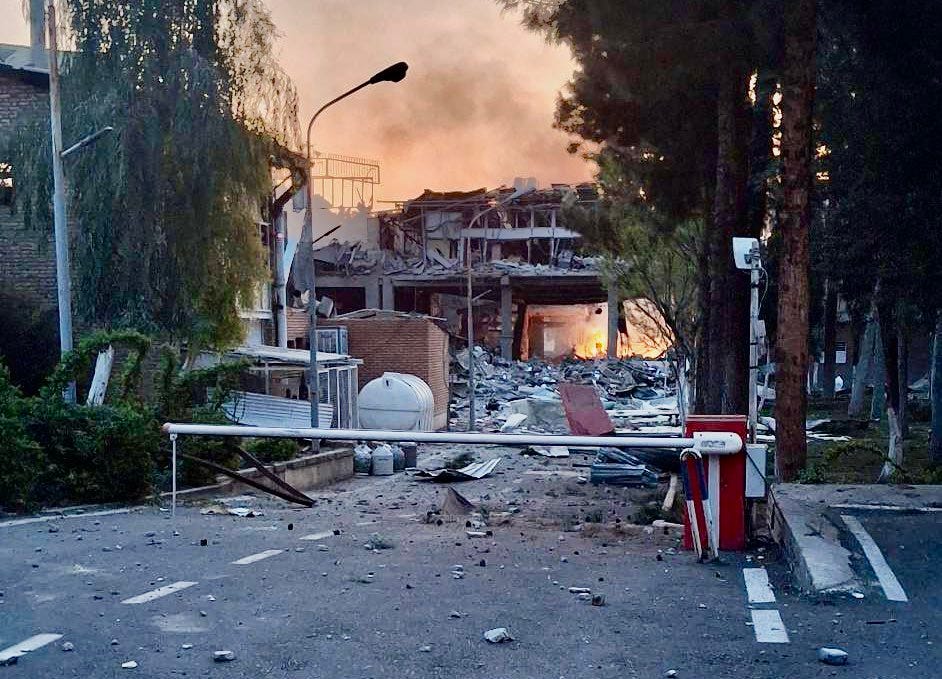
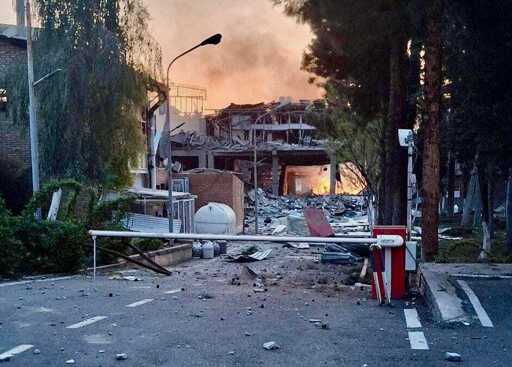
U.S.-Israeli airstrikes caused extensive damage to the Pasteur Institute of Iran, in Tehran. Photo Hossein Kermanpour, spokesperson for the Iranian Ministry of Health, via X.
War on Iran
-
U.S.-Israeli attacks continue to pound Iran:
- Strikes were reported across three locations in Khuzestan province on Thursday, including in the city of Abadan, according to the Mehr news agency.
- American and Israeli aircraft struck multiple coastal sites in southern Iran on Wednesday, including Qeshm Island, the port of Charak, and nearby Hengam Island near the Strait of Hormuz, according to the Mehr News Agency. An official said the strike on Qeshm targeted the Doha fishing pier, injuring two people, and that the Charak strike damaged three landing craft at the port’s commercial pier.
- U.S.-Israeli airstrikes have caused extensive damage to the Pasteur Institute of Iran, a century-old medical research center in Tehran, according to the spokesperson for Iran’s health ministry Hossein Kermanpour, who called the attack “a direct assault on international health security. This violates Geneva Conventions & IHL principles.”
- U.S.-Israeli airstrikes hit a second pharmaceutical facility in western Tehran on Tuesday. The plant, the Daro Bakhsh Pharmaceutical Factory, is one of Iran’s oldest medical production hubs and produces a significant share of Iran’s domestic medicine supply, including antibiotics, cardiovascular drugs, and intravenous fluids used in hospital operations.
- The U.S.-Israeli campaign has damaged more than 115,000 civilian units in Iran so far, according to the Iranian Red Crescent Society, Iran’s main humanitarian body. Its president, Pir Hossein Kolivand, said 44,391 of those units are located in Tehran.
- The death of a third Iranian Red Crescent volunteer was announced on Wednesday.
-
Former Iranian foreign minister wounded in strike on Tehran residence: Kamal Kharazi, an 81-year-old former Iranian foreign minister and a foreign affairs adviser to the late Supreme Leader Ali Khamenei, was severely injured Wednesday in a U.S.-Israeli strike on his Tehran residence that also killed his wife, according to Iranian media reports.
-
CENTCOM reports 12,300 Iranian targets struck: U.S. Central Command claimed on Wednesday it had struck more than 12,300 Iranian targets since its campaign against Iran began, including command and control centers, ballistic missile facilities, and storage depots. More than 155 Iranian naval vessels have been damaged or destroyed, CENTCOM said.
-
British Royal Air Force shoots down 10 Iranian drones: Britain’s Royal Air Force intercepted and destroyed 10 Iranian drones overnight in what the Ministry of Defense described as a “high-threat area,” without specifying the exact location, according to an announcement Wednesday. Typhoon and F-35 fighter jets are continuing defensive missions over Cyprus, Jordan, Bahrain, Qatar, and the United Arab Emirates, the ministry said.
-
Iran fires largest missile barrage at Israel in weeks: Iran launched at least 10 ballistic missiles toward central Israel on Wednesday evening, just before Passover Seder began, in its largest barrage in weeks, according to the Israeli military, which said many missiles were intercepted and others landed in open areas. One missile carrying a cluster warhead dispersed bomblets over the cities of Rosh Haayin and Petah Tikva, damaging homes, cars, and a playground, according to Israeli rescue services. No injuries were immediately reported.
-
Trump offers few new details in Iran War speech: President Donald Trump offered few new details about the Iran war in a primetime address on Wednesday night, despite the White House billing it as an “important update” on the war. Trump gave a vague timeline of when the U.S. will end its military campaign against Iran, saying, “We’re going to hit them extremely hard over the next two to three weeks—we’re going to bring them back to the Stone Age, where they belong.” Trump claimed the “core strategic objectives are nearing completion” and did not indicate he was preparing to send in ground troops. He said that if Iran does not make a deal with the U.S., “we are going to hit each and every one of their electric generating plants very hard and probably simultaneously.” Trump also said “This is a true investment in your children and your grandchildren’s future. The whole world is watching.” After his address, oil rose and stocks fell with U.S. crude surging over $110 a barrel Thursday—for the first time in over three weeks. In remarks to the press earlier in the day, Trump also noted the domestic cost of the war, and of the administration’s belligerent foreign policy generally, saying, “We can’t take care of daycare. We’re a big country. We’re fighting wars. It’s not possible for us to take care of daycare, Medicaid, Medicare, all these things.”
-
Iran Foreign Ministry: “We will not tolerate this vicious cycle”: In response to Trump’s address, Iran’s Foreign Ministry spokesperson Esmaeil Baghaei said, “We will not tolerate this vicious cycle of war, negotiations, ceasefire, and then repeating the same pattern.” He added that Iran does not consider its Gulf neighbors as enemies. “We have repeatedly said that we are determined to continue our good neighborly relations with all of them. The problem is that the United States and Israel are exploiting their territories to carry out their military aggression against Iran.”
-
Trump threatens to leave NATO over Hormuz: President Donald Trump threatened to withdraw the United States from PURL—the NATO program through which European nations fund weapons purchases for Ukraine—after NATO allies declined his demand that they join a coalition to force open the Strait of Hormuz, the Financial Times reported Wednesday, citing officials briefed on the discussions. One source described Trump as “rather hysterical” over the refusal. NATO Secretary-General Mark Rutte subsequently pressed allies to commit to a March 19 joint statement expressing their readiness to help secure the strait, according to the report. U.S. Ambassador to NATO Matthew Whitaker told interviewers on Wednesday that President Donald Trump is “evaluating and reevaluating everything,” including American participation in NATO and support for Ukraine. In an interview with Fox News, he said that NATO “has to be a two-way street” and that the U.S. could not indefinitely guarantee European security without “benefit for America.”
-
Iran says supreme leader in good health: Iran’s Foreign Ministry said Wednesday that Supreme Leader Ayatollah Mojtaba Khamenei is “in perfect health” and that his absence from public view is a result of wartime precautions.
-
Iranian healthcare system shows signs of collapse: Iran’s healthcare system is showing signs that it may be breaking down as a result of recent U.S.-Israeli attacks on key health infrastructure. A cancer patient told the Iranian newspaper Sharg that the MAHAK cancer charity informed them it had no post-chemotherapy medication available. Non-emergency surgeries are being postponed due to anesthesia shortages; and in some Tehran neighborhoods, a single doctor is seeing 200 to 300 patients per day. Iran’s deputy health minister said that 24 pharmaceutical and medical facilities have sustained partial or total damage since the war began. Also on Wednesday, a group of Austrian physicians pointed out that recent Israeli-U.S. strikes on Iranian pharmaceutical facilities fall “outside all legal frameworks of war,” in an interview with Deutsche Welle Persian.
-
U.S. military briefs Trump on plan to seize Iranian uranium in ground operation: The U.S. military has presented President Donald Trump with a plan to seize approximately 970 pounds of highly enriched uranium stored at Iranian nuclear facilities, according to the Washington Post. The plan involves the airlift of potentially hundreds or thousands of troops, excavation equipment, and the construction of a runway inside Iran to fly the material out, according to two people familiar with the matter. The uranium, enriched to 60 percent, is stored primarily in tunnels more than 300 feet deep at a facility outside Isfahan, and additional material is stored at Natanz. The Isfahan site’s entrance is currently buried under rubble from the U.S. bombing in June. A former CIA officer and Defense Department official said the plan had the potential to be “one of, if not the largest, most complicated special operations in history.”
-
Iran launches volunteer recruitment: Iran has launched a nationwide volunteer recruitment campaign, promoted via mass text message and state television, calling on citizens to defend the country against “the American-Zionist enemy’s threats against Iran’s shores, islands and borders” amid the prospect of a U.S. ground invasion, the Financial Times reports. The Islamic Revolutionary Guard Corps has also begun a recruitment drive of its own, calling for individuals as young as 12 to take up roles at security checkpoints, caring for the wounded, or cooking for the military, or to donate financially to the group. Human Rights Watch on Tuesday called on Iranian authorities to revoke the campaign, warning that recruiting children under 15 constitutes a war crime under customary international law and that “children at military facilities would be at serious risk of death and injury.”
-
UK to convene talks on Strait of Hormuz reopening with 35 nations: British Prime Minister Keir Starmer announced Wednesday that Foreign Minister Yvette Cooper will host a virtual meeting of 35 countries Thursday to coordinate diplomatic, political, and military planning to reopen the Strait of Hormuz “after the fighting has stopped.” Starmer said the talks would assess “all viable measures” to restore “freedom of navigation”, ensure the safety of trapped ships and seafarers, and “resume [the] movement of vital commodities.” He also noted that military planners would separately examine how to “marshal our capabilities” to make the Strait “accessible and safe” once hostilities cease. Starmer said that signatories to a recent joint statement on safe passage—including France, Germany, Italy, Japan, and the Netherlands—would be among the participants. “I do have to level with people on this,” Starmer said. “This will not be easy.”
-
Macron says Hormuz can only reopen through coordination with Iran: French President Emmanuel Macron said it was “unrealistic” to reopen the Strait of Hormuz through a military operation in comments to reporters Thursday during a visit to South Korea. “There are people who advocate the idea of the reopening of the Strait of Hormuz by force, through a military operation, a position that has at times been expressed by the United States,” he said. “That has never been the option we have chosen, and we consider it unrealistic.” The reopening of the Strait “can only be done in coordination with Iran,” through negotiations, Macron added.
-
Houthis threaten to close Bab el Mandab strait: Houthi Deputy Information Minister Mohammed Mansour told Al-Monitor in a March 31 interview that the group could close the Bab el Mandab strait—the 32-kilometer chokepoint at the southern tip of the Arabian Peninsula—if Gulf states become directly involved in military operations alongside the U.S. and Israel against Iran. The threat takes on heightened significance as the Strait of Hormuz remains closed, pushing more Saudi oil exports through Bab el Mandab to Asian markets than before the war.
Lebanon
- Casualty count: The death toll from Israel’s assault on Lebanon has risen to at least 1,318—with 3935 wounded—since March 2, according to Lebanon’s Health Ministry.
- Israeli strikes kill seven on Thursday: At least seven people were killed in Israeli airstrikes in Lebanon on Thursday, including four in Ramadiya in the Tyre district and three in a dawn strike on a two-storey building in Kfarsir, according to Lebanon’s Health Ministry and the National News Agency. Six others were wounded—three critically—after a strike destroyed the Abdul Raouf Sbaiti complex in Kafra.
- Israel kills Hezbollah’s southern front commander in Beirut strike: Israel assassinated Haj Youssef Ismail Hashem, the commander of Hezbollah’s southern front, in a strike on Beirut’s Jnah neighborhood Wednesday. Hezbollah confirmed Hashem’s death, calling him a “beacon of the Islamic Resistance.” He is the most senior Hezbollah figure killed since Lebanon was drawn into the war on March 2. The strike that killed Hashem was conducted near a school sheltering displaced civilians, according to Al Jazeera, and killed at least seven people in total.
- Israeli airstrike kills family of four in southern Lebanon: An Israeli airstrike killed two young sisters and their parents Wednesday when warplanes bombed their home in Houmeen al-Tahta in southern Lebanon’s Iqlim al-Tuffah district, approximately 20 miles from the Israeli border, Lebanon’s National News Agency reported. The victims were identified as sisters Nour and Hanan Hamiyeh and their parents, Mohammad Hamiyeh and Rima Jouni.
- Hezbollah claims strikes on Israeli military positions, engagements with Israeli aircraft: Hezbollah said on Wednesday that it launched rockets toward northern Israeli areas including Kiryat Shmona, Avivim, Kabri, and Nahariya, and struck Israeli military positions in southern Lebanon at sites including Qantara, Ainata, Aitaroun, Qouzah, Odaisseh, Markaba, and Robb Thalathin. The group also claimed air-defense success, saying it fired on an Israeli aircraft over Jwayya on Wednesday afternoon and struck a helicopter over Yaroun on Tuesday using surface-to-air missiles.
- Israel privately pressures Christian and Druze towns in southern Lebanon to expel displaced Shiites: While publicly ordering a blanket evacuation of all civilians within 25 miles of the Israeli border, Israeli military officials have privately called leaders of at least eight Christian and Druze villages in southern Lebanon, directing them to expel Shiite Muslims who had sought refuge in their communities, according a new report from New York Times. Local leaders said they complied out of fear their own towns would be bombed if they refused. “I visited the families one by one and told them to prepare themselves, that if we got an alert they would have to move,” one deputy mayor told the Times, who complied with the order “for the safety of the town.”
- France and Indonesia condemn Israeli actions against UNIFIL peacekeepers: France’s junior army minister Alice Rufo said on Wednesday that French peacekeeping troops serving in Lebanon had been subjected to “absolutely unacceptable intimidation” by Israeli forces, citing three incidents on March 28 between French and Israeli military personnel. Rufo, speaking at the War and Peace conference in Paris a day after returning from Lebanon, said she was sending “a message of solidarity” to French soldiers in the field. Separately, Indonesia called on the United Nations to investigate the deaths of three Indonesian UNIFIL peacekeepers killed in Israeli strikes in southern Lebanon this week.
The Gaza Genocide, Israel, and the West Bank
- Casualty count: Over the last 24 hours, three Palestinians were injured in Israeli attacks across Gaza. The total recorded death toll since October 7, 2023 has risen to 72,289 killed, with 172,043 injured. Since October 11, the first full day of the so-called ceasefire, Israel has killed at least 713 Palestinians in Gaza and wounded 1,943, while 756 bodies have been recovered from under the rubble, according to the Palestinian Ministry of Health.
- Israel continues to bombard Gaza: A Palestinian woman, Rawan Fayyad, was killed Thursday by Israeli gunfire near al-Maghazi refugee camp in central Gaza, according to Palestinian writer Mosab Abu Toha. Three people, including a child, were also injured by Israeli gunfire Wednesday in separate areas of Gaza, with the child critically wounded in Khan Younis, while two others were shot near Gaza City’s Zeitoun neighborhood and east of Nuseirat refugee camp, WAFA reported. Sustained heavy strikes were also reported in eastern Gaza on Wednesday night.
- Premature babies evacuated amid Israeli attack on Al-Shifa returned to Gaza after more than two years: Eight Palestinian children who were evacuated to Egypt as premature babies in November 2023 were reunited with their families in Gaza on Monday after two and a half years of separation. The eight toddlers were among 31 Palestinian infants who were evacuated from the neonatal intensive care unit in Al-Shifa Hospital in Gaza City, as the Israeli military laid siege to the medical complex and raided it in November 2023. 28 of the babies were transported across the border to Egypt for treatment. None were accompanied by family members. “These two years felt like forty, even more—a lifetime. During this time, I was a body without a soul. I couldn’t work or do anything,” Ahmed Al-Harsh, who was reunited with his son Mahmoud on Monday, told Drop Site. His wife gave birth to Mahmoud as she was gravely injured following an airstrike that killed their entire family. His wife succumbed to her injuries after giving birth. Read more from Drop Site contributor Abdel Qader Sabbah here.
United States
By Julian Andreone, with Ryan Grim. Have a tip on Capitol Hill? Email Andreone at Julian@dropsitenews.com.
- Johnson buckles under Trump pressure, end to record closure in sight: House Speaker Mike Johnson (R-La.) agreed to move forward with the two-track Senate deal to end the record-breaking Department of Homeland Security shutdown. Johnson and Senate Majority Leader John Thune (R-S.D.) announced on Wednesday that they would pass a bill funding most of DHS immediately, while routing money for Immigration and Customs Enforcement and parts of Customs and Border Protection through a separate reconciliation package. Johnson, who called the deal a “crap sandwich,” reversed course less than three hours after President Donald Trump posted on Truth Social, urging Republicans to fund ICE and CBP through reconciliation and demanding the legislation reach his desk by June 1. The House is not due back until April 14, though Johnson could recall members sooner or use a procedural maneuver to pass it during recess. House Minority Leader Hakeem Jeffries (D-N.Y.) and Senate Minority Leader Chuck Schumer (D-N.Y.) both declared victory, with Jeffries saying Republicans “have come to realize that we will never bend the knee.”
- Possible Democratic hopefuls say Israel must pay for its own missiles: New York Mayor Zohran Mamdani voiced his agreement with Rep. Alexandria Ocasio-Cortez (D-N.Y.), who announced on Tuesday that she would oppose all military aid to Israel. “I support what the Congresswoman said,” Mamdani said. Ocasio-Cortez issued another statement regarding her new position, saying that Israel is “well able” to fund its Iron Dome system, which she defended in principle as “critical [in keeping] innocent civilians safe from rocket attacks and bombardment.” Rep. Ro Khanna (D-Calif.) joined in on Wednesday, signalling he would not support additional funding for Israel’s Iron Dome. “Israel is a first-world country,” Khanna said, “and it can pay for the defensive systems it needs.” Former Chicago mayor Rahm Emanuel made similar comments in an interview with Semafor’s Dave Weigel.
- Death of Rohingya refugee abandoned by Border Patrol at Buffalo doughnut shop ruled a homicide: The death of Nurul Amin Shah Alam, a 56-year-old nearly blind Rohingya refugee from Myanmar found dead on a Buffalo street in February—five days after Border Patrol agents dropped him at a Tim Hortons restaurant—was ruled a homicide by the Erie County Medical Examiner. The county determined he died from complications of a perforated duodenal ulcer brought on by hypothermia and dehydration. Shah Alam had been released from Erie County jail on misdemeanor charges the same day Border Patrol briefly detained him, determined he was ineligible for deportation, and then left him at the closed restaurant in jail-issued booties without notifying his family.
- Top Trump lobbyist testifies in Venezuela lobbying trial : Washington lobbyist Brian Ballard, a prominent figure in Trump’s political orbit, testified in federal court in Miami that he immediately severed ties with former Florida Rep. David Rivera (R-Fla.) after learning in 2020 that Venezuela’s government had paid Rivera a $50 million consulting contract, telling Rivera “I have nothing to do with this.” Rivera is on trial on charges for allegeding lobbying on behalf of Nicolas Maduro without registering as a foreign agent. Ballard’s testimony touched upon his work on behalf of Venezuelan media billionaire Raúl Gorrín—later indicted for allegedly bribing Venezuelan officials—who flew Ballard and Rivera to the Dominican Republic on his private jet to meet with Venezuelan opposition leaders. Susie Wiles, Trump’s chief of staff, was once registered as a lobbyist for Gorrín’s television network, though the White House has blocked efforts to compel her testimony in the trial. Rep. Pete Sessions (R-Texas), who prosecutors say secretly traveled to Caracas for a meeting with Maduro, is also scheduled to testify.
- FBI declares China-linked hack a major national security incident: The FBI determined that a suspected Chinese intrusion into an internal agency system containing law enforcement surveillance data was a “major incident” and poses “significant risks” to U.S. national security. The compromised system reportedly held pen register and trap-and-trace surveillance returns—tools that reveal which phones and websites are being monitored by the FBI—as well as personally identifiable information on subjects of FBI investigations.
- OpenAI built national security hiring pipeline to capture Pentagon contracts, Lever reports: OpenAI quietly removed longstanding prohibitions on military use of its models in January 2024 and embarked on a systematic hiring spree of national security insiders, recruiting more than a dozen former officials from the Defense Department, National Security Council, and Capitol Hill, according to a new report from the Lever. The strategy paid off last month when OpenAI secured a $200 million Pentagon contract after the Trump administration froze out rival Anthropic over its resistance to having its models used for surveillance and automated weapons without sufficient safeguards. OpenAI’s deal with the government was reportedly brokered by OpenAI’s lobbying chief Joseph Larson, a former deputy chief digital and artificial intelligence officer in the Office of the Secretary of Defense. Read more about this hiring spree here.
- Claire Valdez reports $750,000 fundraising haul: Claire Valdez, a democratic socialist running for New York’s 7th Congressional District, raised $750,000 from more than 11,200 donors in her first campaign finance reporting period, with an average contribution of $53.73, according to her campaign. Valdez has the endorsement of both Zohran Mamdani and Justice Democrats. Fundraising figures for her principal opponent, Brooklyn Borough President Antonio Reynoso, who is backed by outgoing Rep. Nydia Velázquez, have not been reported.
- Report: Internal power struggle “saps momentum” from UAW revival as Fain faces re-election challenge: A bitter rift has developed between UAW President Shawn Fain and Secretary-Treasurer Margaret Mock—the two leaders who jointly won control of the union in its first-ever rank-and-file election in 2022—a new report from The American Prospect details. Fain’s inner circle, drawn from the labor-radical publication Labor Notes, clashed repeatedly with Mock over financial oversight and staffing decisions. Neil Barofsky, a lawyer appointed by a federal court to oversee the union, has also been a major source of conflict, within and outside of the union. All of this has stalled the union’s organizing momentum following landmark contract wins with the Big Three automakers and a historic victory at Volkswagen’s Tennessee plant, and touches upon both the future of Fain’s leadership and (tangentially) upon the war in Gaza. Read Harold Meyerson’s full report here.
- NYC politician opposing Mamdani’s wealth tax accused of obscuring family fortune: New York City Council Speaker Julie Menin, a leading obstacle to Mayor Zohran Mamdani’s proposed tax on ultra-wealthy New Yorkers, publicly claimed under $500,000 in assets on disclosure forms. According to The Lever, however, her family’s total holdings may be worth well into the tens of millions of dollars, including a $22 million Hamptons home, luxury Manhattan properties, and access to private jets. She may have been able to obscure this wealth, furthermore, because of a disclosure rule that allows spouses’ assets to remain confidential on public filings. Menin, whose husband runs a major real estate firm, has advocated spending cuts over new taxes to address the city’s deficit, a position Mamdani has called “unrealistic,” warning her approach would “slash billions” from city agencies. The full report is available here.
Other International News
- U.S.-Israeli strike kills three PMF fighters in northwestern Iraq: A U.S.-Israeli strike on the 53rd Brigade of Iraq’s Popular Mobilization Forces in Tal Afar, Nineveh province, killed three fighters Thursday, the Iraqi News Agency reported. Separately, the Islamic Resistance of Iraq—an umbrella of mostly Iran-aligned armed factions—said it carried out 41 retaliatory operations against U.S. bases in Iraq and the region on Wednesday, deploying “dozens of drones and missiles,” according to Iran’s state news agency ISNA.
- U.S. Embassy in Baghdad warns of potential attacks: The U.S. Embassy in Baghdad warned citizens Thursday that “militia groups aligned with Iran may intend to conduct attacks in central Baghdad in the next 24-48 hours.” The embassy said targets could include “U.S. citizens, businesses, universities, diplomatic facilities, energy infrastructure, hotels, airports, and other locations perceived to be associated with the United States, as well as Iraqi institutions and civilian targets.” It also added that “militias have targeted Americans for kidnapping. U.S. citizens should leave Iraq now.”
- Magnitude 7.4 earthquake kills at least one in northern Indonesia: A magnitude 7.4 earthquake struck the Molucca Sea near northern Indonesia on Thursday, killing at least one person, injuring several others, and generating tsunami waves of up to 75 centimeters at monitoring stations along the coast. A 70-year-old woman died in a building collapse in Manado, the capital of North Sulawesi province, while at least three people were hospitalized in Ternate, in neighboring North Maluku province. Dozens of aftershocks followed, including one of magnitude 6.2.
- Pakistan and Afghanistan hold China-mediated peace talks: Pakistan and Afghanistan opened the first round of China-mediated peace talks in Urumqi, in China’s northern Xinjiang region, on Wednesday, with negotiations expected to continue Thursday, according to the Associated Press. The talks came after weeks of the most severe cross-border fighting between the two countries in decades. Even as diplomats met, an Afghan police spokesman said Pakistani mortar fire killed two civilians and wounded six others, including four children, in Kunar province on Wednesday night. China has been pressing both sides toward dialogue since late February, with special envoy Yue Xiaoyong visiting both capitals.
- Russia claims full control of Luhansk: Russia’s Defense Ministry claimed Wednesday that its forces had completed the capture of the entire Luhansk region of Ukraine, a claim which the Ukrainian military denied (it claims it holds “small patches” and has held them “for a long time.” Russian claims of full Luhansk control have been made before—with a similar such claim made in June—and Ukrainian officials have previously said Moscow inflates battlefield gains to convince U.S. negotiators that a Russian victory is inevitable.
- Russia launches drone barrage on Ukraine, killing four: Russia launched more than 360 drones against Ukraine during daylight hours Wednesday—an unusual departure from overnight attacks—killing four people in the Cherkasy region and wounding at least eight others across the Poltava and Khmelnytskyi regions, Ukrainian officials said. Ukraine’s air force said it shot down 345 of the daytime drones. Strikes hit energy infrastructure and industrial facilities across western Ukraine, including critical infrastructure in the Zakarpattia region near the Slovak and Hungarian borders, cutting power to roughly 11,000 customers in the Ivano-Frankivsk region.
- Zelenskyy calls Easter ceasefire talks with U.S. envoys “positive”: President Volodymyr Zelenskyy described Wednesday’s remote talks with U.S. special envoy Steve Witkoff, Jared Kushner, Senator Lindsey Graham, and NATO Secretary-General Mark Rutte as “positive,” saying the Ukrainian and U.S. teams agreed to strengthen a document outlining American security guarantees for a future peace deal. Zelenskyy said he raised his proposal for an Easter ceasefire—Orthodox Easter falls on April 12—during the call, calling it a signal that “could tell everyone that diplomacy can be successful.” Russia’s foreign ministry publicly rejected the proposal as a “PR stunt” and the Kremlin reiterated its demand that Ukraine withdraw from the remainder of Donbas “yesterday.”
- New UN force leader and Chadian advance troops arrive in Haiti: Jack Christofides, a South African UN official appointed late last year to lead the UN-backed Gang Suppression Force, arrived in Haiti on Wednesday alongside an advance deployment of troops from Chad, the force announced. Chad has pledged 800 troops in total, though the overall force remains severely below its target—fewer than 1,000 personnel, mostly Kenyan, are currently deployed, representing less than 20 percent of the 5,500-troop number approved last year.
- Washington removes Venezuelan interim president from sanctions list: The U.S. Treasury Department removed Delcy Rodríguez, Venezuela’s interim president, from its sanctions list Wednesday, marking a shift in the Trump administration’s approach toward Caracas. Rodríguez welcomed the decision, calling it a step toward “normalization” and expressing hope it could lead to the lifting of broader oil sanctions and expanded bilateral cooperation.
- RSF advance drives 10,000 displaced to Sudan’s Blue Nile region: More than 10,000 displaced people from the Geissan district on the Sudan-Ethiopia border have arrived in Er Roseires, the second-largest city in Sudan’s Blue Nile region, after a coalition of the Rapid Support Forces and the Sudan People’s Liberation Movement-North threatened the area, the Sudanese Doctors Network reported Wednesday. The displacement follows last week’s rebel alliance seizure of the strategic border city of Kurmuk, which intensified civilian flight toward Ed Damazin, the regional capital. The Doctors Network said the majority of arrivals are women, children, and the elderly facing acute shortages of food, medicine, and basic necessities, and issued an urgent appeal to national and international organizations for emergency aid, shelter, and civilian protection.
- RSF drone strike destroys medicine warehouse in Sudan’s White Nile State, injuring three: A drone suspected to belong to the Rapid Support Forces struck a medicine warehouse in Kosti, White Nile State, on Wednesday, destroying the facility and injuring three people, including a pharmacist, according to Sudan Tribune. The same drone fired additional missiles across parts of Kosti and targeted a water truck near the town of Al-Layyah.
- Munitions explosion at Burundi military camp kills 13, injures 57 after storage fire: A fire caused by a short-circuit in a storage unit at a military camp in Musaga, on the outskirts of Bujumbura, ignited explosives and triggered a series of blasts Tuesday night that killed 13 people and injured at least 57 others, the Burundian army said Wednesday. Army spokesperson Gaspard Baratuza said three soldiers were among the injured and confirmed the incident was not an attack.
- Iran war drives sharp fuel price hikes across Africa: African governments have imposed steep fuel price increases as the Iran war drives a surge in global oil prices, Reuters reports, with a number of import-dependent countries especially vulnerable to the changes. Ghana raised petrol prices roughly 15 percent and diesel 19 percent for the April 1–15 period, with President John Mahama saying the government was considering reducing fuel margins and exploring a supply agreement with Nigeria’s Dangote refinery to secure alternative sources. Malawi imposed the steepest increases, raising petrol 34 percent and diesel 35 percent. Tanzania raised petrol and diesel prices 33 percent each, while Mauritania raised petrol 15 percent and diesel 10 percent (and announced minimum wage increases and cash transfers to cushion low-income households). Botswana, Gambia, and Mali also announced sharp increases. South Africa moved in the opposite direction, temporarily reducing its fuel levy for one month following pressure from trade unions and business groups.
If you want to continue getting this newsletter, you don’t have to do anything. But if this is too much—we do try to be mindful of your inbox—you can unsubscribe from this newsletter while continuing to get the rest of our reporting. Just go into your account here at this link, scroll down, and toggle the button next to “Drop Site Daily” to the off setting. It looks like this:

From Drop Site News via This RSS Feed.