

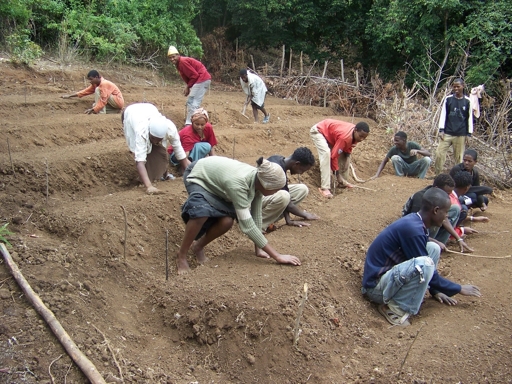
Planting trees has become one of the most widely promoted responses to climate change. As forests grow, they absorb carbon dioxide from the atmosphere while offering habitat for animals, plants and other organisms. The idea is straightforward: Expand forests, and the planet gains both climate mitigation and renewed biodiversity. Yet the land required to remove large quantities of carbon from the atmosphere may place these goals in tension. Efforts to plant forests or cultivate bioenergy crops with carbon capture need vast areas. In some places, those projects could displace ecosystems that already support rich biodiversity. A recent analysis suggests that roughly 13% of globally important biodiversity areas overlap with land that climate models designate for carbon-removal projects, reports John Cannon. The research, published in Nature Climate Change, examined five widely used models that outline pathways to limit global warming to 1.5° Celsius (2.7° Fahrenheit) above preindustrial levels. Ruben Prütz of the Potsdam Institute for Climate Impact Research and his colleagues mapped where these models anticipate land-intensive carbon dioxide removal, such as new forests or bioenergy plantations. They then compared those locations with important wildlife habitats. Previous work tended to analyze a single model and a narrower set of species. The new study expanded the scope to roughly 135,000 species, including fungi and invertebrates alongside plants and vertebrates. That broader view offers a more detailed sense of how climate mitigation plans might affect life on Earth. Avoiding biodiversity hotspots entirely would sharply limit the land available for carbon-removal projects. According to…This article was originally published on Mongabay
From Conservation news via This RSS Feed.