

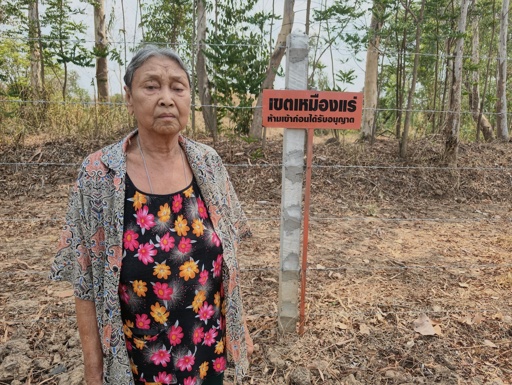
BAN KHAO MO, Thailand — On March 24, 2026, residents of this small community achieved a landmark legal victory. Ten years into a class action suit against the Chatree gold mine, the Bangkok Civil Court ruled in their favor, holding the company liable for environmental damage and health impacts. Four days later — and four years after first documenting the villagers’ struggle for justice — Mongabay returned to the community still living in the shadow of Thailand’s largest gold mine. The scene in the village was hardly celebratory. Chamnian Buakam stands in Ban Khao Mo village, in Thailand’s Phichit province, on March 28, 2026. The wall of the tailings dam is visible behind her in the distance. Image by Kannikar Petchkaew for Mongabay. Thailand’s mid-summer bore down with relentless, furnace-like heat. Villagers around the gold mine retreated to the sparse shade of trees, waiting in uneasy uncertainty. The court had ordered the company to compensate nearly 400 villagers found to have elevated levels of heavy metals in their blood. It must also shut down one of the storage facilities where it keeps mining waste, or tailings, long cited as a source of contamination, and bear the full cost of environmental rehabilitation — an effort one expert estimates could reach hundreds of millions of baht. The verdict is historic, the country’s first environmental class action following a 2015 legal amendment that enabled such lawsuits. Yet, even with the support of an NGO, only 40 villagers were able to make the five-hour…This article was originally published on Mongabay
From Conservation news via This RSS Feed.