

The Endangered Species Act is the bedrock law that protects threatened plants and animals in the United States, and in the 50 years since it became law it has prevented thousands of resource-extraction projects — oil drilling, mining, and logging — from moving forward. The law is difficult to circumvent, but it does contain a key loophole. If the federal government wants to move forward with a project even though it will threaten an endangered species, it can convene a committee known as the “God Squad” — the heads of six executive agencies including the Interior Department, the EPA, and the National Oceanic and Atmospheric Administration — to vote on whether to override the law.
The “God Squad” loophole is onerous by design, and it has only ever been invoked a few times. In 1978, the committee voted to deny an exemption for a small Tennessee dam; the following year, it voted in favor of a small Wyoming dam despite concerns about whooping crane habitat. The committee met again in 1992 to grant an exemption for a few thousand acres of timber land sales in Oregon, overruling threats to the spotted owl. That exemption was withdrawn after a lawsuit.
On Tuesday, the Trump administration convened the “God Squad” for the first time in more than three decades, seeking to grant a far larger exemption than the committee has ever considered. In a morning meeting that lasted around 15 minutes, Interior Secretary Doug Burgum and Secretary of Defense Pete Hegseth made the president’s case. “We cannot allow our own rules to weaken our standing and strengthen those who wish to harm us,” Hegseth said.
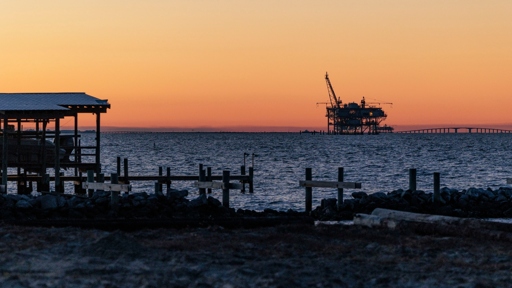
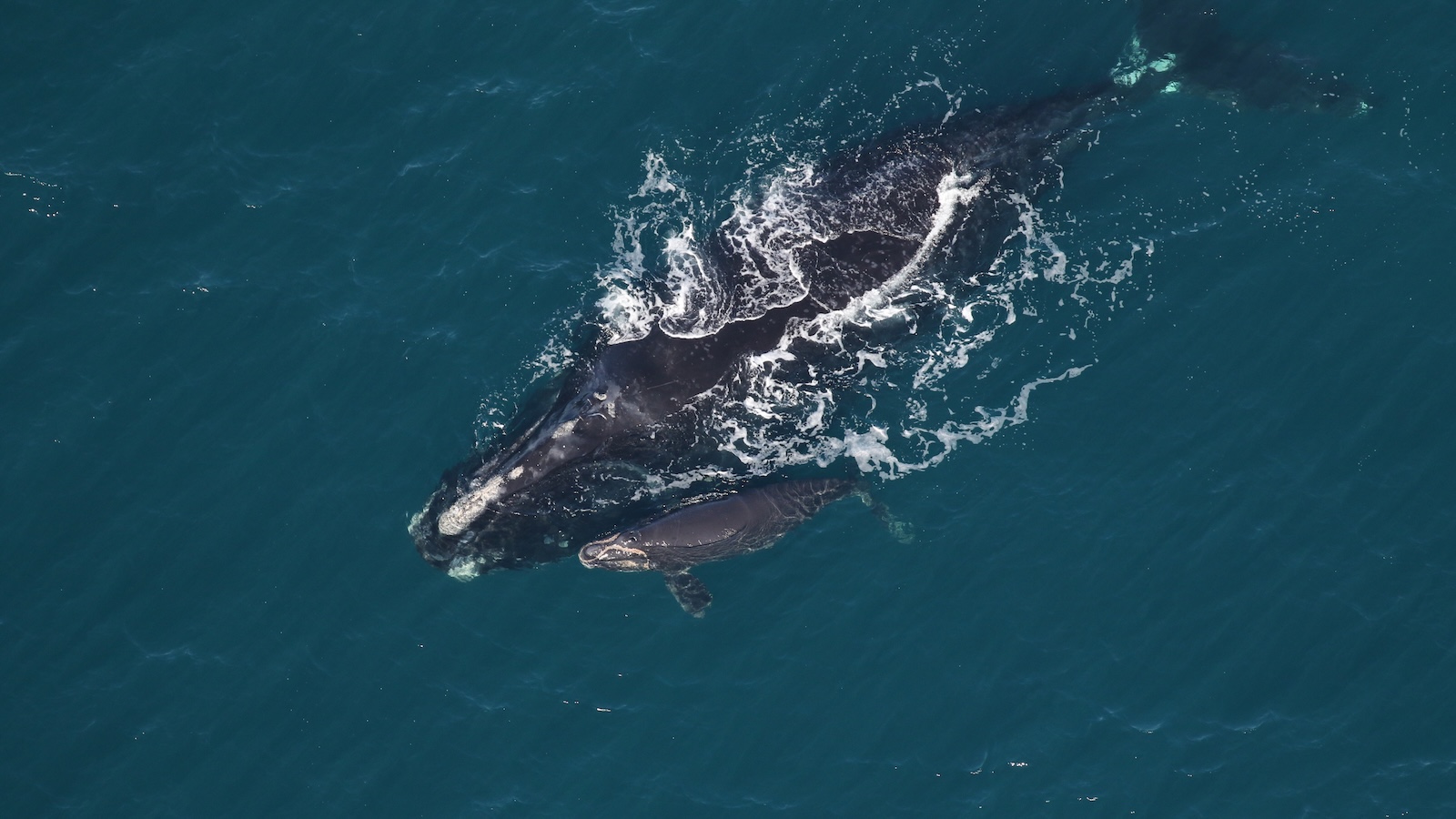
The committee then voted unanimously to waive all Endangered Species Act regulations on oil and gas extraction in the Gulf of Mexico. The administration has itself noted that oil and gas production in the Gulf “is likely to jeopardize the continued existence of the Rice’s whale.” Its analysis concluded that the BP Deepwater Horizon oil spill in 2010 killed 17 percent of the whale’s population and that vessel strikes could kill multiple whales per year. The decision to override the Endangered Species Act could cause the extinction of the Rice’s whale, a species that only lives in the northern Gulf of Mexico and which has only about 50 living members.
Read Next
Ocean speed limits protect endangered right whales. Trump wants to weaken them.
“It’s another example of this administration trying to figure out what the limits are on how far they can push the existing norms and authorities,” said Sally Jewell, who served as Interior Secretary under the Obama administration.
In granting the exemption, the committee cited a never-before-used section of the Endangered Species Act. The statute says in direct language that “the Committee shall grant an exemption for any agency action if the Secretary of Defense finds that such exemption is necessary for reasons of national security.”
As each member of the committee voiced their support for the waiver, they cited the national security implications of the U.S.-Israeli war in Iran, which Trump joined last month. The war has caused the closure of the Strait of Hormuz, blocked millions of barrels of oil from moving around the world, and raised fuel prices.
“Recent hostile actions by the Iranian terror regime highlights [sic] yet again why robust domestic oil production is a national security imperative,” said Hegseth during the committee meeting. “Production in the Gulf of America provides a vital buffer, insulating our economy and military from foreign instability and reducing the strategic leverage of our adversaries.”
The U.S. produces more oil than any other country, and the Gulf of Mexico only accounts for about 15 percent of the nation’s oil production, a far lower share than before the fracking boom and only around 2 percent of natural gas production. “Getting around environmental laws is not going to accelerate production and won’t solve any current challenge that our nation faces,” said Jewell. What’s more, the national security risk the administration cited would not exist were it not for Trump’s own decision to enter a conflict in Iran. “I just don’t view this as something that’s going to address any near-term national security crisis,” she said.
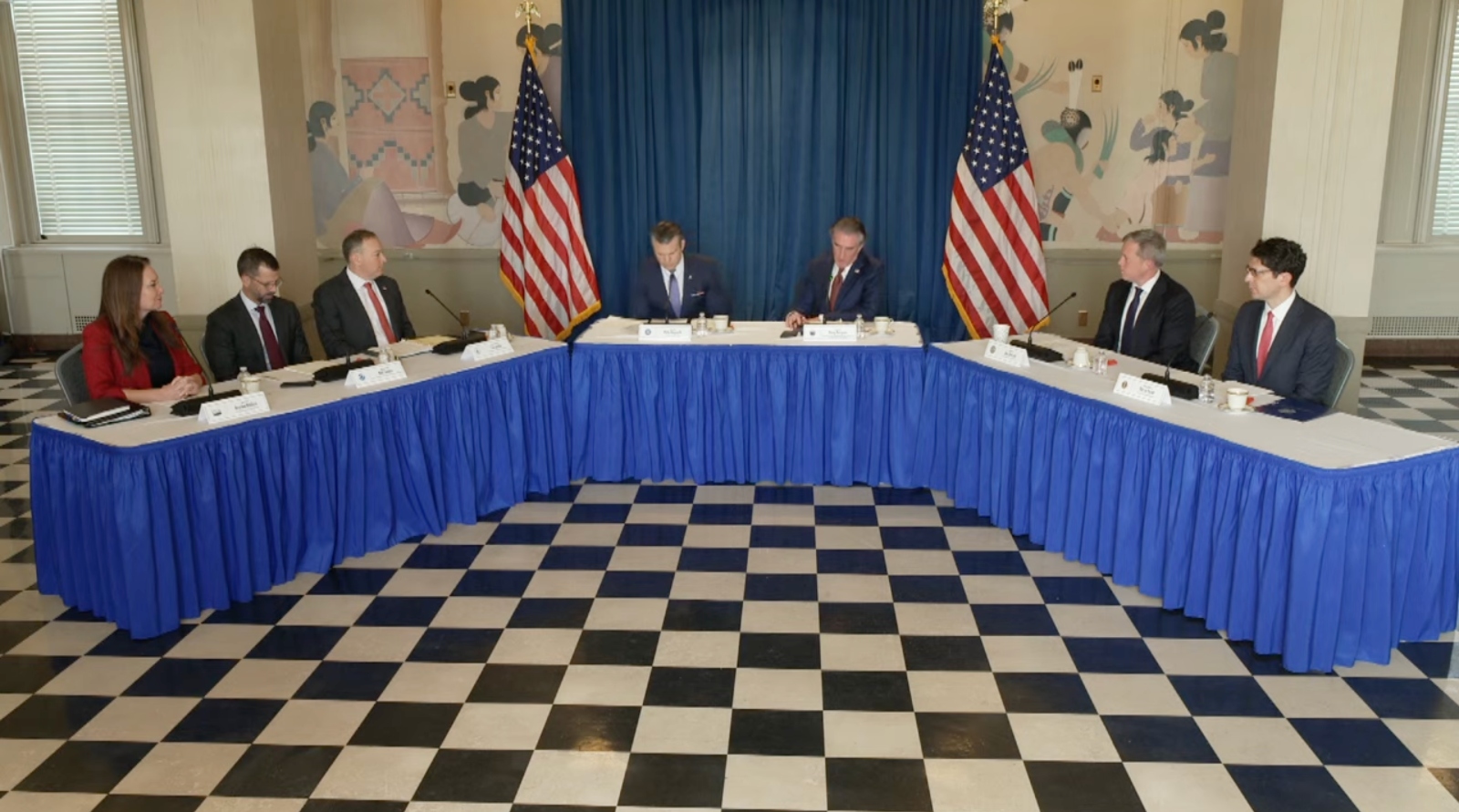
The Endangered Species Committee, or “God Squad”, meets in Washington, D.C., to discuss the Gulf of Mexico. Federal officials present included the Secretaries of Agriculture, Defense, and the Interior, and the head of the Environmental Protection Agency. Department of the Interior
What, then, does the Trump administration consider to be such a dire threat to national security? The supposed threat, in this case, appears to be litigation from environmental groups. “I feel like it’s a solution in search of a problem, but in the most harmful way,” Steve Mashuda, a lead attorney for oceans at the environmental organization Earthjustice, told Grist.
Last year, the administration concluded that oil producers in the Gulf could prevent harm to the whales by using new whale detection technology. Environmental groups sued over that conclusion, arguing that the technology is speculative and on its own would be insufficient. Limits on ship speed, the plaintiffs argued, would be the most effective way to prevent whale deaths.
The state of Louisiana, Chevron, and the American Petroleum Institute also sued the federal government over the proposed requirement to use whale-detection technology — calling it too stringent and arguing the Rice’s whale is not as threatened as the federal government thinks. According to federal disclosures, BP, which is pursuing a new offshore oil and gas platform called Kaskida in the Gulf of Mexico, lobbied the White House and three federal agencies on the issue at least once a quarter last year. (BP didn’t respond to a request for comment. The American Petroleum Institute said in a statement to Grist that it did not advocate for the God Squad meeting.) A federal court overruled the administration’s proposed requirement to use whale detection technology in January, and at the moment there is no active Endangered Species Act restriction on vessel speed in the offshore oil industry.
In the end, the Trump administration’s attempt to avoid litigation has already brought on litigation. Earthjustice and other environmental groups said on Tuesday afternoon they’re going to sue over the God Squad’s decision.
Editor’s note: Earthjustice is an advertiser with Grist. Advertisers have no role in Grist’s editorial decisions.
This story was originally published by Grist with the headline Trump’s ‘God Squad’ blocks endangered species protections in the Gulf of Mexico on Apr 1, 2026.
From Grist via This RSS Feed.