

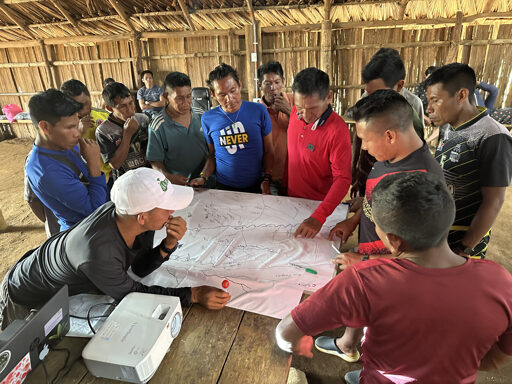
In 2025, botanists Rodrigo Cámara-Leret and Juan Carlos Copete embarked on a two-hour boat ride down the Vaupés River in the Colombian Amazon, followed by a two-hour hike to the village of Wacará, where about 140 Indigenous Cacua people live in relative isolation. They were aiming to study the medicinal plants used by this Indigenous group, one of the smallest in the country. But their plans changed as soon as they had their first meal in the village of thatch-roofed houses, when some children offered them a yellowish-brown fruit the Cacau called táam. Although the duo had been studying tropical plants for more than a decade, they had never seen that drop-shaped fruit before. Initially, they thought the fruit might be from a palm tree introduced to the region from nearby Brazil. However, as they spent more time with the community, they realized it was likely an entirely new species of palm that had not yet been described by scientists. “We knew most of the plants we would encounter in the forest, so when we saw that fruit, we were extremely shocked and surprised,” Cámara-Leret, a professor in tropical plant diversity and ethnobotany at the University of Zürich, tells Mongabay. Discovering new palm species in the Amazon is rare, even more so one that is tall-stemmed and used in the human diet like the táam. Palms are among the most well-known species of the region and were extensively studied by European naturalists who explored the jungle between the 16th and…This article was originally published on Mongabay
From Conservation news via This RSS Feed.