

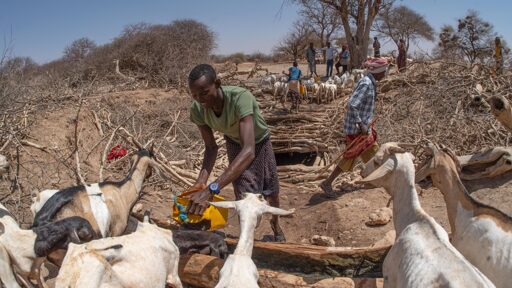
JIJIGA, Ethiopia — The land here used to speak. At dawn in Kebribeyah district, Somali Regional State, eastern Ethiopia, the plains stretch wide beneath a pale sky, with dusty shades of brown and yellow broken by thorny acacia trees and the slow movement of livestock across the horizon. For generations, pastoralists learned to read the landscape. The arrival of seasonal winds, the timing of the rains, and the alignment of stars all carried meaning. Mohamoud Sulub, a 50-year-old livestock herder, grew up relying on these signs in Guuyow village. They told him when to move his herd and when to stay. He knew his neighbors would, in hard times, understand them, too — and help when needed. That knowledge is now failing him. This year, Mohamoud says, there is simply nowhere to go. “The land is all drought,” he tells Mongabay. The father of six has spent his entire life herding animals across this arid landscape, as his father did before him. Today he keeps 40 goats and sheep, five cows and six camels. “When the rains are good, the land is fine and there is no need to move,” he says. “But during drought, we migrate.” In this photo taken Sunday, Sept. 3, 2017, a child attends to his malnourished calf in the Danan district of the Somali region of Ethiopia, which hasn’t seen significant amounts of rain in the past three years. Image by AP Photo/Elias Meseret. For generations, pastoralists like Mohamoud relied on mobility and strong social…This article was originally published on Mongabay
From Conservation news via This RSS Feed.