

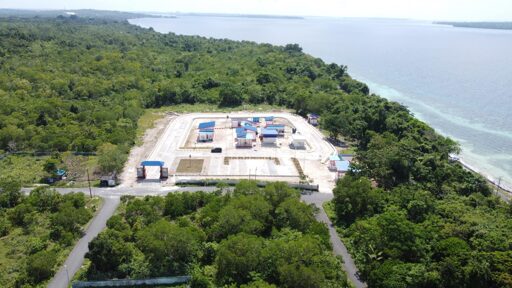
Indigenous leaders in Indonesia’s South Papua province have rejected a government plan to build a state-backed fishing settlement on their ancestral land, highlighting growing tensions between national development programs and customary land rights in the country’s easternmost island. Members of the Wiyagar tribe say the proposed Red and White Fishers’ Village (KNMP) in Sumuraman, a remote coastal area in Mappi district, is being advanced without proper consultation with traditional landowners. The project forms part of a nationwide initiative to develop hundreds of “modern” fishing settlements to boost marine productivity and coastal livelihoods. “We oppose the designation of Sumuraman as a Red and White Fishers’ Village because the people of the Wiyagar tribe do not work as fishers there,” Alowisius Boi, a coordinator of the coalition Solidarity for the Environment and People in South Papua, said as quoted by local media. A planned design for the fishing village initiative by the government. Image courtesy of the Indonesian Ministry of Marine Affairs and Fisheries. Local Indigenous organizations and youth groups say the government has treated Sumuraman as unoccupied land, even though it has been held under the customary tenure of Wiyagar families for generations. Community representatives say they weren’t informed when officials from the Ministry of Marine Affairs and Fisheries conducted surveys in early March, and they accuse authorities of meeting with people they don’t recognize as legitimate landowners. The dispute also reflects deeper complexities in Indonesian Papua, where decades of migrant influx from other parts of Indonesia, overlapping land claims, and…This article was originally published on Mongabay
From Conservation news via This RSS Feed.