

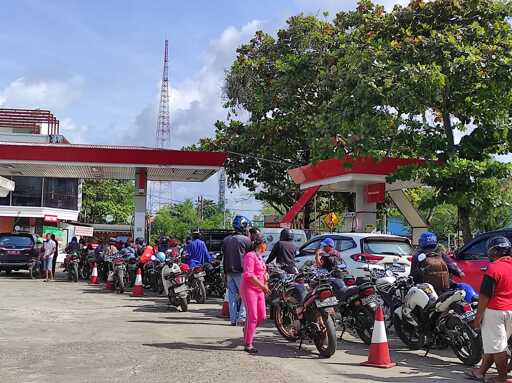
JAKARTA — As the U.S.-Israel war on Iran drives oil prices above $100 a barrel and disrupts global supply routes, Indonesia is once again confronting the costs of its dependence on fossil fuels — with growing calls not only to accelerate its renewable energy adoption, but also to make oil and gas companies help pay for the transition. The crisis is already testing the country’s energy system. Disruptions in the Strait of Hormuz, a chokepoint for global oil flows, have constrained supply, sending prices sharply higher from around $70 a barrel before the war began at the end of February. For Indonesia, the impact has been immediate. The country of 280 million people has been a net oil importer since 2003, and its economy remains heavily dependent on fossil fuels to power transport, industry and electricity. That dependence is now translating into rising fiscal pressure, currency risks and broader economic vulnerability. Yet the same shock is also sharpening calls to speed up the transition to renewable energy, even as policymakers move to secure more fossil fuel supplies and ramp up coal output at home. The ongoing global energy crisis, which the International Energy Agency (IEA) describes as the worst in recorded history, has laid bare the risks of Indonesia’s energy mix. The country consumes around 1.5 million barrels of oil per day but produces less than 700,000 barrels, leaving it highly reliant on imports. That exposure carries a direct cost. An analysis by the Institute for Development of Economics and…This article was originally published on Mongabay
From Conservation news via This RSS Feed.