

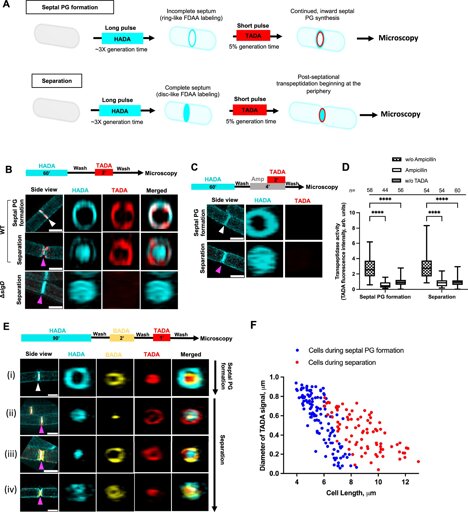
A Université de Montréal study has found a previously unknown mechanism in bacterial reproduction that could be attacked by future antibiotics. Bacteria reproduce by dividing into two: they form a wall, or septum, between the two future cells while remodeling the old cell walls so the so-called “daughter” cells can separate without bursting. Until now, scientists had believed that once the dividing wall was built, bacteria gradually break down the links between its two sides to allow the cells to separate in a process called cleavage.
From Biology News - Evolution, Cell theory, Gene theory, Microbiology, Biotechnology via This RSS Feed.
You must log in or # to comment.