

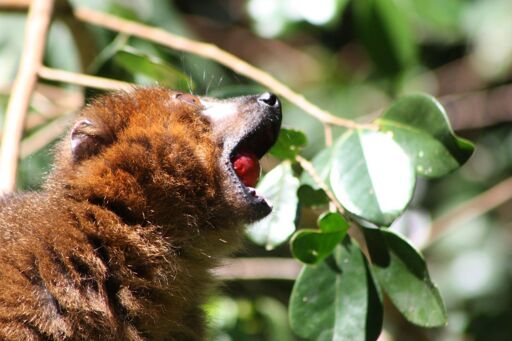
Madagascar is renowned for its lemurs, which are threatened due to hunting and deforestation. Restoring native forests to ensure their survival is critical, but once damaged, forests in Madagascar are vulnerable to takeover by invasive guava trees — whose seeds the lemurs themselves are helping to spread. When the delicious strawberry guavas (Psidium cattleyanum) are in fruit, lemurs will choose them over native fruit, says Amy Dunham, a biologist at Rice University in the U.S. On her last visit to Ranomafana National Park, in southeastern Madagascar, Dunham, who has been doing fieldwork there for more than 30 years, filmed an endangered Milne-Edwards’ sifaka (Propithecus edwardsi), a large lemur with a dark-brown and cream-colored coat, a black hairless face, and penetrating orange eyes. The sifaka was sitting in a thick guava patch munching on one of the ruby-red fruits. “For me, [the video] captures a big part of the picture,” Dunham says. “An endangered lemur can benefit from an invasive plant that is simultaneously undermining the long-term biodiversity and functioning of the forest.” Dunham and colleagues carried out a study in Ranomafana in 2024 that found that where strawberry guavas, originally from Brazil, had taken hold, they created thick, impenetrable patches in areas of forest that had been disturbed as far back as the 1930s. These thickets, which Dunham refers to as “monocultures,” drain key nutrients from the soil, suppress the growth of native plants, and strip away the diversity of insects and other invertebrates. The loss of insect diversity means…This article was originally published on Mongabay
From Conservation news via This RSS Feed.