

This editorial by Juan Salazar Vázquez originally appeared in the March 30, 2026 issue of La Jornada de Oriente, the Puebla edition of La Jornada, Mexico’s premier left wing daily newspaper. The views expressed in this article are the authors’ own and do not necessarily reflect those ofMexico Solidarity Mediaor theMexico Solidarity Project*.*
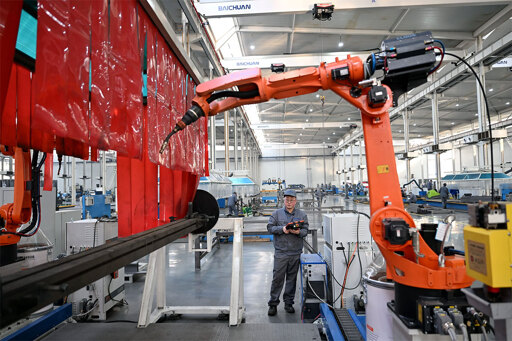
China’s reaction to Mexico’s new tariffs revealed a problem deeper than a simple trade dispute. The Chinese Ministry of Commerce accused Mexico of imposing barriers to trade and investment and warned that it reserves the right to retaliate. Beyond the diplomatic controversy, the episode raises a fundamental question: can Mexico maintain an effective tariff policy without its own industrial strategy?
The answer, so far, appears to be negative. The Mexican government has defended these measures as an attempt to level the playing field and protect domestic production. However, in practice, Mexican trade policy is not operating with a uniform approach. If the argument is to correct asymmetries and respond to practices that harm domestic industry, then it is clear that this logic is not applied with the same rigor to all trading partners. This reveals one of the main weaknesses of the current strategy: rather than responding to a national vision of development, it seems to selectively adjust to the pressures of the North American geopolitical environment.
For more than two decades, the trade relationship between Mexico and China has assumed a strategic role, but we must recognize its asymmetrical nature. The development models implemented by both countries have been completely different. While Mexico shifted to neoliberalism, implementing an export-led growth strategy, China combined its international integration with an active industrial policy, protection of key sectors, productive financing, and the development of technological capabilities. For this reason, it consolidated its position as Mexico’s second-largest trading partner, and its share of total Mexican trade has grown significantly since 2002.
Our country is trying to reposition itself as a reliable production platform for North America, but it is doing so without resolving a fundamental contradiction: it wants to reduce its dependence on Chinese imports without having yet built a sufficiently robust industrial base to replace them.
Trade between the two countries exhibits an uneven pattern: China exports manufactured goods, machinery, and high-tech products to Mexico, while Mexico exports primarily minerals, copper, lead, and some vehicles to China. This reflects a less favorable trade position for Mexico; in fact, its trade deficit with China has grown considerably.
Added to this is a crucial element: the relationship with China cannot be understood apart from the United States. Mexico does not trade with China in a vacuum; it does so within a regional structure dominated by the USMCA and the growing rivalry between Washington and Beijing. In this context, our country is trying to reposition itself as a reliable production platform for North America, but it is doing so without resolving a fundamental contradiction: it wants to reduce its dependence on Chinese imports without having yet built a sufficiently robust industrial base to replace them.
Therefore, tariffs can end up producing the opposite effect to what they promise. When there is no domestic supply capable of competitively replacing imported goods, the cost of the tariff doesn’t disappear: it is passed on. It is passed on to production chains, inputs, manufacturing costs, and ultimately, to the prices paid by businesses and consumers. Instead of triggering reindustrialization, the measure can become a mere revenue-generating mechanism or a penalty that makes domestic production more expensive.
In terms of investment, Chinese FDI in Mexico has increased since 2010, especially in manufacturing and auto parts; however, this investment has not fundamentally changed the pattern of trade integration, but rather largely replicates it. This is due to the limited capacity for support, guidance, and integration with Mexican industrial development. Nevertheless, China remains interested in increasing its FDI flows to our country. Mexico faces the challenge of better leveraging Chinese investment and strengthening its industrial capacity to overcome a structurally unequal trade relationship.
Currently, trade policy, within the framework of the USMCA, has aligned with the interests of our main trading partner, raising tariffs on Chinese goods. While the measure aims to reduce imports and promote import substitution, thereby increasing revenue, the underlying policy has thus far proven entirely ineffective, shifting the impact of the tariffs onto production costs and final prices.
The lesson is clear: without a policy aimed at increasing the productive investment rate to accompany the country’s reindustrialization process, trade barriers will be inefficient due to the rigidity of the productive structure.
-

Tariffs Without Industry: The Trap of Mexican Trade Policy Towards China
March 31, 2026March 31, 2026
Without a policy aimed at increasing the productive investment rate to accompany the country’s reindustrialization process, trade barriers will be inefficient due to the rigidity of the productive structure.
-
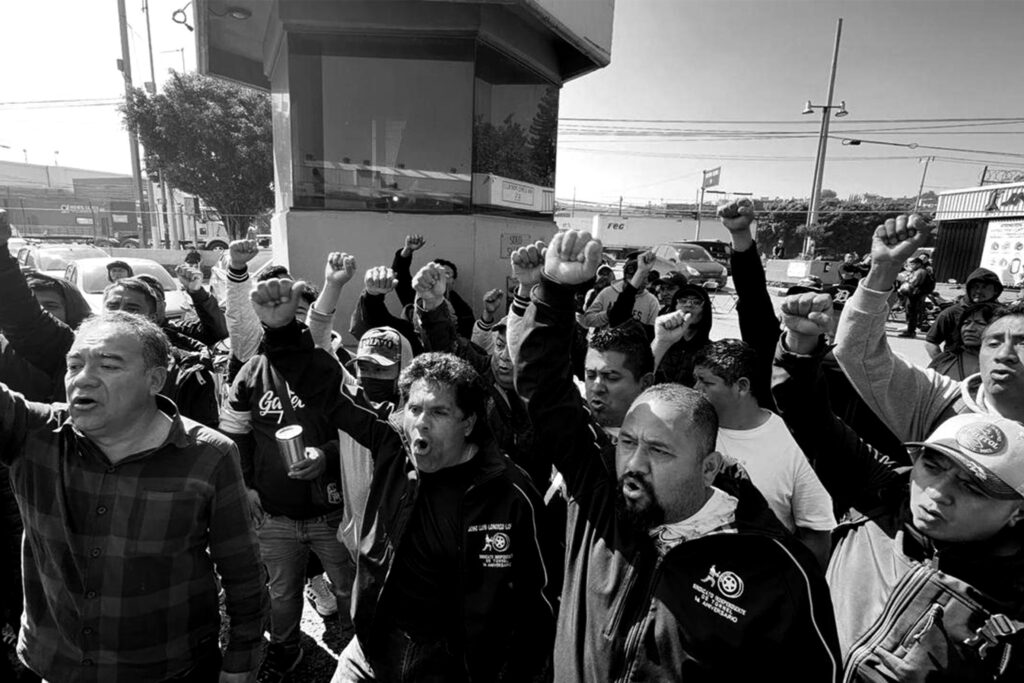
Second Suspect in Attack on Striking Tornel Workers Prosecuted
March 31, 2026
What began as a workers’ protest escalated into an armed attack against those protecting the movement, with four workers shot.
-

Nine Out of Ten Agricultural Workers in San Quintín, Baja California Don’t Have Social Security
March 31, 2026March 31, 2026
“The separation between landowners, agricultural companies, and transnational corporations, combined with the multiple levels of labor intermediation, creates an extremely complicated context for workers.”
The post Tariffs Without Industry: The Trap of Mexican Trade Policy Towards China appeared first on Mexico Solidarity Media.
From Mexico Solidarity Media via This RSS Feed.