


Trump’s illegal war against Iran is gripping Asia. Major disruptions to oil and gas and the resulting fuel shortages are acutely felt by India’s economy. This is especially true in terms of energy security and supply.
Asia feels the sting
The impact of what is unambiguously regarded as a ‘war of choice’ has reverberated beyond the Middle East. Since initial strikes on Iran were launched in late February, vessels have not been able to pass freely through the Strait of Hormuz. This crucial waterway has global significance for Asia, serving as the gateway for 20% of global Liquified Natural Gas (LNG) and 25% of seaborne oil.
India, Pakistan and Bangladesh have invoked emergency measures and sought alternative suppliers. Meanwhile, China has secured its energy needs by stockpiling reserves. It has also maintained access to Iranian and Russian oil despite US sanctions. Some of these, get this, have been paused to relieve the global energy market.
Evan Feigenbaum, vice president for studies at the Carnegie Endowment for International Peace, said in an interview that while China is unhappy about the situation in the Middle East, given its interest in regional stability, China was not unique in having these concerns. Moreover, the evolving situation is of deep importance for Asia.
He added that other Asian countries, like Japan, Taiwan, South Korea, Vietnam, Thailand, Pakistan, and Bangladesh, are even more vulnerable to energy market, supply chain disruptions. The US has also complicated energy security for countries like India through tariffs and sanctions, he said.
Feigenbaum said:
If you look at China’s neighbors, for example, Japan is even more dependent than China is on Middle East oil and gas. Taiwan is quite dependent, but without Japan’s level of reserves. Korea’s been playing around with price caps, and has less than two weeks of reserve. Vietnam is rationing jet fuel. They’re talking about work from home. Thailand has petrol controls. Pakistan and Bangladesh are closing schools
West is complacent so far
Eric Nutall told Bloomberg that we are facing the worst energy crisis of our lifetime. He forecasts that the oil disruption from war with Iran is projected to be worse than during the COVID pandemic, as the Strait of Hormuz remains closed, affecting the continent of Asia’s energy strategies significantly.
West has really yet to feel the true impact. When you read stories about product hoarding, you read about operators of gas stations being shot dead because they ran out of product in India and was unable to fill up cars. You hear about fishing boats in the East not being able to fill up because the economics of going out and fishing just don’t make any sense. We see the world through a western lens and yet this is a global crisis.
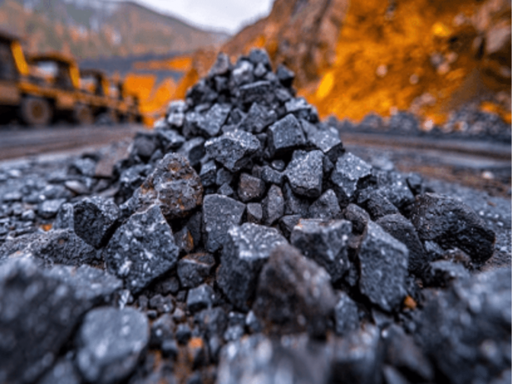
Coal to the rescue
Since no coal goes through the Strait of Hormuz, Asian countries, as reported by Financial Times are:
opening the tap on coal generation to help offset rising gas prices and supply risk.
Reports suggest that Japan will allow more coal-fired plants in capacity auctions. Meanwhile, South Korea is considering moving away from coal power, a move which could reshape energy usage patterns in Asia altogether.
India’s prime minister Modi said that adequate coal stocks were available amid rising summer demand in Parliament last week.
He added that:
Another major challenge of the war is that the summer season is beginning in India. In the coming days, with rising temperatures, the demand for electricity will increase. Currently, adequate coal stocks are available at all power plants across the country.
Modi is far from an innocent bystander. He is a member of the US-Israel alliance. Despite his proximity to Netanyahu, India has remained a ‘fence sitter.’ Furthermore, Modi refrains from openly condemning either side.
Still, the imperial boomerang unleashed by Trump’s latest war is felt beyond the Middle East, reaching even the world’s fastest-growing major economy—India—and emerging markets in Southeast Asia. It’s a scorched-earth policy by alternative means.
Featured image via the Canary
By The Canary
From Canary via This RSS Feed.