

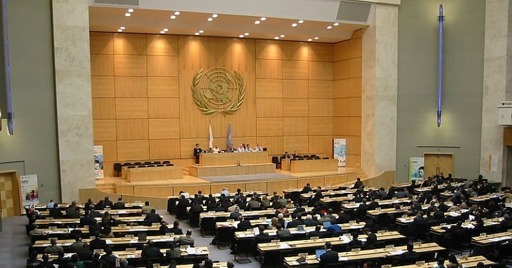

On 25 March 2026, the United Nations (UN) General Assembly voted to recognise the Transatlantic Slave Trade as the ‘gravest crime against humanity’. It was a move that many hoped would increase legitimacy for reparations and justice for the descendants and the countries affected by the trafficking of 12 to 17 million African people to the Americas between 1502 and 1888.
The resolution follows over three years of campaigning – particularly by Ghana, which brought the resolution forward – and has been supported by 123 countries. It calls for discussions around reparations, compensation and systemic reforms.
UN secretary general António Guterres said:
The Transatlantic Slave Trade was a crime against humanity that struck at the core of personhood, broke up families and devastated communities… I welcome the steps countries are taking to apologise for their role in the evil of slavery and to join an honest dialogue about its lasting consequences…
Controversy
The UN declaration has unsurprisingly sparked opposition around the world, particularly from former colonial powers in Western Europe and the United States, which took part in and benefitted from the Transatlantic Slave Trade.
Only three countries – the United States, Israel and Argentina – voted against the declaration. 52 other countries, most of them from the EU and Britain, abstained from the vote.
The U.S. Ambassador to the UN Economic and Social Council Dan Negrea argued:
The United States strongly objects to this cynical usage of historical wrongs as a leverage point in an attempt to reallocate modern resources to people and nations who are distantly related to the historical victims.
Negrea’s position deliberately ignores and downplays the longstanding impact that the slave trade has had on international relations, as well as the impoverishment, economic and political inequality that plagues many Black communities today.
Others argued that if reparations are being demanded of Western nations, then the same should be demanded of African states and societies that partook in selling Africans to Europeans:
Britain should not pay reparations.
We abstained from voting against paying reparations for the transatlantic slave trade in yet another egregious example of this Labour Government’s desperate attempt to curry favour.
The transatlantic slave trade was a deplorable and horrific… pic.twitter.com/yYCYunWzOM
— Ben Obese-Jecty MP (@BenObeseJecty) March 26, 2026
Within a class context, there is an argument for this. But such arguments are often made in order to deflect from Western/European accountability.
There are families across West Africa that profited from the slave trade, who probably should face their own accountability. But this will likely come after the process of decolonisation in these African societies is fully complete and the power of slave-trading families’ descendants and Western-backed puppet leaders is broken.
This would require Africa to be fully liberated from the Western sphere, which is economically and politically against the interests of the West.
The reality of British slavery
In the UK, the leader of the Conservative Party, Kemi Badenoch, argued that the UK should have voted against the resolution and described the UK position as an act of ‘cowardice’.
Russia, China and Iran vote with others to demand trillions in reparations from UK taxpayers…and the Labour government abstain!
Britain led the fight to end slavery.
Why didn’t Starmer’s representative vote against this? Ignorance…or cowardice?
We shouldn’t be paying for a… https://t.co/nWlzBxhb5w
— Kemi Badenoch (@KemiBadenoch) March 26, 2026
Her position reflects UK’s mainstream position on slavery, which overemphasises the country’s role in ending the slave trade rather than its role in perpetuating and expanding it.
This obscures the horrific reality of the UK’s role in the Transatlantic Slave Trade and its historical and economic impact, which continues to affect former British colonies today, particularly in the Caribbean.
In the 18th century, Britain was shipping more Africans than any other Western power. Plantations in the British Caribbean had become the most heavily enslaved societies on Earth at the time, resulting in the demographic transformation of huge portions of the Caribbean. To put this into perspective, between 1640 and 1807, Britain trafficked 3.4 million Africans across the Atlantic Ocean, representing the second-highest amount, just behind Portugal/Brazil.
Slavery was an important part of the British economy. Profits from plantations boosted capital accumulation, which helped to expand industrial production and accelerate the Industrial Revolution. Wealth generated from the slave trade was invested in businesses, banks, ports, institutions and entire communities. It was transformative on a scale very few understand.
The significance of the UN resolution
Many people believe that the UN resolution is part of a growing political trend that is calling for reparations and justice for countries and communities affected by the slave trade.
A few years ago, the Netherlands apologised for its role in slavery, which I reported on as part of a wider trend among European states to reposition their relations with formally colonised countries. As power slowly shifts to the Global South, the pressure and incentives to name and label slavery as a crime against humanity will grow.
Cynically, an argument could be made that the UN resolution is more about preserving the declining influence and legitimacy of the liberal world order. Countries that are products of the slave trade (particularly those in South America, the Caribbean and West Africa) increasingly choose to build deeper relations with China, India and Russia – powerful countries without the historical baggage and legacy of Western European barbarism and exploitation.
But Western countries still want to control the narrative around accountability. Ultimately, they also want to control the terms of any reparations, because they know that acknowledgment could easily spiral into calls to seize the very economic foundations that their modern economies have been built on.
Can the UN make any meaningful difference?
The question I have is whether this declaration will make any long-term meaningful difference that is tangible to African diaspora communities.
I am not alone in this. Professor Kehinde Andrews, a long-time opponent and critic of the UN, views the resolution as a distraction. He has reiterated his position that Western liberal institutions, like the UN, remain arms of imperialism that act in a more covert and ‘friendly’ way:
‘You left your mind in Africa if you think the UN is recognising slavery as a "crime against humanity’ in 2026’. New @makeitplainorg pod where I warn about the dangers of reparations when it comes from CARICOM, ADOS and big companies. Watch https://t.co/i9Y9W4qO5m pic.twitter.com/cWyelke4Eb
— Kehinde Andrews (@kehinde_andrews) March 28, 2026
Another issue is the fact that the UN does not have any power to enforce reparations or reparatory justice. The fact is that many former slave-trading nations – such as the US, France and the UK – sit on the security council of the UN and wield substantial influence over it. This includes veto powers that will always limit the extent to which the UN could act on issues like this.
However, supporters of the resolution argue that the UN still matters. The fact that the resolution has 123 countries supporting it, representing the majority of the world, serves as a compass for the direction the world is going in, particularly in terms of the the Global South’s relationship to the West.
This relationship is likely to become more tense with time. Countries have indicated their desire to correct historical crimes upon which Western countries have built themselves on. It is possible that this won’t end with the Transatlantic Slave Trade. Western crimes of colonialism and genocide could eventually follow.
Legitimacy in crisis
For Western countries, legitimacy is key to not being left behind. But an inability to face accountability and transform their relationship with the Global South could eventually put liberal institutions like the UN in crisis, if Global South countries start building their own international institutions.
From the West’s support of Israel’s genocide in Gaza to its inability to condemn US imperialism against Venezuela, Cuba and Iran, Western legitimacy is already in crisis. Combined with the inability of Western countries to accept the UN declaration of the Transatlantic Slave Trade as the gravest crime against humanity, this sends a message that, from 1502 to 2026, the West is still the same and unwilling to change and evolve.
From Canary via This RSS Feed.