

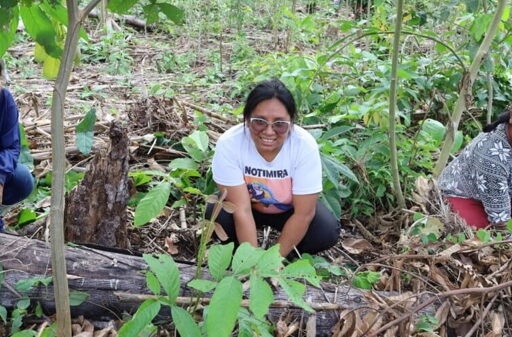
Kashiri, the Moon, saw the young woman through a window. The celestial body descended from the sky and found her eating soil molded into the shape of a tubercle. “What you are eating is mud, not yuca,” the root of the cassava plant. “I will let you taste the true yuca,” it said. In love with her, Kashiri handed a sacred seed and taught her how to plant it. This is the story that has survived through the tales of grandmothers and grandfathers of the Machiguenga people. Gabriela Loaiza Seri recalls the ancestral anecdote. The account speaks about the origin of crops in her village of San José de Koribeni, in Cusco, in southeastern Peru — the largest Indigenous Machiguenga community in the South American country. “The young woman learned how to plant yuca, magona potatoes, shonaki [an Indigenous name for a type of sweet corn root] and all the tubers we have always consumed,” she says. Since then, women have been responsible for these crops. This time-honored knowledge, however, is now facing increasing threats. The expansion of monocultures and intensive agriculture in Peru has put many of these native species at risk of disappearing, according to Loaiza Seri. To make matters worse, the introduction of new varieties and foreign crops has reduced the diversity of yucas that once secured food to Indigenous communities year-round. The arrival of external projects has also distanced the community from their chacras ( small, traditional farming plots). A member of the association Mujeres Emprendedoras…This article was originally published on Mongabay
From Conservation news via This RSS Feed.