

The US-Israeli war on Iran began over a month ago. The attacks by the US and Israel have killed over 2,000 Iranians, displaced tens of thousands, and targeted Iran’s civilian infrastructure like schools, hospitals, and recreation centers. Casualties from Iran’s retaliatory attacks have also been reported in the neighboring Gulf states and in Israel. But beyond the direct death and destruction, the war has had global impacts, causing a dramatic increase in the price of crude oil, effectively shaking up the entire economy.
The neighboring South Asia region has been the primary recipient of the knock-on impacts of the war due to the number of South Asian nationals within the Gulf countries and the Gulf being the primary exporters of fuel to the region.
There are over 21 million South Asians living and working in the Persian Gulf countries. Out of the over a dozen people killed in the region so far by Iranian retaliations, at least 10 are from the different South Asian countries. The violence and instability has prompted many to attempt to return home. But if large-scale return migration were to happen, it would disrupt the lives of millions in South Asian countries because, for most of these families, jobs in the Persian Gulf are their only source of income.
Apart from the impact on migrants, Iran’s pressure tactic to close off the Strait of Hormuz has also disrupted trade in energy and other commodities between the two regions, creating a major shortage of gas, petrol, and diesel in South Asia. This has already pushed prices up, forcing many countries to adopt emergency measures to control consumption such as shortened work weeks, suspension of school, and more. Those measures further disrupt domestic life and industrial production.
The energy crisis is also coming just as summer approaches in South Asia when the demand for energy typically rises. All the countries in the region are heavily dependent on imports of their basic energy resources, such as oil and gas, and have limited storage facilities.
The war is also expected to disrupt the supply of crucial fertilizers to the region as well as the export of various commodities from South Asian countries to West Asia, further disrupting economic activity.
India
Though Iran has declared it will allow Indian ships to pass through the Strait of Hormuz, the South Asian country’s fuel supply is still affected due to production disruptions.
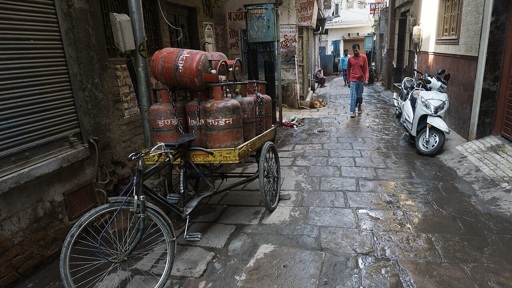
The shortages have forced the Indian government to initiate various rationing measures. Apart from cutting supplies to commercial enterprises and prioritizing domestic consumption, India also reintroduced Kerosene as an alternative to cooking gas for domestic use years after it was discontinued due to economic, environmental, and health reasons.
A large number of industries in the country are already suffering from the inadequate supply of commercial gas, causing partial closures of industries and unemployment for hundreds of thousands of people.
Hundreds of thousands of people who mostly rely on selling food and beverages on the streets in various cities have been forced to either shut their businesses due to the shortage of cooking gas or shift to wood or other highly polluting materials.
In order to keep the price of the petroleum products in check, the Indian government announced a cut in taxes last week. However, it is speculated that the cuts will not be enough to mitigate the effects of the global increase in prices, now crossing USD 115 per barrel, and the consumers will have to pay increased prices soon.
In addition, the fate of nearly nine million Indian migrants working or living in the Persian Gulf hangs in the balance. The majority of the migrants killed in Iranian retaliatory strikes in the Gulf region are Indian.
Sri Lanka
Sri Lanka was one of the first countries to introduce fuel rationing, given its high dependence on imports and lack of adequate storage facilities. It has already seen a 33% increase in fuel prices for domestic consumers since the beginning of the war.
Rising oil prices have increased the cost of public transportation and the price of other commodities as well.
Sri Lanka, located on the crucial maritime trade route is seeing congestion at its ports, delays, and the cancellation of some of its exports as well.
To mitigate the shortage of energy products, the government has now implemented an additional holiday in the week on Wednesday and is considering more such measures in the coming days.
Though Iran has offered to supply oil to the country, it has been unable to do so due to the shortage of its own vessels, and is now depending on India and China for transportation.
Over 650,000 Sri Lankans work in the Persian Gulf region.
Bangladesh
The Daily Star reported on Monday that the Bangladeshi government is considering various austerity and emergency measures to deal with the energy crisis in the country caused by the US-Israel war on Iran.
Bangladesh is already facing a shortage of fuel and long queues at oil stations with the growing cost of imports.
The proposed measures include shutting down schools and holding classes online as well as adding extra holidays in the week and work from home options.
Bangladesh has already issued restrictions on the usage of electricity by government offices.
Nearly five million Bangladeshi citizens live and work in the Persian Gulf region.
Pakistan
Pakistani officials claimed on Monday that beginning next month the country will have virtually zero availability of Liquified Natural Gas (LNG). LNG is used to produce nearly 20% of all electricity in the country.
Common Pakistanis are already facing a severe increase in the price of energy products due to the shortage in supply and expected to face even higher prices in the coming days.
Pakistan has raised the price of fuel to 332 Pakistani rupee per liter (USD 1.20).
The Pakistan government was one of the first governments in the region to implement emergency measures in early March, given the fact that more than 90% of its energy needs are fulfilled by imports from the Persian Gulf region.
It has announced severe austerity measures while shutting down schools and colleges and implementing a quota system for fuel distribution to curb consumption.
Over five million Pakistanis live and work in the Persian Gulf region.
Nepal
Nepal is also facing a shortage of cooking gas and oil due to the war on Iran. It has also seen both the increase in prices and the implementation of rationing.
Due to the expansion of the war in the region, thousands of Nepali citizens wishing to travel to West Asia in search of jobs are unable to do so while those already in the region are facing the grim situation of returning home to safety.
Nearly 1.2 million Nepalis live and work in the Persian Gulf and send remittances, which form a crucial part of the country’s GDP (nearly 25%).
The war has threatened the economic prospects of these migrants and millions of others depending on them at home.
The post South Asia faces severe economic crisis due to US-Israeli war on Iran appeared first on Peoples Dispatch.
From Peoples Dispatch via This RSS Feed.