

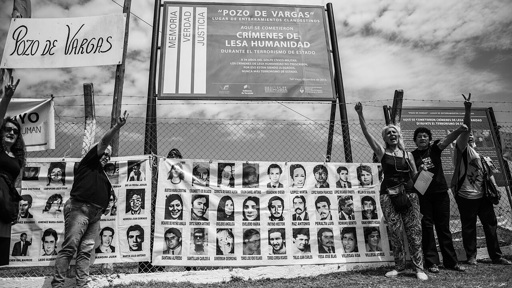
On March 24, Argentina remembered the beginning of the bloody military dictatorship that began 50 years ago in the South American country. The scars of the country’s most severe social trauma still largely shape its politics and past. Museums, historians, mothers of the disappeared, grandmothers of grandchildren stolen from their parents, unions, political parties, and many others fight every day to ensure that the crimes against humanity committed by the Argentine Army are not forgotten.
Words fail one when first confronted with the figures left in the wake of the so-called “National Reorganization Process”: 30,000 disappeared; 15,000 murdered; 8,500 arbitrarily imprisoned, including priests, nuns, the elderly, people with disabilities, women, and children; 1,000,000 involuntarily displaced and exiled within Argentina or to other countries; forced expropriation and illegal sale of many of the victims’ properties; imprisonment in concentration camps and the establishment of detention and torture sites in various parts of the country; countless cases of rape, beatings, dismemberment, electrocution, etc.; illegal adoption of more than 300 children born in captivity whose parents were murdered.
Rewriting history or rewriting memory?
Currently, Milei’s far-right government has sought to present and remember the history of the dictatorship in a different light. In a video released 50 years after the dictatorship began, Milei’s government appears to be attempting to “justify” the military’s actions in some way by calling for the “full story” to be told. The argument that the dictatorship in Argentina was necessary due to the alleged existence of left-wing terrorist groups that were throwing the country into chaos is not new. It was precisely the justification used by the military coup leaders of the 1970s and 1980s.
Now Milei has seized the opportunity to, once again, attack Kirchnerism, a political group that, according to the video released by the Executive, censored the stories of those who recounted events that did not align with a supposed Kirchnerist narrative and that of human rights organizations.
But Milei’s view of the dictatorship is not new. On previous occasions, he has claimed that there were not actually 30,000 disappeared, but rather 10,000 (which would still be a chilling number) and that the dictatorship did what it did to save Argentina from an alleged civil war. The data presented by far-right intellectuals has not been confirmed and directly contradicts the most serious national and international investigations that have been conducted.
A State that sought the destruction of the revolutionary left
It is important to remember, however, that the coup d’état was only one of the events that led to these crimes. Years earlier, the Argentine military had already seized power on several occasions to counter the growing influence of Radicalism and Peronism. And a few months before the coup d’état, nearly a thousand people were extrajudicially executed in Tucumán by the armed forces in an effort to destroy the forces of the Argentine revolutionary left.
This latter aspiration, so deeply ingrained in the dominant ideology of Argentine conservatism, served as a justification for the worst atrocities. Sometimes the facts, which are already infamous and shocking in themselves, can obscure the most important questions: Why did the military do what it did? How was it possible for them to annihilate thousands of people over several years? Did they act alone? What economic agenda did they promote while in power?
The answers to these questions reveal that behind the actions of the military, conservatives, a significant portion of the Catholic Church in Argentina, US intelligence agencies, and others, there was a specific objective: to destroy the revolutionary groups in Argentina.
An elderly Argentine activist, a survivor of torture under the military dictatorship, told me this several years ago. He asserted that the reason there is no significant revolutionary movement in Argentina is not because, as the Argentine right often claims, the desire for profound change has faded, but rather that the groups advocating for a change in the system were systematically massacred so that there would be no possibility of profound change in Argentina’s future (where the revolutionary left was very strong for much of the 20th century).
A machine for extermination
Following the coup, the Argentine state quickly became a well-oiled machine dedicated to carrying out the goal of destroying a generation of revolutionaries. Operations involving arrests, torture, mass killings, disappearances, the abduction of children, and the control of all state functions and the media, among other things, reveal a very well-thought-out and carefully planned strategy.
With the approval of the United States, through its Secretary of State, Henry Kissinger, the military dictatorship acted publicly against the population by controlling the media, through which it claimed that the corpses, the disappeared, and those captured had in fact been victims of leftist terrorist groups.
These claims persisted for a brief period of the dictatorship. It later became known that it was the military itself, along with allied paramilitary groups, who were kidnapping, torturing, raping, and committing other atrocities, although they did so without uniforms, posing as civilians, yet in full coordination with the army’s high command, who were aware of and ordered these human rights violations.
It was also claimed that those killed had fallen in combat against state forces. Dozens of bodies appeared in the streets alongside submachine guns and pistols. However, when the families who did manage to recover the bodies (tens of thousands of other families have still not been able to do so to this day) examined the corpses, they saw horrific signs of torture: faces without eyes, without testicles, without breasts, with nails torn out, and skin bruised from beatings.
Suspicions soon arose that would later be confirmed: after days of intense torture, intended to force the captives to reveal the names of their comrades (and thus restart the manhunt), they were extrajudicially executed and then dumped in the street alongside a weapon they never got to fire.
But the dictatorship was so vile and bloodthirsty that the strategy of leaving bodies in the streets seemed “impractical” to them. This is how methods of mass extermination were organized, such as the infamous “death flights,” in which detainees were loaded onto aircraft, drugged, and then thrown into the sea. Thousands of people drowned at sea, unable to move, due to a military dictatorship that did not hesitate for a second to put its entire infrastructure at the service of political extermination.
Business leaders and religious figures: allies and participants in the dictatorship
It is often assumed that the military acted alone in carrying out these acts. The names of Generals Videla, Massera, Agosti, Viola, Galtieri, and Bigone are usually the ones most frequently recalled. But the truth is that many other people were involved and enabled this genocidal project to operate with greater efficiency. Business leaders, professionals, religious figures, journalists, politicians, and others were part of the military dictatorship.
Among them was José Alfredo Martínez de Hoz, the dictatorship’s minister of economy, who implemented an economic program aimed at financial liberalization, massive foreign debt, and the beginning of the deindustrialization of the once-powerful national industry. Martínez de Hoz was the political representative of some of the country’s most important economic groups, particularly agro-exporters and banks (groups that remain, to this day, deeply interested in deindustrializing Argentina).
Adolfo Diz (President of the Central Bank) and Roberto Alemann also played a role in this regard; they were part of the government and served as trusted advisors to the IMF and major companies such as Ford Argentina, Technit, and Ledesma, some of which provided the military with lists of workers to be assassinated.
Catholic intellectuals and priests also collaborated. Jaime Perriaux actively collaborated by drafting legal frameworks that supported the military regime. Military Vicar Adolfo Tortolo legitimized the dictatorship’s criminal actions, as did Antonio Plaza, Archbishop of La Plata and a trusted confidant of the dictatorship. This was particularly significant given that within the Catholic Church some were disappeared and tortured, including several priests associated with Liberation Theology.
Some media outlets, such as Clarín, La Nación, and La Razón, supported the dictatorship at the beginning of its rule, when most of the crimes were committed. To this day, several critics of the dictatorship continue to point to these major media outlets as accomplices to the crimes, as they followed the same arguments as the dictatorship, even though it was evident that the official narrative was not consistent with the facts.
The “internal enemy”: the ideology of the dictatorship
However, a group of military officers seeking to annihilate a political group cared little or nothing for consistency. In the context of the Cold War, the United States promoted the doctrine among Latin American militaries that the greatest threat to their existence lay within their own borders. Hundreds of lieutenants, colonels, generals, and others were trained at the School of the Americas, a US military and ideological training center for military personnel. There, they were not only taught about the dangers of communist groups, their ideology, and their methods of political action, but also taught counterinsurgency techniques, including methods for torturing, extracting information, and instilling terror among the civilian population.
Thus, in all Latin American countries – except for Cuba – the media, the church, the state, and right-wing political parties promoted the notion that a bloody communist revolution would soon erupt across the continent, destroying society. Several media outlets, backed by US intelligence agencies, went so far as to claim, for example, that children would be snatched from their families in the event of a revolution, and it was even said – as ridiculous as it sounds now – that communists ate children. Furthermore, a significant portion of the Catholic Church, leveraging the immense ideological power it wields in the region, warned citizens against “the communist and atheist threat.”
Thus, anti-communism quickly fostered the idea of an “internal enemy” (a concept promoted by the US National Security Doctrine), which had to be annihilated by any means necessary if society was to be saved. A significant portion of Latin American societies took the bait (even to this day), and this allowed military dictatorships to have a certain legitimacy to commit the aforementioned crimes.
United and coordinated under Operation Condor, the various dictatorships that emerged throughout South America (at one point in the 1970s and 1980s, only two countries in the region were not under military dictatorship) shared information and acted in concert to annihilate an entire generation of young revolutionaries.
Brazil, Chile, Argentina, Uruguay, Paraguay, Peru, Ecuador, and Bolivia, to name a few, were countries where genuine processes of state terrorism were unleashed, and where the United States played a fundamental role in promoting these dictatorial processes and providing its support. And while some dictatorial regimes, such as those led by Velasco Alvarado in Peru or Rodríguez Lara in Ecuador, held sovereignist and redistributive positions, it was very clear that democracy was no longer an option in Latin America.
Anything that appeared to lean toward the left was labeled “communist,” and this gave the military apparent “carte blanche” to act against the very people they had sworn to defend. As a result, thousands of center-left and non-Marxist left-wing Latin Americans were also annihilated, persecuted, and exiled from their homeland. Likewise, anyone who criticized the dictatorial regimes was also threatened.
The effects
The impact of Argentina’s military dictatorship and those of other Latin American dictatorships remains a subject of study and debate. Few can deny the enormous impact they had on the democracies that subsequently reestablished themselves as best they could. The armed forces could not be ignored as one of the most important political actors in each country, often becoming the decisive force in a conflict.
At the same time, Latin American societies took a clear turn to the right, largely promoting traditional values as mechanisms of social cohesion. At the same time, dictatorships, such as Argentina’s, paved the way for the establishment of neoliberal economies in which collective political identities and the fragmentation of the social fabric became the foundations upon which the neoliberal civilizational project was built – a project that remains hegemonic in the region to this day.
Added to this is a radical political movement that never fully recovered. With the murder, torture, and disappearance of tens of thousands of young people, an entire generation of revolutionaries was lost – one that could no longer serve as a bridge between the past and the present, which has led to a historic weakening of Latin American revolutionary political groups. And while various sectors are striving to rebuild that political tradition, the consequences of terror and persecution continue to be part of a widespread political reality.
The end of the Argentine dictatorship
In a last-ditch effort to reestablish itself as a useful force for Argentine society, several military leaders opted for a foreign conflict. This is how the Malvinas War broke out, pitting the Argentine military dictatorship against Margaret Thatcher’s Britain over control of the Malvinas Islands (or Falkland Islands). After several weeks of fighting and thousands of deaths, the Argentine dictatorship was defeated.
The failure to reconquer the Malvinas deepened the dictatorship’s crisis of legitimacy. Many voices that had previously supported the military called for an end to the generals’ political control. Thus, on December 10, 1983, the dictatorship handed over the government to President-elect Raúl Alfonsín of the Radical Civic Union. The two chambers of the National Congress, provincial governments, municipalities, and a Supreme Court of Justice – which replaced the dictatorship’s court – were also reinstated.
But while the dictatorship did indeed come to an end, the scars of the crimes committed did not disappear. During the dictatorship, dozens of mothers of the disappeared demanded that the regime reveal the whereabouts of their children. This demand was soon joined by the search for children who were born in captivity and were abducted and raised by other families. Thus, after the end of the dictatorship, those struggles for truth and reparations continued.
Alfonsín immediately decreed the creation of a National Commission on the Disappearance of Persons, which investigated the dictatorship’s crimes. Although many of the murderers and torturers thought they would get away with it, they were tried and convicted of crimes against humanity, including members of the military junta. This set a legal precedent for the inclusion of the crime of enforced disappearance in the Penal Code, a move replicated by several UN member states.
However, the dictatorship had not been in vain. Several subsequent governments, such as that of the neoliberal Carlos Menem, granted pardons to individuals facing criminal charges, prompting the victims’ families to seek redress from international bodies. In 2004, Germany demanded the arrest of two of the dictatorship’s leaders, Jorge Rafael Videla and Emilio Massera, for the murder of German citizens. However, both men remained under house arrest for other crimes.
Memory as a battlefield
Every March 24, thousands of Argentines take to the streets to commemorate the atrocities and state terrorism perpetrated by the dictatorship. But they also come out to remember their loved ones (most of whom are still missing): their gestures, their lives, their struggles, their dreams, their aspirations for a different world, their smiles, their tears, and so on – none of these are forgotten. For Argentina, memory is one of the most important battlegrounds, and a large part of its future hangs in the balance.
One of those remembered was the great Argentine poet Juan Gelman, whose son and pregnant daughter-in-law were disappeared by the dictatorship. In a text, Gelman says to his disappeared granddaughter: “[Your mother] must have given birth alone, under the gaze of some doctor complicit with the military dictatorship. They then took you from her side, and you ended up – as was almost always the case – in the hands of a childless couple consisting of a military husband or a police officer, or a judge, or a journalist who was a friend of the police or the military. There was then a sinister waiting list for each concentration camp: those on the list hoped to keep the child stolen from the prisoners who gave birth and, with some exceptions, were murdered immediately afterward.”
But there is hope. It is real. It moves crowds. Gelman found his granddaughter. Her name is Macarena, and she resembles her missing parents – just like Argentina itself, which, if you look closely, bears the face of all the disappeared.
The post How the Argentine dictatorship annihilated a generation of revolutionaries appeared first on Peoples Dispatch.
From Peoples Dispatch via This RSS Feed.