

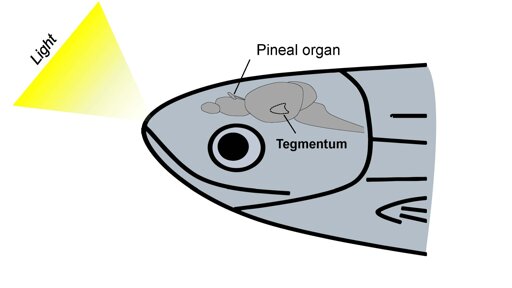
Using zebrafish, researchers from Osaka Metropolitan University (OMU) have identified the tegmentum region in the fish midbrain as the area where light input from both the fish’s eyes and the pineal organ—the “third eye”—is integrated. Their findings, published in the journal Proceedings of the National Academy of Sciences, suggest that fish use the integrated light signals in this region to swim up or down in response to differences in the wavelength of light.
From Biology News - Evolution, Cell theory, Gene theory, Microbiology, Biotechnology via This RSS Feed.
You must log in or # to comment.