

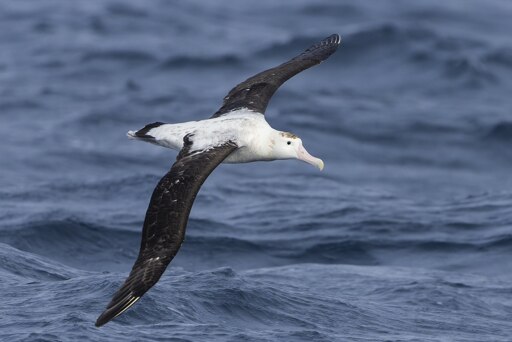
Last week, governments, conservationists and civil society from around the world gathered in Brazil for the 15th Conference of the Parties to the Convention on Migratory Species (CMS-15). In a rare moment of unity, they formally established something scientists have long understood but never before mapped at a global scale: marine flyways. This decision may sound technical, but it represents one of the most important shifts in ocean conservation in a generation. For decades, we have celebrated the great migrations of land birds like cranes sweeping across continents and swallows stitching hemispheres together, but far offshore, another story has been unfolding, largely unnoticed. Seabirds have been navigating vast, predictable highways across the open ocean, linking nations, ecosystems and hemispheres in ways we are only now beginning to understand. At BirdLife International, our latest research revealed six major marine flyways used by more than 150 migratory seabird species spanning the waters of 54 countries. These routes are not abstract lines on a map, they are living, breathing pathways traveled by albatrosses – the largest of the seabirds – to storm petrels, the smallest – and many in between. The Arctic tern, the world champion of migration, travels almost 100,000 kilometers (over 62,000 miles) a year along these ocean highways. A puffin ringed on Skomer Island in June may be feeding off the coast of Canada by winter. Despite their resilience and astonishing navigational feats, 42% of these species are globally threatened, more than half are declining, and the ocean is changing…This article was originally published on Mongabay
From Conservation news via This RSS Feed.