

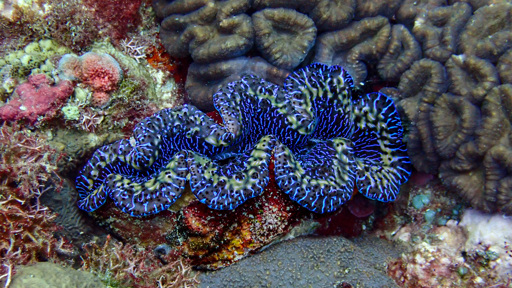
For coastal Indigenous communities in American Samoa, giant clams are deeply rooted in fa‘a Sāmoa (the Samoan way of life) and local food systems. According to the findings of a study published in PeerJ, it is village-based protections like fa‘asao (fishery closures) that have helped conserve giant clams lying in the islands’ shallow water coral reefs. The authors found that the highest clam densities and species are located in remote sites and areas under traditional village enforcement, outperforming federally designated no-take zones on the most populated island. The authors examined giant clam population trends, clam densities and distributions, and species composition across six islands — Tutuila, Aunuʻu, Ofu, Olosega, Taʻū and Muliāva — from 1994/5 to surveys conducted between 2022-24. While the highly populated island of Tutuila had the lowest clam densities with 83.5 individuals per hectare (33.8 per acre), remote islands like Taʻū and Muliāva showed higher densities up to 812 to 1,166 per hectare (328 to 471 per acre). On Tutuila, which had multiple types of management zones, subsistence and remote sites had the highest densities of giant clams, followed by remote areas, then village protected areas. Federal no-take sites held the lowest mean density of clams overall on the island. “By restoring local stewardship, cultural accountability, and respect for customary marine tenure values, community-led systems like fa‘asao have strengthened marine ecosystem conservation through village-based fishery closures,” Dimary Ulberg, an Indigenous Samoan and program manager of the Community-based Fisheries Management Program (CBFMP) at the Department of Marine and…This article was originally published on Mongabay
From Conservation news via This RSS Feed.