

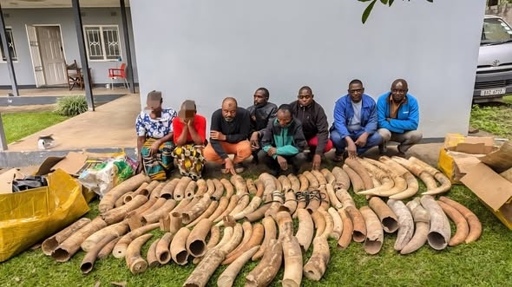
On March 9, wildlife authorities in Zambia arrested 10 people in possession of 550 kilograms (1,212 pounds) of ivory, according to the U.K.-based Environmental Investigation Agency (EIA), which provided intelligence that led to the arrests. EIA said the case highlights the impact that international cooperation can have in the fight against the illegal trade of wildlife. In a Mar. 19 statement, the Zambian Department of National Parks and Wildlife (DNPW) said police raided several locations in the capital, Lusaka, leading to the arrest of members of a cross-border wildlife crime syndicate, including a foreign national, who is believed to be the buyer of the ivory. “Notably, some of the apprehended suspects are repeat offenders who have previously been convicted for wildlife-related crimes, highlighting the persistent challenge posed by illegal wildlife trafficking networks,” DNPW said in a statement. The suspects have been charged with unlawful possession of a prescribed trophy but have not yet appeared before a court. In an email, the EIA’s executive director, Mary Rice, told Mongabay that governments are becoming more receptive to collaborating closely with nongovernmental agencies such as EIA. “There are more examples of embedded partnerships where NGOs work directly with a mandated authority to tackle illegal wildlife trade.” These growing partnerships, which in some cases include financial support, have helped disrupt trafficking networks and secure convictions, she said. She highlighted a three-year collaboration involving EIA, Interpol, China Customs, Tanzania, Mozambique and Nigeria. In May 2017, the group busted the Shuidong ivory smuggling network, one of…This article was originally published on Mongabay
From Conservation news via This RSS Feed.
The number of organisations that play a role world wide is so big I rarely notice twice the same. It’s beautiful in resilence but so tought to find your way around. To me it is similar to biologist searching for “such lisard” in the amazon. They estimate the total population from their number of encounters and recatch since they can get a global view of all.
