


By FABIO BOSCO
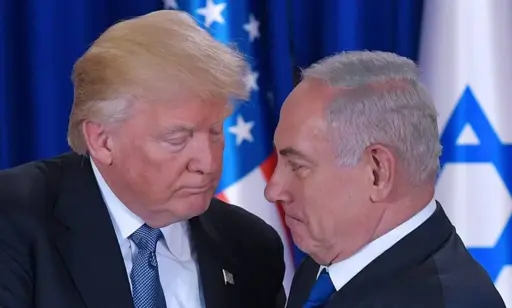
Twenty-five days after the start of the U.S.-Israeli military aggression against Iran and Lebanon, President Trump has found no easy solutions to overcome the international oil crisis and Iran’s surprising military strategy.
On Sunday, March 22, Trump made statements indicating negotiations to end the war and a five-day postponement of attacks on Iranian power plants. The aim of these statements was to prevent a runaway rise in the price of oil and to buy time to decide next steps—whether to end the war or to escalate the aggression.
In reality, Iran’s tactic of attacking Arab countries hosting U.S. bases—all of which are major oil and gas producers—and blocking the Strait of Hormuz is currently prevailing over the overwhelming military superiority of the United States and Israel. The prospects for a negotiated ceasefire are very slim. Trump presented Iran with a list of demands amounting to total surrender, which does not correspond to the current state of the conflict.
Trump wants nothing less than the complete end of Iran’s nuclear and ballistic missile programs, an end to support for allies in the region such as Hezbollah, Hamas, the Iraqi Hashd Shaabi, and the Yemeni Ansar Allah (better known as the Houthis), as well as the unrestricted opening of the Strait of Hormuz. All this in exchange for a ceasefire and some relief from the heavy imperialist economic sanctions. On the other hand, the Iranian regime, strengthened by the international energy crisis which it currently controls, demands just war reparations for all the deaths and destruction caused by the aggression of the United States and its Zionist acolytes, as well as an end to the criminal economic sanctions, and guarantees that the United States and Israel will not attack the country again, which requires the closure of U.S. bases throughout the Middle East.
The negotiations are being conducted through intermediaries: the governments of Pakistan, Turkey, Egypt, and Oman. But there are no clear signs that they can bear fruit in the short term without resulting in a defeat for one of the sides.
Alternatively, Trump is awaiting the arrival of a naval reinforcement with 2000 Marines scheduled for this Friday (March 27). And in this way, he could possibly attempt a ground invasion of the strategic island of Kharg, the main terminal for Iranian oil exports, or of other islands and territories around the Strait of Hormuz. He could also attempt the risky deployment of military commandos to Isfahan in search of the 404 kg of enriched uranium whose whereabouts are unknown, but which is likely to be in the city’s underground facilities.
However, this gamble on escalating military aggression is very risky, as Iran has demonstrated that it can not only strike the region’s main oil and gas production centers but also launch missiles against less-protected Israeli targets, as occurred in the cities of Dimona and Arad in the Naqab Desert, or even targets 4000 km away, such as the British base at Diego Garcia in the middle of the Indian Ocean. There is still conflicting information regarding the sinking of a U.S. battleship in the Indian Ocean or the downing of a modern, U.S.-made F-35 aircraft in the skies over Tehran, which would be a major blow to the cowardly aerial aggression of Trump and Netanyahu.
Israel continues territorial expansion and the genocide in Palestine
For the State of Israel, this war has so far borne some fruit. On the one hand, the genocide and ethnic cleansing being carried out against the Palestinian people in Gaza and the West Bank continue at full speed, supported by Donald Trump’s “Peace Plan” and the smokescreen provided by the aggression against Iran.
Furthermore, the Zionists are planning territorial expansion in southern Lebanon and Syria. In Lebanon, they have already killed more than a thousand Lebanese and displaced a million people, in addition to the destruction of neighborhoods and villages in the south of the country, in the capital Beirut, and in the Bekaa Valley.
Their plan is to occupy Lebanese territory up to the Litani River and, ultimately, continue on to Beirut. They are counting on the inaction of the Lebanese government, which limits itself to calling for negotiations with the aggressor, while also threatening to crack down on the Lebanese resistance, instead of calling on the Lebanese people to confront the Israeli invasion with arms in hand.
In Syria, the Israeli plan is to occupy the south of the country, from the Golan Heights to the province of Sweida, passing through the provinces of Quneitra and Daraa. The Syrian government is banking on diplomatic aid from its Turkish allies and the Arab League, whose support has failed to halt the Zionists’ steady advances. Meanwhile, it is negotiating with Putin for the extradition of Bashar al-Assad and the recovery of part of the hundreds of billions of dollars he embezzled, in exchange for Russia being allowed to maintain its bases in Tartus and Hmeimim.
It is clear that to carry out this plan for a Greater Israel, the Zionists depend on the military, political, diplomatic, and financial support of U.S. imperialism, and on the traditional international complicity of the 62 countries denounced by the UN Special Rapporteur on the Palestinian territories, Francesca Albanese.
Russian and Chinese Imperialist Opportunism
Russian imperialism, one of the main beneficiaries of the war, maintains its role as a major oil exporter to the Zionist genocide machine. In addition, it is negotiating with the Trump administration to halt the supply of logistical information to Iran in exchange for the United States halting the supply of logistical information to Ukraine. However, this benefit is limited because more than 40% of Russia’s oil and gas production capacity has been reduced as Ukraine has intensified drone strikes on its reservoirs and port terminals.
Chinese imperialism is already becoming another beneficiary of the war. Iranian oil continues to flow to its refineries, and its extensive strategic reserves guarantee, for now, the functioning of the economy. At the same time, it is consolidating its energy transition policy to avoid dependence on fossil fuels, and it benefits from the loss of credibility of U.S. imperialism, presenting itself as a “more predictable and reliable” imperialism (though it remains imperialism).
The Iranian people: against imperialist aggression and against the dictatorship
The Iranian people face a very difficult situation. On the one hand, the death toll from imperialist aggression has already surpassed two thousand, in addition to the widespread destruction of schools, hospitals, the pharmaceutical industry, oil reservoirs, and gas production and distribution centers, which threatens the survival of the population. On the other hand, the dictatorship executed three political prisoners who participated three months ago in a wave of popular protests.
The extent of the destruction is so great that even the son of the former Shah, Reza Pahlavi, criticized the bombing of his former residence in northern Tehran. For this man, his former palace is far more important than the lives of the two thousand Iranians killed, or the ten million residents of Tehran suffering from acid rain, or even the 175 victims of the bombing of a school, most of whom are girls aged seven to 12.
Reza Pahlavi supports the military aggression against Iran, and for this reason, the monarchist forces he leads are losing credibility among the population both inside and outside the country. On the other hand, the social base of the Iranian dictatorship is being galvanized and strengthened by the events in defense of the country.
The working-class and popular sectors opposed to the dictatorship are already opposing the criminal imperialist attacks and understand that an end to the aggression is necessary to resume their struggle for democratic freedoms and living conditions.
Take to the streets against imperialism!
For the PSTUB and the International Workers’ League (Fourth International), the military defeat of the United States and Israel will represent a step forward for the struggle of the Iranian people and all Arab peoples. This will also demonstrate that not even the most powerful nations are invincible. For this reason, all workers and oppressed people of the world must stand on the side of the military victory of the Iranian regime, Hezbollah, and the Palestinian resistance against the criminal U.S. and Israeli aggression.
But this in no way implies political support for the Iranian dictatorship, or for the so-called “axis of resistance.” On the contrary, the Iranian regime could, at any moment, strike a deal with imperialist and Zionist forces to ensure its survival, abandoning the Palestinian and Lebanese resistance, just as it did in October 2023 and 2024, respectively, amid the genocide in Gaza and the massacres in Lebanon.
Therefore, we cannot place any political trust in the Iranian dictatorship; rather, we must demand the release of political prisoners, arms for the people to confront a potential imperialist ground invasion, as well as wage increases and the distribution of food to the entire population—particularly the one million displaced people—to address the food shortage.
In any case, it is essential that the working class and youth in all countries take to the streets to defeat imperialist aggression and in solidarity with the Palestinian, Lebanese, and Iranian peoples. This weekend we have the “No Kings” protest on March 28 in the United States, and Palestinian Land Day around the world; these are opportune moments to express workers’ and popular support for the oppressed peoples against imperialism.
The post 25 days since attacks began on Iran: Take to the streets to defeat Trump and Israel! first appeared on Workers’ Voice/La Voz de los Trabajadores.
From Workers’ Voice/La Voz de los Trabajadores via This RSS Feed.