

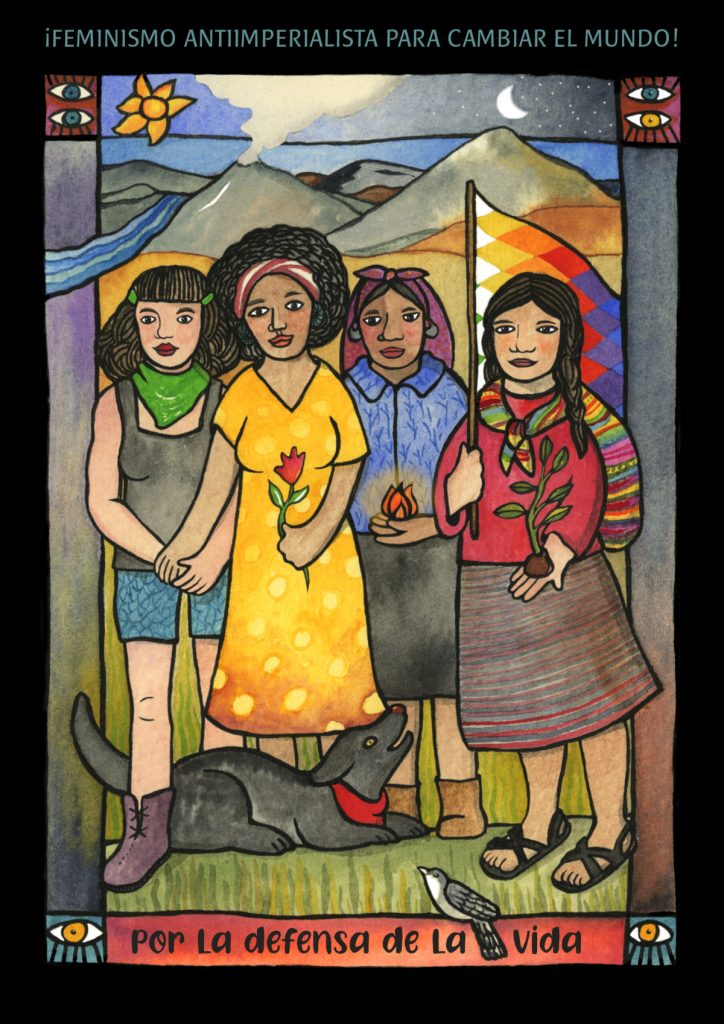
Paulina Veloso (Chile), Untitled, 2021. Available at capiremov.org.
Greetings from the Nuestra América desk of Tricontinental: Institute for Social Research.
This March 8th, a day in which the world honors the working woman, we pay tribute to the anti-imperialist women of our continent. With their body-territories, their intellect, and their example, they are writing the most dignified pages of the contemporary history of Nuestra América.
We are moving through a stage marked by Trump’s aggression—a deepening of hybrid warfare—and a neocolonial war deployed through financial impunity and voracious extractivism. The advance of the far-right in the region is no coincidence; it seeks to impose a model of plunder where the weight of debt strangles the peoples’ sovereignty. In the face of resistance to direct invasion and the silent war of Unilateral Coercive Measures (UCMs) against Cuba and Venezuela, popular feminism emerges not only as a protest but as the backbone of survival and dignity.
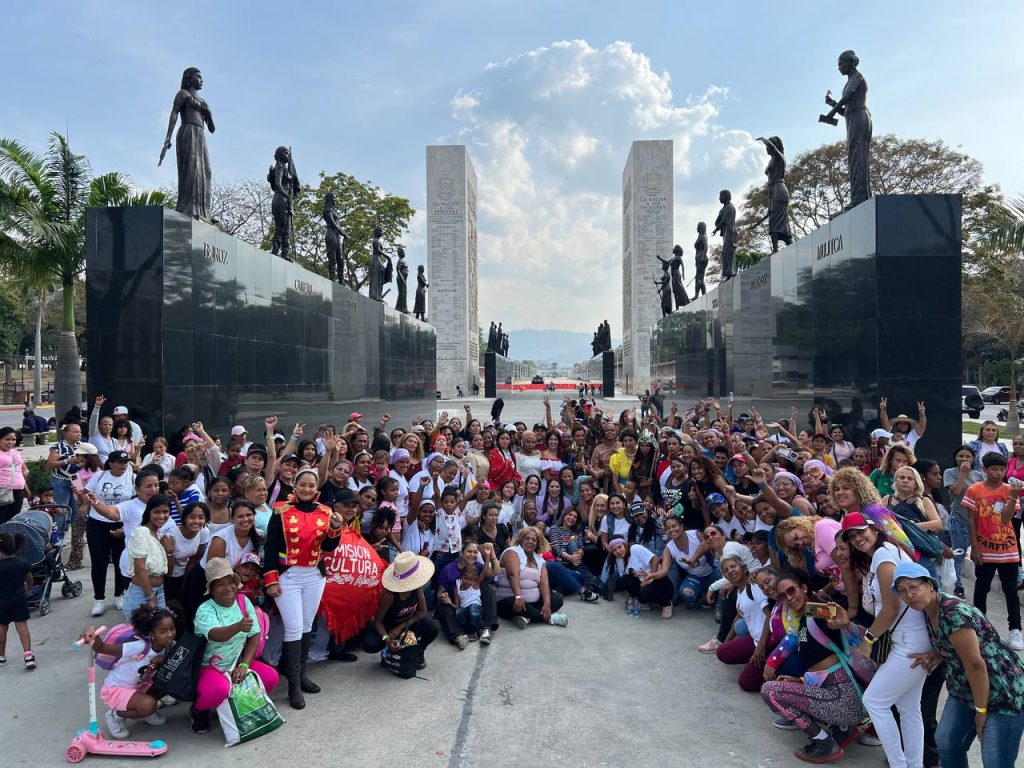
Women at the Monument for the Heroines of Resistance and Independence, Caracas. 2025 (Prensa MinMujer).
-
The 3 Lessons of Trump’s Aggression and the Neocolonial War in Latin America
The recent history of Nuestra América, marked by the shadow of the Monroe Doctrine and its update under the “Trump Corollary”—which persists as State logic in Washington—leaves us with three fundamental lessons regarding the nature of the current war against sovereignty.
1. The Woman’s Body as the First Territory of Defense
The attack of this past January 3rd against Venezuela was not just a military incursion; it was an affront to the dignity of a people that has decided to be free. On that day, 12 women gave their lives in combat. Nine of them were soldiers, members of the Presidential Honor Guard.
Imperialism understands that to break a nation, it must break the will of those who sustain the social fabric. In hybrid warfare, the woman is not a passive victim but a combatant cadre who reorganizes the collective will in every commune and every territory.
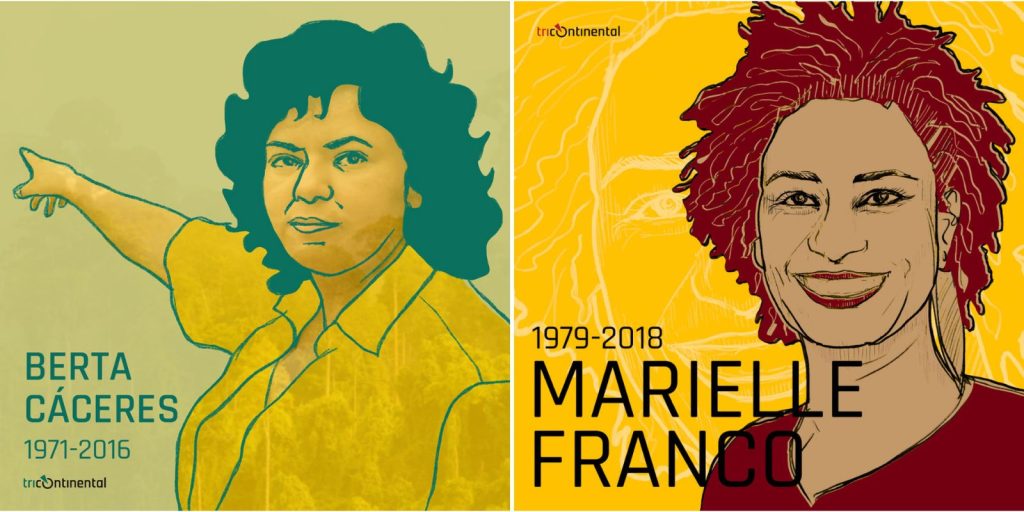
This lesson is intertwined with the “sowing” of Berta Cáceres in Honduras. A decade ago, the extractivist elite believed that by assassinating Berta, they would extinguish the voice of the Lenca people. They did not understand that her body, like those of the Venezuelan female militia (a component of the Bolivarian National Armed Force) and communards, represents resistance against dams and transnational capital.
The illegal detention of social activist Cilia Flores is yet another attempt to kidnap this symbol of dignity and political resistance. Illegally detained in the United States, Cilia Flores is a renowned social and political activist. She was the lawyer for the officers who rose up during the military insurrections of 1992, including Commander Hugo Chávez. On this day, women of the world call for her release and return to Venezuela.
2. The Resistance Economy is Feminine
In Cuba, the “silent war” of UCMs has taken the form of an unprecedented energy siege. By preventing the arrival of fuel, Washington seeks to transform daily life into a hell of scarcity. However, on the island, resistance has the face of a woman. It is they who, through popular organization and community bonds, invent daily solutions to sustain life in the face of the blockade.
This resistance economy does not seek profit, but rather the reproduction of life. While the international financial system uses debt to discipline nations, Cuban and Venezuelan women oppose it with an economy of collective care. In Venezuela, 80% of the leaders in communes and communal councils are women. They decide, plan, and execute the projects that keep the social structure afloat under the blockade. The lesson is clear: socialism in Nuestra América survives because women have transformed the private sphere into a space for political management and economic resistance against imperialist aggression.
3. Solidarity and Peace as People’s Diplomacy
The recent action by Claudia Sheinbaum’s government in Mexico, sending ships with 1,200 tons of aid to Cuba, breaks the logic of financial submission. “Sorority” is not just an interpersonal concept, but an international political category.
We also see this in the mobilization of popular organizations that, defying external pressures, coordinate the delivery of aid and mutual support between besieged nations. March 21st, saw the arrival of the Nuestra América Convoy, organized by various movements and popular organizations. This grassroots solidarity is what allows Cuba to resist and Venezuela to deepen its communal model.
When Mexico defies Washington’s pressure to give aid to the island, and when women organize themselves into feminist brigades like the “Cilia Flores Internationalist Brigade for Peace,” they are practicing a form of feminism that prioritizes the lives of families and communities above the dictates of transnational capital. Solidarity is the tenderness—and the strategy—of the people.
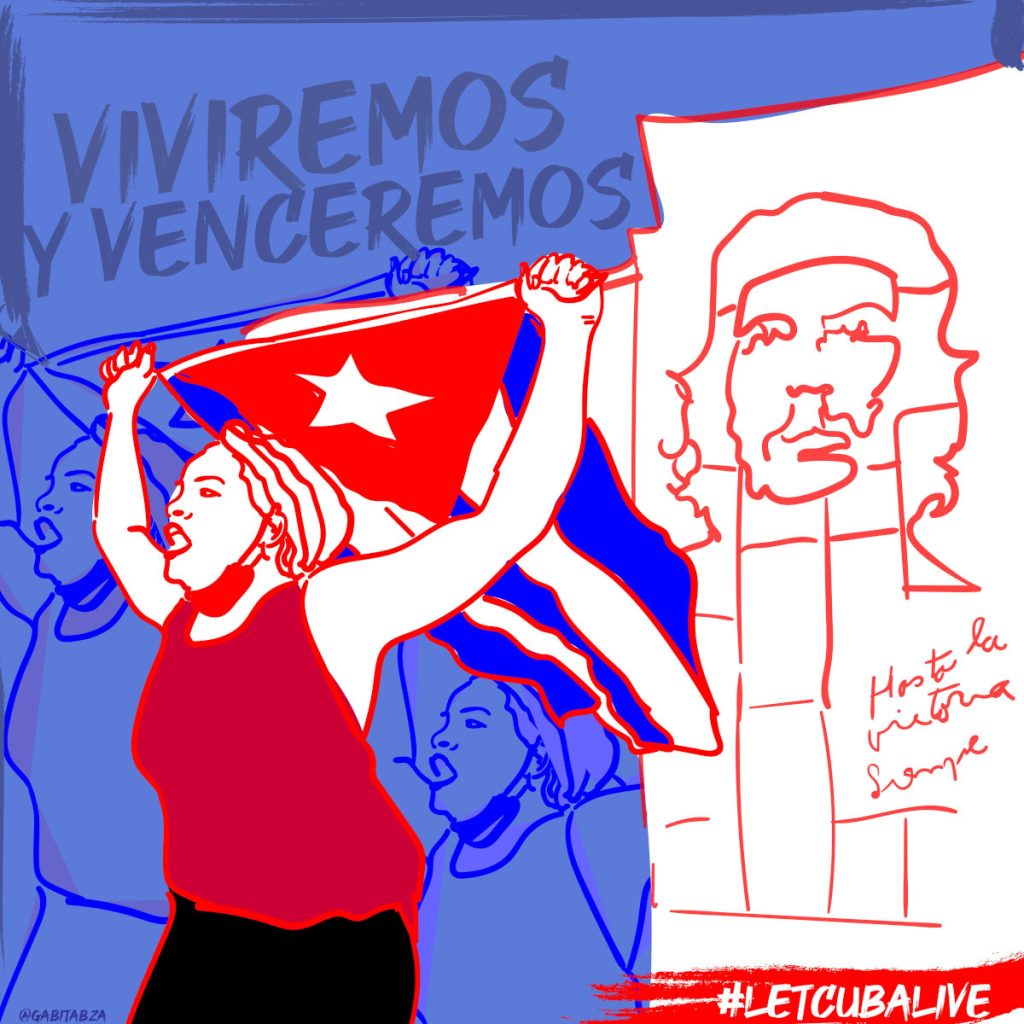
Gabriela Barraza (Argentina), Viviremos y venceremos [We Will Live and We Will Overcome], 2021. Available at thetricontinenal.org.
-
The 3 Tasks Popular Feminisms Call Us to Undertake
1. Institutionalize the Communal Management of People’s Power
In Venezuela, nearly 80% of leadership roles in communal councils are held by women. They are the street spokeswomen, the ones who plan projects and execute the sovereign budget. Faced with the advance of the far-right, the response is greater people’s power. The urgent task is to strengthen the National Popular Consultation and the commune model. It is there where popular feminism manages resources and responds to the imperialist offensive.
We must ensure that the territory’s resources are managed by those who inhabit and defend them, blocking the path for the impunity of militias (in Brazil, parapolice and paramilitary armed groups) and illegal power structures like those that tried to silence Marielle Franco in Brazil.
2. Dismantle the Impunity of Neocolonial Extractivism
We cannot move toward the future without closing the wounds of impunity. The stories of Berta Cáceres in Honduras and Marielle Franco in Brazil are beacons, but also reminders of the ferocity of capital.
- Justice for Berta: Ten years after her assassination, the task is to dismantle the extractivist model that murders those who defend the commons. Punishment for the intellectual authors of Berta’s murder is an outstanding debt for the entire region in the fight against transnationals.
- Justice for Marielle: The recent conviction of the Brazão brothers in Brazil is a victory against paramilitary militias and parastatal power. The task is to eradicate the structures of political violence that damage the social fabric and attempt to silence Black women, faveladas, and dissidents who occupy spaces of power.
Berta and Marielle taught us that defending indigenous, peasant, and Afro-descendant territories and defending life in the cities is the same struggle. Their names are beacons that feed and sustain our daily resistance against patriarchy, colonialism, racism, and capitalism.
3. Push for Popular Agrarian Reform and Food Sovereignty
As our peasant sisters of the Landless Workers’ Movement (MST) teach us, an urgent task for grassroots feminism is the defense of the land. Popular agrarian reform is the right of women to decide over production and seeds in the face of extractivist agribusiness. For women, land is the space for the reproduction of culture and life. Without food sovereignty, national sovereignty is incomplete. We must strengthen the ties between peasant women and urban workers to guarantee that food is a right and not a commodity of debt.
-
Message from Berta Cáceres
For the women of Nuestra América, the struggle is for life itself. Berta Cáceres, guardian of the rivers and the dignity of the peoples, left us a mandate that shakes the conscience of the entire continent:
Awaken, humanity! There is no more time. Our consciences will be shaken by the fact that we are contemplating self-destruction based on capitalism, racism, and patriarchy. In our worldviews, we are beings born of the earth, water, and corn. Of the rivers, we are ancestral custodians… Let us give our lives, if necessary, for the defense of humanity and the planet!
This cry from Berta is our compass. Faced with neocolonial aggression, our response is unity, the guardianship of our land, and unbreakable rebellion.
Long live the women who fight! Long live a free and sovereign Nuestra América! We shall overcome!
Greetings to all,
Carmen Navas, Maisa Bascuas and Pilar Troya
| Carmen Navas is a Venezuelan political scientist, researcher at the Nuestra América Desk at Tricontinental: Institute for Social Research. |
| Maisa Bascuas is an Argentine political scientist, professor and researcher at the University of Buenos Aires, and Co-Coordinator of the Department of Feminisms of the Global South at Tricontinental: Institute for Social Research. |
| Pilar Troya is an Ecuadorian researcher and feminist activist. She has worked on public policies for equality and the women’s movement, and serves as Co-Coordinator of the Department of Feminisms of the Global South at Tricontinental Institute for Social Research. |
From | Tricontinental: Institute for Social Research via This RSS Feed.