

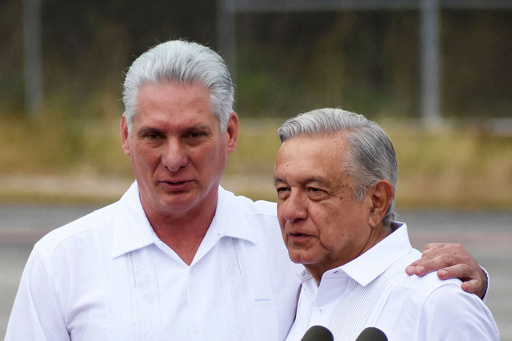
This interview with President of Cuba, Miguel Díaz-Canel, by Luis Hernández Navarro was originally published in the March 26, 2026 edition of La Jornada, Mexico’s premier left wing daily newspaper.
Havana. The essence of the close relationship between Mexico and Cuba, according to President Miguel Díaz-Canel, is summarized in the title of a play he presented in these lands: Amor con amor se paga.
The son of a teacher and a disciplined worker, the president explains in an exclusive interview with La Jornada that the US anger against the island stems from its insatiable colonial appetite and the fact that, in 67 years of revolution, Washington has not been able to seize the Caribbean nation.
Díaz-Canel details how talks between Washington and Havana have progressed within a framework of respect for the sovereignty and political systems of both countries.
Visibly moved, he said: “To Mexico, to the Mexican people, to the Mexican government, all our admiration, our respect, our affection, and our commitment. And in particular to Claudia, the Mexican president, who has demonstrated unwavering conviction, unwavering principles, courage, and gallantry. Thank you, Mexico! A thousand times thank you for always standing by Cuba’s side in our nation’s most difficult moments.”
Mr. President, you were born in 1960. The revolution had already triumphed. You have lived your entire life under an economic blockade. What’s new about the fuel embargo? How can you explain to the world the US’s anger against the island?
You’ve made a very accurate observation. I was born in 1960, in the early years of the revolution. By a coincidence of historical dates, I turned one the day after the victory at Playa Girón. But 80 percent of the Cuban population was born after the revolution. Therefore, 80 percent have lived their entire lives under the blockade. My children, our children, have lived under the blockade. Our grandchildren were born under the blockade.
This anger, this hegemonic conception of the blockade and the confrontation between a power like the United States and Cuba, has historical precedents and contextual factors. Among these historical precedents, it is clear that the United States’ desire has always been to seize control of Cuba.
Regarding the elements of the current context, we must first acknowledge the weakening of the hegemonic power that the United States has wielded over the world, due to the emergence of powers that champion multilateralism and offer alternative relationships for nations. Furthermore, a multidimensional crisis of the capitalist system always makes it more aggressive and ultraconservative. It acts in a more irrational and fascist manner. I believe we are witnessing a resurgence of fascism. Consequently, this attitude leads to the unpopularity of anyone who defends their self-determination, promotes a different model, and refuses to be crushed by imperial designs. Such individuals are then attacked in various ways: through economic, political, and diplomatic pressure, as well as media manipulation.
Cuba has lived under blockade for 67 years. However, in the midst of this siege, it has managed to build a just society. A society with unity, convictions, and principles. Many people question Cuba’s economic policies, but it is the Cuban economy, under siege, that has been able to sustain an enormous social program. This has generated a feeling of admiration and recognition of our resistance. But it is not just resistance; it is creative resistance. By resisting, we have been able to build, advance, and develop. The imperialists have not liked that.
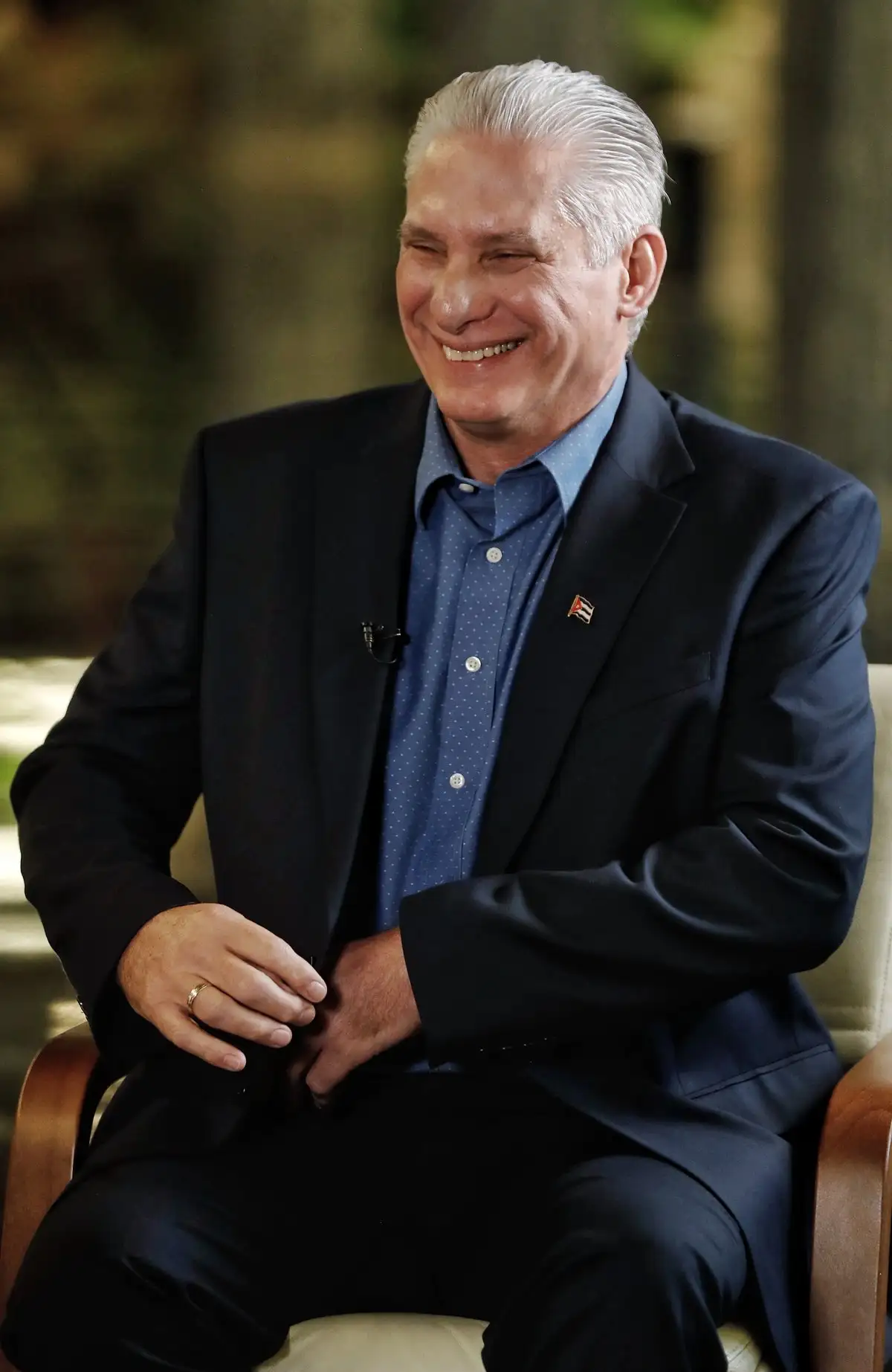
Photo: Marco Peláez
In very recent times, this blockade has intensified. This began with the first stage of the Trump administration, which implemented more than 240 measures against Cuba in the second half of 2019, deepening the embargo. They even included us on a list of countries that supposedly support terrorism, which cut off all avenues of financing for the country and led us to a very difficult situation. What we are experiencing is the culmination of 67 years of the blockade and its intensification. The Biden administration maintained this policy.
As the situation worsened, they began cutting off our energy sources, our sources of foreign currency, and restricting tourism. There was enormous pressure on the work of the Cuban medical brigades. In the midst of all this, we faced COVID-19 and had to overcome it with Cuban ingenuity, with Cuban vaccines, with technologies developed by Cuba. We have also experienced the effects of natural disasters. In short, we have lived through a crisis that has brutally impacted the reality of our people and their daily lives, caused by the blockade, COVID-19, and natural disasters.
Now we turn to the events in Venezuela. What happened on January 3rd in Venezuela is a watershed moment for the world. It demonstrates how a superpower, driven by its unbridled desire to exert its hegemony, kidnaps a president and removes him from the country to frame him for a trial in the United States based on lies, fabrications, and slander. In the midst of this situation, they restrict fuel shipments to Cuba. On January 29th, an executive order is issued, declaring Cuba an unusual and extraordinary threat to the security of the United States. This is yet another slander, another completely fabricated story.
It’s been almost four months since we last received a drop of fuel. In this situation, it’s very difficult to develop the economy and the lives of a people. But the country endures, it functions, it continues to dream, to plan, and it aspires to achieve greater social justice in order to overcome this situation with determination.
The biggest failure of the United States government in these 67 years of revolution is its inability to seize control of Cuba. That provokes anger. I want to identify that feeling with something the army general explained many years ago: when the revolution triumphed and began to implement a series of measures aimed at independence, sovereignty, and social justice, when it passed the Agrarian Reform Law, it crossed the Rubicon. From then on, they never forgave us for the revolution’s progress. Then came the blockade, the pressures of all these years, the intensification of the conflict, and all this history we’ve reviewed. Undoubtedly, that failure has provoked anger.
You are the son of a teacher and a brewery worker. You are an engineer. Now you are at the head of the Cuban state. Does that personal trajectory summarize the changes in Cuban society since the revolution?
Here you have familiar elements, like a typical Cuban family, which evolved during the revolution. From my mother, I have the example of a dedicated teacher. She always wanted to be a rural teacher, to work with the children of that area. I felt enormous pride in her for that. She raised me with values, also with decency, with proper behavior. My father was a laborer who got up every day at 4 in the morning to get to his job early, which was outside of Santa Clara. He always maintained a strict approach to our education.
In my family, there are figures like my grandparents. A maternal grandfather of Spanish origin, hardworking, optimistic, very poor before the revolution. A loving paternal grandmother, who was also a teacher, a great admirer of Martí. She taught me to believe in Martí. She preached in a very Martí-esque way. Her gifts were always books. She introduced me to systematic reading. An aunt, the daughter of the poet Navarro Luna, influenced my development, even as a communist activist. Furthermore, there was a harmonious family and neighborhood in the block where I lived in Santa Clara. All of that contributed to my upbringing.
I grew up with the feelings of the people. I witnessed the progress and transformations of the revolution in my childhood and youth. Therefore, I consider myself a product of that process of growth. I have an enormous commitment to ensuring that this process continues, that it keeps growing and contributing, so that we can overcome this stage in which our dreams have been stalled. I tell you this with all sincerity: I am prepared to act to the very end. I have an enormous commitment to the Cuban people, to the revolution, its leadership, and our history.
When he speaks about the energy crisis caused by the US strangulation, he does so as an engineer. He has explained to us how there is a crisis in the energy generation model, how they depend on large thermoelectric plants, but how they are changing that pattern with photovoltaic energy. However, the backbone of generation remains thermoelectric plants, which need oil, and Cuba produces only 40 percent of the crude oil it requires. What will they do to solve that problem?
A very interesting question. We do not relinquish our right, like any country in the world, to receive fuel supplies. We do not cover all our electricity generation needs with domestic production. Furthermore, fuel is needed for other economic activities and for the daily life of the country. The energy blockade is, above all, a flagrant violation of our human rights as a people, and a violation of international law. It even goes against the logic of capitalism. They, who talk so much about free trade and the free market, are imposing a criminal energy blockade on us.
There are three directions here. One is to continue developing our energy transition strategy towards renewable sources, which includes not only photovoltaics and hydroelectric power, but also other native sources we are studying. This also includes the use of biomass in power plants that operate on it, and the use of biogas. There is a whole strategy in place in that regard.
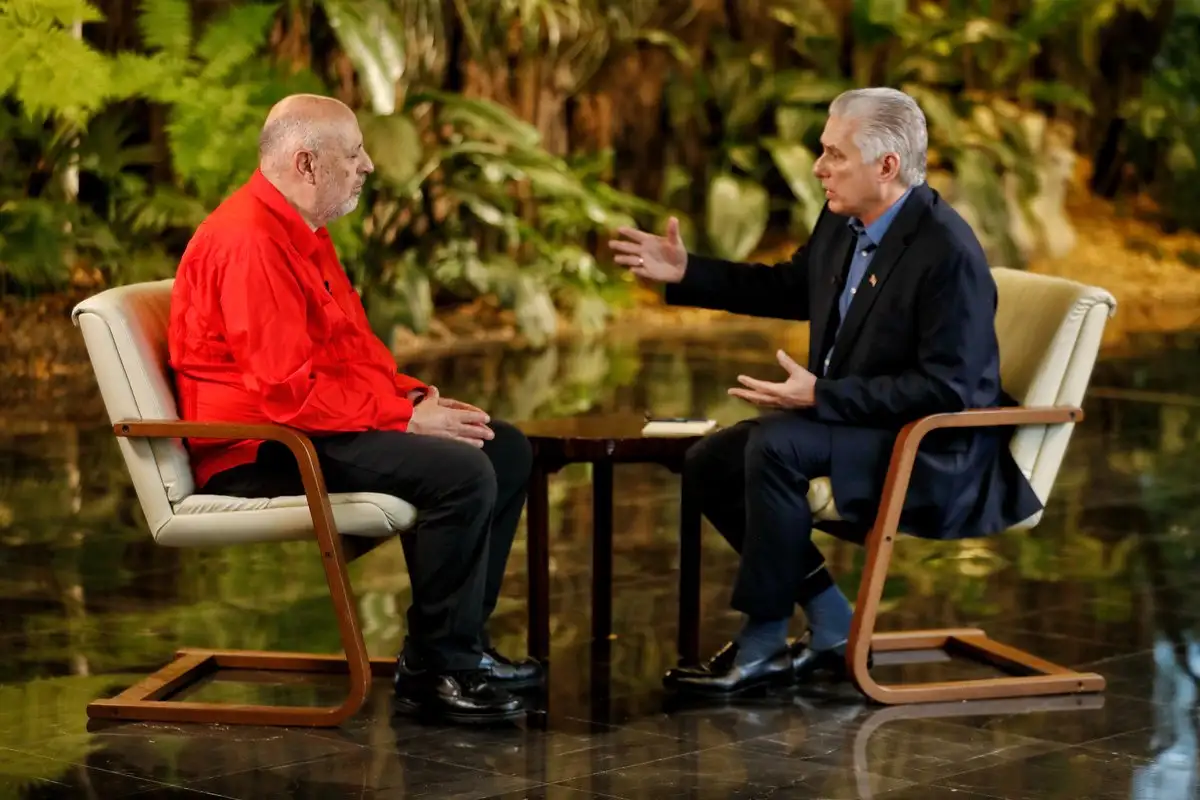
Luis Hernández Navarro of La Jornada & President of Cuba Miguel Díaz-Canel Photo: Marco Peláez
We are also working to further incentivize domestic crude oil and associated gas production. To that end, we are pursuing a strategy of increasing oil well prospecting and exploration, as well as improving our extraction processes. In the first two months of the year, we have been able to halt the decline we had been experiencing in domestic crude oil and associated gas production.
Furthermore, by turning to science, we have found solutions to improve the processing of our domestic crude oil, which is heavy and has a high sulfur content. Nevertheless, we will still have a dependence on hydrocarbon imports, which will decrease as we progress. To this end, we are seeking to build energy cooperation alliances with sister nations. In addition, we are exploring commercial projects that will allow us to diversify and expand our fuel suppliers, with countries that respect Cuba’s sovereignty and are willing to face the challenges of this energy blockade.
Another point is denouncing this genocidal blockade before international organizations, a blockade that violates the human rights of the Cuban people and condemns them to severe limitations. A fourth element is promoting South-South energy cooperation, which would allow for technology transfers, exchanges, and faster progress on all these proposals.
These are our visions, our aspirations. Doing so under these conditions of the US energy blockade is very difficult. But we have solidarity. Last week we received a convoy of members of the solidarity movement with Cuba. We have many people who are buying panels and photovoltaic systems and bringing them to Cuba. The private sector in Cuba itself, with a strong commitment to social responsibility, is promoting renewable energy projects. We have also given this private sector the ability to import fuel to power a range of processes. The private sector can import fuel, and it is doing so.
Socialist countries with communist parties running the state, such as China or Vietnam, have undertaken economic reforms to introduce market mechanisms. Is that on the Cuban agenda?
We maintain a broad relationship with Vietnam and China, countries under construction of socialism. We have a bond of political parties, governments, and peoples. They are nations that are very supportive of Cuba. Our three countries systematically exchange information about their reform processes: China’s, Vietnam’s, and, in our case, the updating of our economic and social model.
The Chinese and Vietnamese have repeatedly emphasized that their reforms and processes have unique characteristics specific to China and Vietnam. We, too, have our own unique characteristics. We are an island nation, a small island, located 90 miles from the United States and heavily blockaded. We have developed significant human capital and a skilled workforce. We have well-established universal education and healthcare systems, and a level of scientific and technological development that distinguishes us and gives us strength.
We are carrying out a process of updating our economic and social model, which began or was deepened at the Sixth Party Congress. We have achieved a series of transformations that we seek to accelerate, with Cuban characteristics. It is not about copying. It is a Cuban system, but one that shares elements with the Chinese and Vietnamese models. For example, the leadership of the Communist Party, as the guiding force of society, is enshrined in our Constitution. A strong state. An efficient government. An agile public administration, freed from bureaucracy. A proper relationship between centralized planning and the market. The necessary market regulations to prevent speculation. Harmony between the state and non-state sectors. That all economic actors contribute to the country’s economic and social development.
This combination of elements should allow us to achieve sustainable, socially just, inclusive, and equitable development. It should enable us to achieve food sovereignty, strengthen science and innovation, and develop digital transformation and artificial intelligence processes in our society. We must continue to strengthen universal public social services, guarantee the rights to education, health, sports, and culture, and boost our economy in every sector, while maintaining international cooperation. That is the direction we are heading. We are doing so under very difficult conditions, because all of this entails investment, requires transformations, and dismantling bureaucracies and ingrained habits. And we are doing it amidst a situation of being under siege, with the blockade intensifying.
You announced the possibility that Cubans living outside the island could invest. Are there specific guidelines on how this investment would work? Isn’t there a risk of social stratification?
We have evaluated all of these factors. We must acknowledge that in recent years the number of Cubans and Cuban families residing abroad, whether temporarily or for longer periods, has increased. Our government is committed to listening to them, welcoming them, providing them with services and support, and giving them the opportunity to participate in our economic and social model and contribute to the country’s development.
This has been a long-standing effort. Fidel, in 1978, initiated a dialogue with the Cuban community abroad. This was followed by four conferences on the nation and immigration. There has been an ongoing exchange. Lately, we have been holding meetings in countries with Cuban communities, at the regional level. When we make working visits abroad, we meet with representatives of Cuban residents. We have a dossier of proposals, aspirations, motivations, projects, and concerns that we have analyzed and presented.
That analysis led us to improve our policy, to refine and update it for Cubans residing abroad, where we made several things more flexible. Many of these changes relate to their investments in our country.
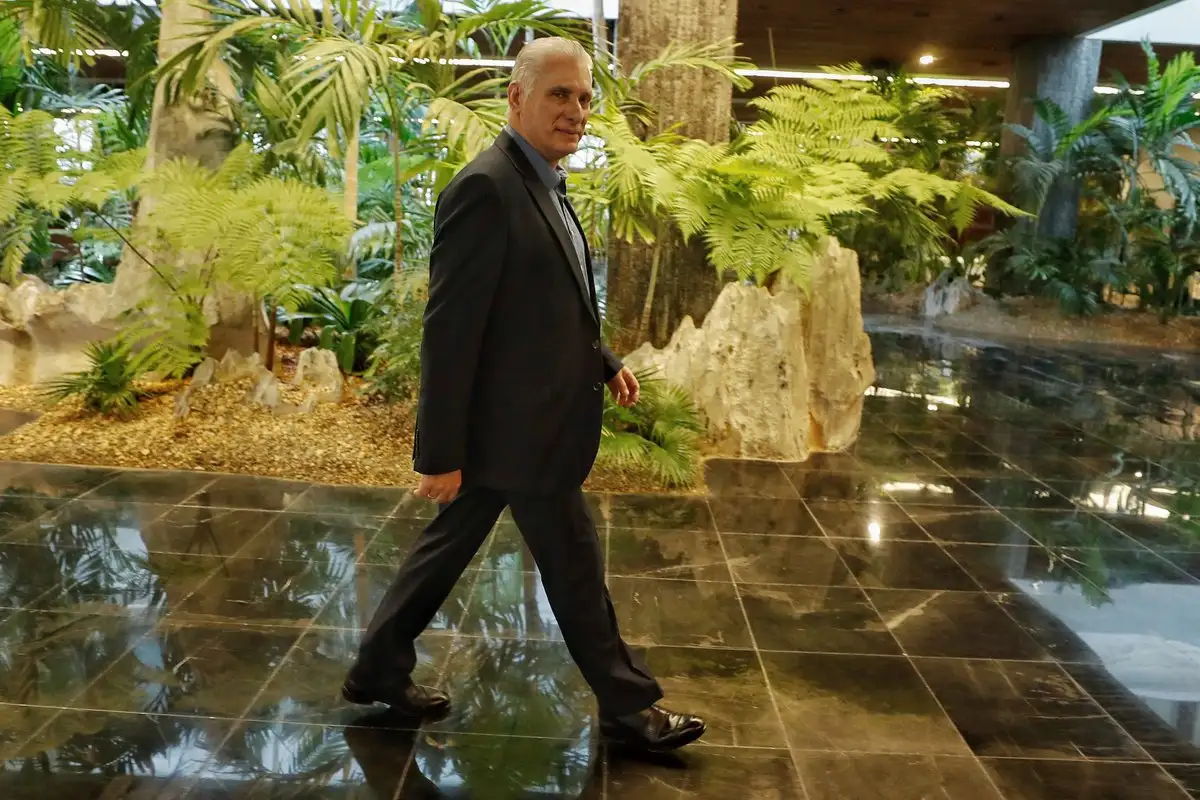
Photo: Marco Peláez
Their investment in our country is carried out in accordance with our legal framework. There is oversight and regulations in place, just as foreign investment from any entity must comply with, or as companies, both private and state-owned, must comply with in our country.
All our observations are important to prevent the involvement of Cubans residing abroad with capital subservient to the interests of circles outside Cuba, linked to policies seeking to change the sociopolitical system or to subversive programs. We must maintain vigilance and control.
I believe that with the unity that exists in our people, with ideological clarity and with the defense of the legality of the country, and also, with the understanding of those who come with a commitment to participate in the development of their nation, this whole process can be feasible and beneficial.
Regarding the talks with the United States, you have established a critical path: initiating conversations, aligning agendas, advancing on possible solutions, and then implementing them. Always, you say, within the framework of respect for sovereignty and respectful treatment. Where are you at on that path, and who are the actors participating?
At this time, there has been a conversation between Cuban officials and State Department officials, which was facilitated by international factors.
He’s not going to tell us what they are…
No. These processes are very sensitive. They have to do with bilateral relations and ties between countries, with the whole history of misunderstandings.
Although the Vatican has played a role in the past.
Don’t provoke me… I’m not going to say it. I believe we must respect the discretion inherent in these processes, in these conversations. As we explained, this is in line with a historical practice of the Cuban Revolution. We have always expressed our willingness to engage in dialogue with the United States on any issue, but always based on respect for both political systems. Respect for sovereignty, unity with a principle of reciprocity, and adherence to international law.
Now, the important thing is that both sides show the will and readiness to continue advancing the dialogue. That, on that basis, we identify the bilateral differences that we can resolve. That both sides have the will to implement measures that help and benefit both peoples. That we find areas of cooperation that allow us to confront threats and, above all, guarantee peace and security for both nations and the region. That we find ways to build spaces of understanding that allow us to move forward and move us away from confrontation. For that, we need an agenda, the willingness to develop its points, and to reach agreements. We are at that point.
Is President Díaz-Canel an obstacle to this dialogue process or is he a factor in its favour?
In Cuba, processes like these cannot be personalized. In Cuba, there is a collegial, collective leadership that is also accountable to its people. We must answer to the people, to the supreme body of the nation, which is the National Assembly of People’s Power. What I defend, what we defend collectively, is not the purpose or idea of a single individual. It is the consistent practice of the revolution.
Undoubtedly, one realizes there’s media manipulation surrounding this. Sometimes they label you, calling you more or less of a bureaucrat, an obstacle, or inflexible. I believe this is part of a media manipulation strategy used to reinforce the unconventional war against our country, a strategy that has one fundamental element: reputation assassination.
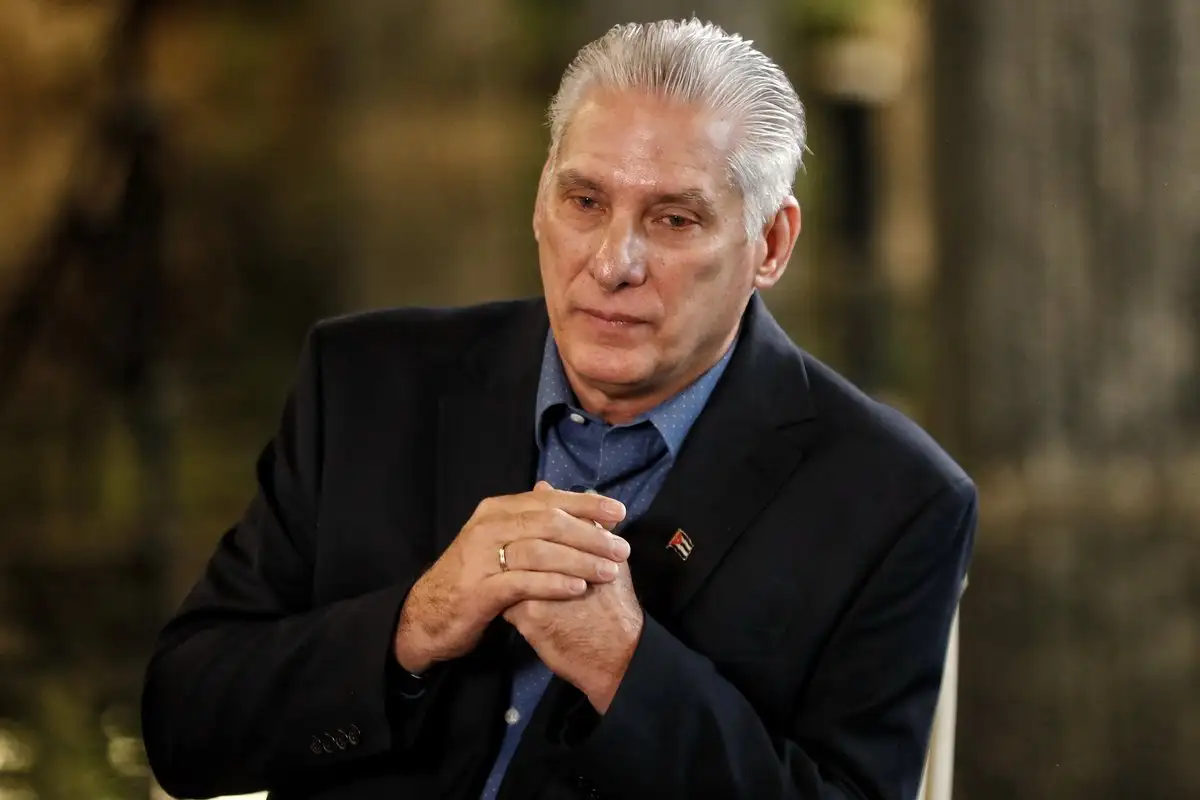
Photo: Marco Peláez
The decision to engage in dialogue with the United States is a collective one. Our political system and any decisions made by our people and parliamentary bodies are not at stake in this decision. Therefore, my continued service, or that of anyone else who may at any given time hold a position of this level of responsibility in our country, depends on the people. And it also depends on the representatives of those people in the National Assembly of People’s Power, not on the United States.
You have acknowledged that, within the context of the tightening of the noose, there is discontent and that this discontent is legitimate. Is there a way to channel it so that it can be expressed creatively? Would transformations in the mechanisms of popular representation be necessary?
Life is very hard. The Cuban people are generous, supportive, resilient, and resourceful. There are places where we’ve had blackouts lasting 30 or even 40 hours. Today, people are limited in how they get around and how they get to work because of the fuel shortage. The early mornings become labourious because, if there’s even a little electricity, it’s the time to cook, preserve food, and do a bunch of other daily chores around the house.
We’ve had to adapt the way our school year operates. This requires a significant effort from all teaching staff and affects our young people and children. Today, our healthcare system is suffering tremendously. Just look at how criminal this energy blockade is. We’re talking about a country that knows how to do these things, that has a robust healthcare system, that knows how to operate, that has the capacity, without the blockade, to avoid waiting lists for surgeries, because it has the entire system of medical institutions to do so.
In our efforts to produce food, sometimes we have the food but struggle to distribute it because we lack fuel for transportation. People have had to adapt their cooking methods. Every Cuban kitchen has become a wood-burning or charcoal stove. It’s very difficult to have that in apartment buildings. Communal kitchens have sprung up. Everyone respects each other, everyone helps out. But look at the hardships we face. I would ask, how many people could endure such a situation? Only a people like ours, who deserve a monument.
It was precisely your country’s former President, López Obrador, a great friend of Cuba, who expressed that the Cuban people deserved a monument. I believe that monument doesn’t have to be made of marble or stone. It could simply be a gesture that is within the power of the United States government and its president: lifting the blockade that violates the human rights of ten million Cubans.
So, amidst this situation, this complexity, there is dissatisfaction. No one can be happy living through all of this. To the extent that we explain and engage with the people, we can help them understand that the culprit is neither the revolution nor the Cuban government. The Cuban government does not work to upset the people. On the contrary, it works to find solutions in the midst of this very complex situation. We have a humanist vocation; this pains us deeply. We are part of this people.
It must be understood that this escalation is an act of war against the Cuban people. There is also the media manipulation that accompanies this blockade and attempts to capitalize on what could be protests against the government. Most of the dissatisfied people are dissatisfied because they have a problem, because they have suffered a prolonged blackout, because we haven’t been able to restore their electricity for days. They go to the institutions of the Party, the government, the country. They go to the institutions that represent them. They have confidence in these institutions. They go, and the leaders of these places face them. They explain things, and where possible, they try to mitigate the situation, even by involving the people.
Unfortunately, there are others who, because of these same manipulations, because money is involved, express themselves in a vandalistic manner. And that has to do with other things. It has to do with subversion, with behavior that disrupts the internal order and requires a different kind of treatment.
We have a will. And we are doing it because there have always been spaces for greater popular participation and mechanisms that we must improve. I always say: everything we do, everything we set out to do, must have a foundation in popular participation. It needs to have at least three fundamental elements. There must be spaces for people to voice their problems, raise their doubts and concerns, and make proposals. A space for the governing mechanisms and institutions to channel these proposals and make decisions. These decisions are then shared with the community, and the community, along with the institutions, participates in implementing them. And within this participatory process, there must also be popular oversight. So, there is institutional oversight, combined with popular oversight. That is a harmonious system of popular power.
With the labor adjustments we’ve had to make, people are spending more time in their communities than in their traditional workplaces, social centers, or educational institutions. Therefore, there needs to be an improvement in the work of the municipal assemblies of people’s power, at the community institutional level, and in the community-level governance structures, such as the people’s councils and district delegates, along with all community institutions. There needs to be a shift in the behavior or redesign of the activities of mass organizations, the Committees for the Defense of the Revolution (CDRs), women’s groups, social organizations, student organizations, and even workers’ organizations, because workers are now spending more time in their communities.
There is enormous potential. We’ve been sharing this with a group of women. We’ll be sharing it tomorrow with a group of outstanding young people. We need to have systematic spaces for debate with different sectors of society. These organizations can focus on addressing all the problems that are so acutely felt in the community. If we harness all the potential of our people in each community, addressing issues of vulnerability, disadvantage, support for the school year, municipal self-sufficiency, and community-based markets, there’s an impressive field of participation, relationships, and social dynamics. That’s what we’re promoting and refining.
Is there a failed state in Cuba?
It’s a very hypocritical and unjust construct. The country that imposes a blockade to deprive you of everything and leads you to difficult situations calls you a failed state when it’s the one responsible for those problems. What a strange failed state we are! We maintain coherence, direction, harmony; we resist. As a people, we continue to come together and share solidarity with the entire world. We are not isolated. The world doesn’t recognize us as a failed state. On the contrary, what it recognizes is how we are able to continue functioning on this basis of creative resistance amidst so much coercion, so much pressure, and so much aggression. And it has to do with the strength of our people’s unity.
It’s very common for the leaders of the revolution, at any level—local, municipal, provincial, national—to visit these places and interact with the people. I myself have a system of working with comrades from the party. We systematically go to the provinces, we visit the municipalities. We’re on our second or third tour of every municipality in the country these past few years. When we go there, in addition to reviewing and analyzing economic and social development programs, we meet with the people. There are always two or three thousand people gathered in the plazas, with whom we can interact extensively. A failed state can’t do that. There are states that don’t consider themselves failed, and a president or a leader doesn’t have that opportunity to be among the people. It’s another hypocritical construct they use to try to fragment unity and distort our reality.
Mr. President, Cuba has been extraordinarily supportive of the world. It actively participated in the fight against colonialism in Africa and in national liberation struggles in Latin America. Cuban blood has been spilled on many continents. Most recently, that of the 32 heroes who defended President Maduro before he was kidnapped. Do you believe there has been reciprocity for all the solidarity they have shown?
We have offered solidarity out of conviction. There is a Martí precept that “homeland is humanity.” Fidel developed this with his concept of internationalism, of international solidarity. He took it to its highest expression. There is also the example of Che. We have never gone to a country to invade. When we have participated in actions to defend a country, it has been at that country’s request. From Angola and Africa, we only take our dead; we take no riches. We receive nothing in return but recognition. African blood runs through our veins. It is in our origins. It is in the formation of Cuban identity.
We have always stood on the side of just causes. We have defended the Palestinian people, the Sahrawi people. We defended Vietnam during the war with the United States. We have defended the integration of the Caribbean and the Americas.
And so the issue of the medical brigades, which the United States government is now so vehemently attacking, has been present. They want to portray them as a form of human trafficking. We have always stood on the side of just causes. We have defended the Palestinian people, the Sahrawi people. We defended Vietnam during the war with the United States. We have defended the integration of the Caribbean and the Americas. We have developed missions at the continental level that have allowed several countries to eliminate illiteracy using a Cuban method. Operation Miracle restored sight to millions of people in our region. We have provided free training, primarily to thousands of young people from every continent. Even amidst this complex situation, we maintain a project like the Latin American School of Medical Students.
And we have done this out of conviction. And we have received reciprocity. Cuba is not isolated, which is another narrative they are trying to impose right now. Recently, we received hundreds of people: representatives of solidarity movements, of political parties of different political persuasions, representatives of the people, and of social movements. They came and brought material aid by boat, on long voyages, using their own resources and with tremendous dedication. They brought medicine, food, and photovoltaic panels to alleviate the energy situation. But above all, they came to share their hearts and support, which gives us energy and shows us that Cuba is not isolated, that it is not alone. We have reciprocally received that support, that aid, and that interest.
And what more can be said about the Mexican people? There’s the appeal made by La Jornada, the one from UNAM, the one made by President AMLO, the way in which Mexican governors and political figures have donated part of their monthly salaries. The way in which the Mexican people have mobilized to collect and send aid to Cuba is impressive.
It seems that the genocide in Gaza sparked a new awareness among young people and a capacity for mobilization and protest. Do you think this could be extended to Cuba, or has it already happened?
It doesn’t extend to Cuba because it’s already here. Our youth, the generations that share the revolution today, were born and raised witnessing the example of the Palestinian people, suffering the genocide against them. Fidel was one of the people who, on an international scale, in international forums, most forcefully denounced the genocide against the Palestinian people. When I was a university student, there were young Palestinians studying at my faculty, and we became friends with them. Today, hundreds of young Palestinians are studying in our country, and we have met with them regularly.
What is stirring in the world as a sentiment was already a conviction among Cuban generations, and particularly among young people. Recent events among Cuban youth have further strengthened these anti-imperialist convictions. Beyond the Palestinian issue, this maturation of ideas and convictions, which is beginning to spread globally and advocates for multilateralism, against militarism and aggression, and for a more inclusive and just international economic order, takes Cuba as its point of reference. These are the values that Cuba has always defended. Without Cuban chauvinism, we have played a leading role internationally, thanks to the development of these convictions within our own national process.
The issue isn’t whether it spreads to Cuba: it already exists there. The issue is how Cuba, based on its revolutionary practice, its historical experience, and its struggle, manages to radicalize that position and contribute to its expansion and understanding among many people around the world. That’s what we can contribute.
President, to conclude: is there anything you would like to say to the people of Mexico?
That’s the most difficult question. Talking about Mexico, expressing in words the feelings we have toward Mexico, is impossible for me. I’m going to try to string together expressions that might reflect the magnitude of those feelings, which are very strong, of how Cuba and Cubans see Mexico.
Mexico is the sister nation that has always stood by Cuba, in good times and bad. The one that has always been with us, the one that has never wavered. Let us remember the 1960s, when the whole world turned its back on us due to pressure from the United States, yet Mexico remained steadfast. For Cubans, Mexico holds a very special place in their hearts. With all that history and culture, it has opened its arms to welcome Cuba’s sons and daughters on countless occasions, some of whom are among the most representative figures. From Heredia to Martí, from Mella to Fidel and the Centennial Generation. Thousands of personalities, thousands of events, thousands of anecdotes come to mind, all connected to that shared history that unites us.

José Martí
How many people stood alongside Benito Juárez during the Mexican Revolution? How many Mexicans fought in our wars of independence? Our artists? How many Cuban-Mexican families are there? It’s a deeply personal relationship.
There is a very important fact. When Martí lived in Mexico, at only 22 years old, he presented a work to the Mexican public called Amor con amor se paga (“Love is Repaid with Love”). I believe that there, in that phrase, in the title of that work, lies the essence of our deep relationship. To Mexico, to the Mexican people, to the Mexican government, all our admiration, our respect, our affection, and our commitment. And in particular to Claudia, the Mexican president, who has demonstrated unwavering convictions, unwavering principles, courage, and gallantry. Mexico and the president of Mexico have no idea how many Cubans would like to personally thank their president for everything she has done for Cuba during these times. We feel tremendous respect and tremendous admiration for her and for her people.
Thank you, Mexico! A thousand times thank you for always standing by Cuba’s side in our nation’s most difficult moments.
Many thanks to La Jornada, Carmen Lira, and her entire team. It’s a tremendous opportunity for us to be able to reach out to their readers as well.
-
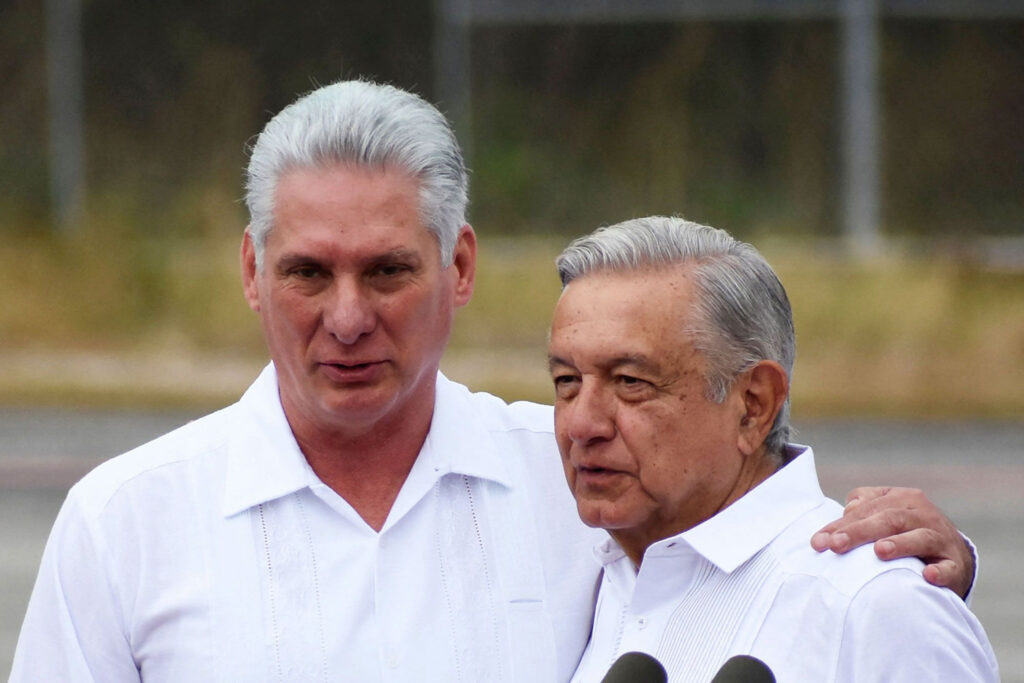
“Mexico is the sister land that has always stood by Cuba, in good times & bad.”
March 27, 2026March 27, 2026
An interview with President of Cuba, Miguel Díaz-Canel, by Luis Hernández Navarro of La Jornada.
-
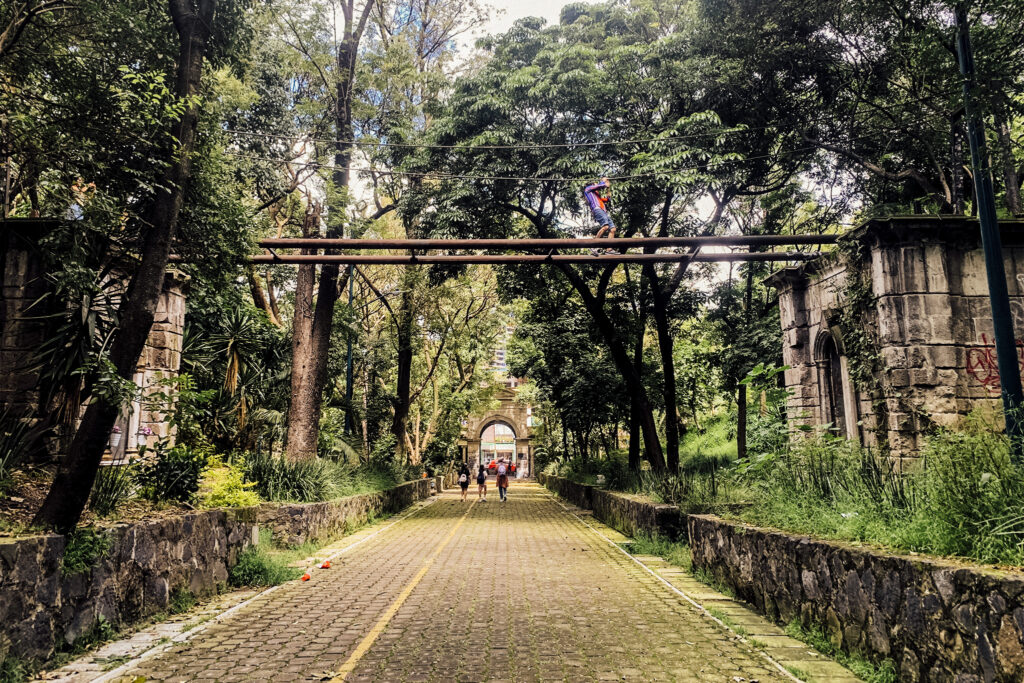
“Off with their Event!” Private Parque Lira Party Pulverized
March 27, 2026March 27, 2026
Facing organized opposition from neighbours, social concern over creeping privatization of public parks & increased city scrutiny, the company producing an Alice in Wonderland event has canceled it.
-
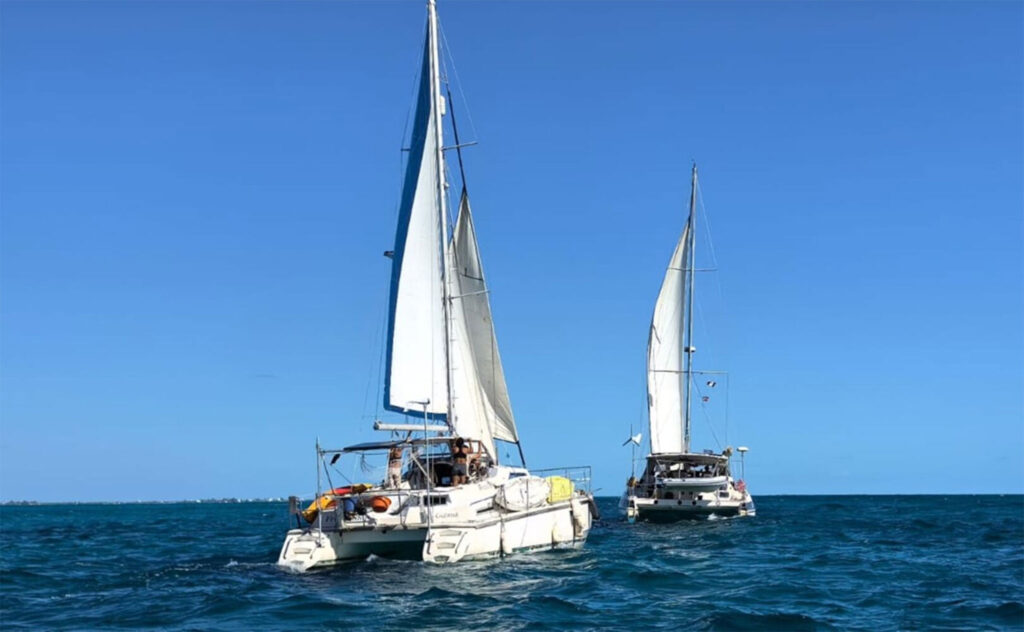
Mexican Navy Searching for Two Nuestra América Convoy Sailboats That Disappeared in Caribbean en Route to Cuba
March 27, 2026March 27, 2026
The two vessels, carrying humanitarian aid and nine crew members, set sail on March 20th from Isla Mujeres, Quintana Roo and were scheduled to arrive between March 24th and 25th.
The post “Mexico is the sister land that has always stood by Cuba, in good times & bad.” appeared first on Mexico Solidarity Media.
From Mexico Solidarity Media via This RSS Feed.