

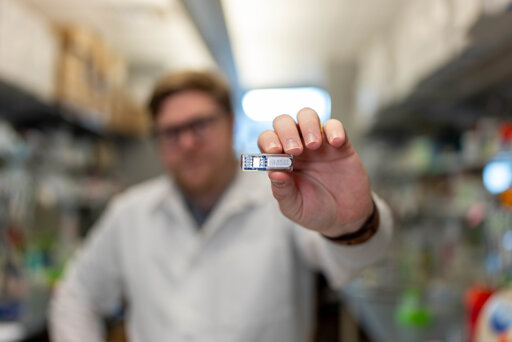
A multi-institutional team of scientists, co-led by Northwestern University, has taken a crucial step toward implantable “living pharmacies”—tiny devices containing engineered cells that continuously produce medicines inside the body. In a new study published in Device, the team engineered cells to simultaneously produce three different biologics—an anti-HIV antibody, a GLP-1-like peptide used to treat type 2 diabetes, and leptin, a hormone that regulates appetite and metabolism. When implanted under the skin of a small animal model, the device kept drug-producing cells alive and stably delivered all three therapies at once.
From Biology News - Evolution, Cell theory, Gene theory, Microbiology, Biotechnology via This RSS Feed.
You must log in or # to comment.