

Driving into Havana, most of the city was in darkness. For the second time in a week, more than 10 million people across Cuba were left without power during a national blackout. We were told that in some places, people were going 14 hours without electricity.
This is the human reality of a criminal and inhumane blockade, imposed on Cuba by the United States. Cuba has been under a US embargo for over 60 years – an embargo that doesn’t just prevent bilateral trade between these two countries, but tries to isolate Cuba from the rest of the world.
Until January of this year, Cuba was receiving oil at a discount from Venezuela. However, after the illegal abduction and imprisonment of Venezuelan president Nicolás Maduro, Trump declared that no Venezuelan oil would go to Cuba, seizing oil shipments bound for Cuba and intercepting vessels in the Caribbean Sea.
Declaring Cuba an “unusual and extraordinary threat” on 29 January, Trump effectively launched a total oil blockade by imposing new tariffs on countries that directly or indirectly supply Cuba with oil. Under a very strict interpretation of the Helms-Burton Act, Trump is not allowing any company that trades with Cuba in any way to trade within the United States. This is, obviously, a huge disincentive for any European company that might want to, for example, invest in the energy supply industry in Cuba.
This criminal blockade has consequences. At home, refrigerated food goes off. Factories can’t operate. Schools can’t operate. Hospitals can’t operate. Something as simple as getting around your own city by car or bus is suddenly not possible. Black market prices for petrol had reached $40 a gallon (roughly £10 a litre). Only those with a lot of spare cash can get any fuel at all. For millions of people, normal life is very, very difficult.
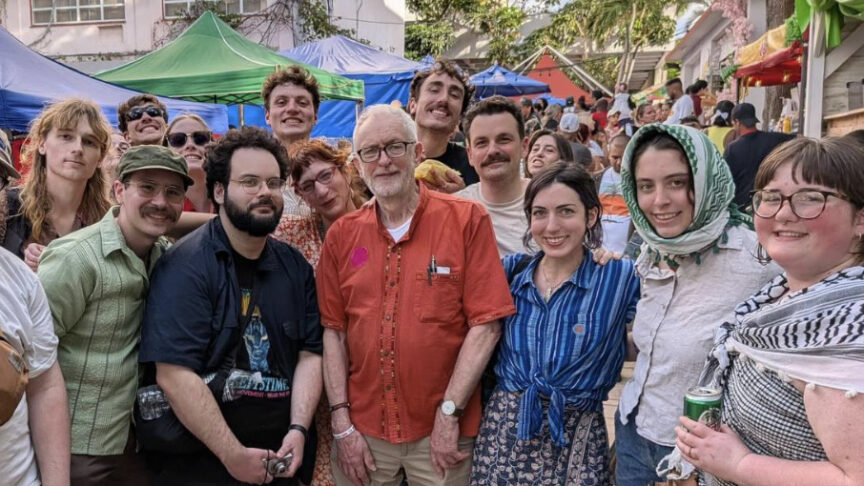
That’s why I joined the Nuestra América convoy to Cuba, an international coalition of individuals and organisations dedicated to delivering critical humanitarian aid to the people of Cuba. The delegation, organised by Progressive International, was made up of representatives from 30 different countries. So often, Cuba has been there for the rest of the world. Now, the rest of the world was there for them.
We delivered aid in two tranches. The first was to a solidarity centre near John Lennon Park, which was hosting a music concert later that day, where Cuban students gave wonderful renditions of traditional Cuban music, including the hopeful and iconic song Guantanamera.
The second was to the Cuba Cancer Hospital. Richard Burgon MP, Natasha Hickman from Cuba Solidarity Campaign and myself presented several large suitcases full of equipment and medicines, including those that were very difficult to obtain in Cuba. Healthcare workers described the stress of working under a blockade, deprived of the equipment they needed to treat the patients coming in. The hospital was very well run, but was operating under immense hardship given the shortages imposed upon them. Often, they could not run the backup generators that were required to provide life-saving care.
The purpose of the visit was twofold. One, to deliver urgent humanitarian aid to the Cuban people. Two, to mobilise for an end to blockade, to show the blockade can be broken, and to show that the US government cannot just have everything its own way. We were there to stand with the Cuban people, oppose these punitive policies, and demand the right of every nation to live, develop and determine its own future free from intimidation.
I’ve been supporting Cuba all my life. When Fidel Castro entered Havana in 1959, my mother came and woke me up and said “Fidel is in Havana”. I first visited Cuba in 1986, and have returned three more times in between. A particularly fond memory was cycling round Cuba with one of my sons. I have huge admiration for the people of Cuba, who have survived and endured a criminal blockade for more than 60 years.
During our trip, we held a substantial meeting with president Miguel Diaz, who described the deep bind that Cuba has been placed in, and the innovative ways Cubans are trying to survive and thrive. We held discussions with ministers, who told us about the growing need to invest in solar and wind generation for electricity. It would take something like $14bn to purchase the necessary equipment and refurbish the energy supply system, in order to guarantee energy independence for Cuba.
Trump’s blockade should be seen as part of a much wider assault by the US on national sovereignty around the world. Their presumed right to intervene – as they have done in Venezuela, Iran and Cuba – runs totally against every aspect of international law. Trump somehow thinks that anything that happens in the southern hemisphere is the business of the United States. It’s not. Trump tells the world he’s winning. He’s not. He has lost every moral and legal argument there is around the world.
While I was there, many people put the question to me: what does the US actually want Cuba to do? There is no demand being made by the United States on the Cuban government. Instead, accompanying the blockade is a general assertion that Cuba is a bad place, and therefore deserving of being put under the most intense sanctions ever.
Cuba’s crime is that it has developed public services, built universal healthcare and raised life expectancy comparable to or higher than the United States. The US blockade is not just trying to suffocate Cuba. It is trying to suffocate the Cuban example.
Every year at the UN General Assembly, the majority vote against the sanctions and then do nothing about them. If Britain, France, Germany and others instructed an oil tanker to go to Cuba to deliver oil, would the US really bomb that oil tank? Would they really stop that oil tanker going through? Our government’s failure to even ask itself that question is proof of its political cowardice and moral bankruptcy.
The night before I departed, we held a wonderful music event for Cuba in my constituency, as part of an emergency fundraiser for Cuba. The event was proof of the strength and scope of solidarity that exists for Cuba around the world. The aim of the criminal blockade is clear: to starve the Cuban people into submission. It will not succeed. As much as the US would wish otherwise, Cuba is not alone.
From Novara Media via This RSS Feed.