

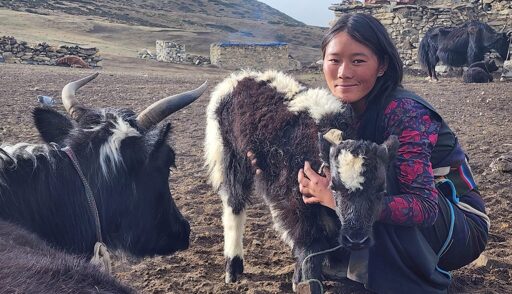
KATHMANDU — In the rugged mountains of the Dolpo region in western Nepal, Youngdung Jhama Lama spent her childhood herding nagton (domesticated yaks) across the vast alpine pastures. Two decades on, mobile herding has greatly changed. “We only have four yaks left now,” said the 24-year-old resident of Vijer (Tra) village in Nepal’s largest and remotest district, Dolpa. For traditional herders such as Lama, rearing yaks (Bos grunniens), valued for transport, meat and wool, is becoming challenging due to rising costs, climate change, lack of local markets for yak produce, frequent spread of diseases and other socioeconomic pressures. This has not only increased challenges for domesticated yaks, but also for their wild cousins (Bos mutus). “My family sold dozens of them in the neighboring Mustang district last fall because it was more labor-intensive and costly to rear them, and we had limited kharka (pastureland/rangeland) to graze them,” Lama said. Many young people across the Himalayan rangelands are leaving for better opportunities in big cities or abroad, creating a shortage of labor. According to the National Population and Housing Census 2021 Internal Migration in Nepal report, in the country’s mountains, in-migration increased from 9,698 (2.2%) in 1971 to 75,542 (2.4%) in 2021, but excess out-migration resulted in a negative net migration of -543,966 by 2021. According to the International Centre for Integrated Mountain Development (ICIMOD), climate change is affecting Himalayan high-altitude ecosystems used for grazing. It is altering how water circulates in these landscapes, changing the timing and availability of moisture.…This article was originally published on Mongabay
From Conservation news via This RSS Feed.