

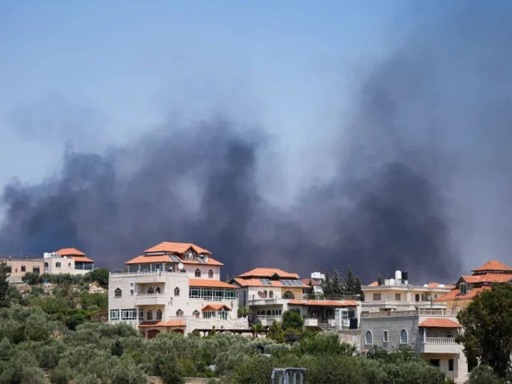

Raids carried out by the Israeli occupation forces (IOF) on the West Bank town of Turmus Ayya, happen very regularly, according to Yaser Alkam.
West Bank — ‘Turmus Ayya is a peaceful town…. The only violence we see is from the army or from the settlers’
He tells the Canary:
Last night they raided Turmus Ayya starting at 1am, and it continues until this moment. That’s about 12 hours, so far, of continuous raid — going into homes, destroying people’s property and furniture, harassing people, carrying out personal searches and searching their cars. All for no good reason. We haven’t had any incidents around Turmus Ayya for them to claim this is a security raid to look for suspects, or to look for weapons or anything else. Turmus Ayya is a very peaceful town. We’re not violent and we aren’t causing any security issues. The only violence we see is from the army or from the settlers. There is no knock on the door. It does not matter if you are sleeping, the IOF breaks into anyone’s house, at any time they want.

According to Alkam, the IOF will sometimes drive through the streets of the town, without going into any houses. But raids like these, where they go into homes, harrass people and break personal property, happen every week to 10 days.
Sometimes people are arrested during these raids. They are either detained under administrative detention — as there is no evidence against them, or released the following day, after they have been beaten by the occupation.

Some people are beaten up so badly by the IOF that their bones are broken
Alkam says:
We’ve had people who are beaten up so badly they have broken limbs. They are trying to scare people with their intimidation tactics, to make us leave our homes and drive us out of the town. It’s working for some people, but not for the majority of us.
Alkam, a lawyer, was born and brought up in Turmus Ayya, but emigrated to the US, just before turning 18. In September 2022, after 35 years in America, he returned to Turmus Ayya with his wife and children to live. He says he felt he owed something to his homeland, that there is a debt he needs to pay to his birth town. He is now the Municipality’s Head of Dept. of Foreign Relations, and tries to spread the word about the injustices happening to the residents of his town.
Around 80 percent of Turmus Ayya’s residents, like Alkam, hold dual citizenship with the US. He says that despite the violence, people have left the US to return to Turmus Ayya with their children. Their children attend local schools, and learn the language, culture and history of Palestine. This, he says, is extremely important:
With time, if Palestinians keep moving away, Palestine is going to be long gone and forgotten. We don’t want that to happen. Palestinians are struggling to keep their identity, and this is part of maintaining it. For us Palestinians, it’s about a right that we can’t afford to lose — which is our land, our home, our ancestry, and the memories we have in this land. I absolutely don’t regret coming back at all.
West Bank — in 2023 settlers killed a Turmus Ayya resident
But residents of Turmus Ayya do not only have to put up with the IOF, who destroy their property and terrorise them. Violent colonial Jewish settlers are also a daily threat to life in the town. Settler violence, although sharply increasing since the start of the genocide in Gaza, has been ongoing in Turmus Ayya for decades. The most serious settler attack the town has suffered was in June 2023. Hundreds of settlers from the nearby illegal Shilo settlement stormed the town, firing live ammunition and setting homes and cars ablaze. Ambulances and firefighters were prevented from entering, and onePalestinian man was killed.

Alkam has five acres of land he has been unable to access, since October 2023. After just one day of olive picking, in October 2023, he says the army came and kicked him off his land, and he still cannot return.
He says:
There arethree settlements near to Turmus Ayya, with the closest being Shilo, established in 1978. The settlers living in Shilo are known as theHilltop Youth, and are extremely violent. They want to scare people from going to their lands, so go from one area to another, trying to intimidate and beat people up. Whenever an attack takes place, the army follows, apparently to protect the settlers from Palestinians trying to fight back. We’re not allowed to fight back. We’re supposed to run away. If you stay your ground and don’t run away, that means you’re fighting back!
Residents have repeatedly demanded protection from the American government but, as yet, no assistance has come their way. These settlers see that the US has neglected its own citizens, and this has emboldened them further.
Turmus Ayya is a fairly wealthy town, so farming is not the main source of income for most living here. But for Palestinians, their land and the harvesting of their olives are two of their core identities. They are vital symbols of heritage, resistance, and economic survival, and represent an unbroken, generational connection to their homeland. But in Turmus Ayya vast areas of land have been confiscated and are now controlled by settlers.
Vast tracts of Palestinian land stolen by the Israeli occupation
Alkam points to a large stretch of land in front of us, and says:
This here is Turmus Ayya’s farmland, but it’s all beyond our reach. In October 2023, the army declared the area an “unsafe war zone”, and told us all that this is now a closed military zone, instead of just telling us the truth — that they had taken over our land. And over there, also on private Palestinian land, is the outpost ofEmek Shilo, which is about six months old, and was founded by Amishav Melet. He’s a very tough guy, and monitors the entire area. Whenever there’s a settler attack on anyone, you’ll find him on the scene, either minutes before, after, or during the incident. This leads me to believe he is a key decision maker, or organiser of some type.

Also on land stolen from the people of Turmus Ayya, is Shiloh Winery. Around60 percent of its 230,000 annual bottles are exported, including to the UK, and it has won consistent international awards. These awards help to not only normalise settlements, such as Shilo, which are all illegal under international, but also to normalise the dispossession of Palestinians from their land. In addition, the Israeli occupation government provides financial support to Shiloh and other West Bank wineries, to help ensure their success.
Alkam says:
We are not aware of anything that will assist us. The lawyer is against you, the judge is against you, and the law is against you. What can we do? We’re occupied people! All we can do is talk about international law, and seek international protection. But, these days, Israel does not care about international law. The people of Palestine have reached this point of disappointment. It’s a feeling I cannot describe.
Featured image via Aljazeera
By Charlie Jaay
From Canary via This RSS Feed.