

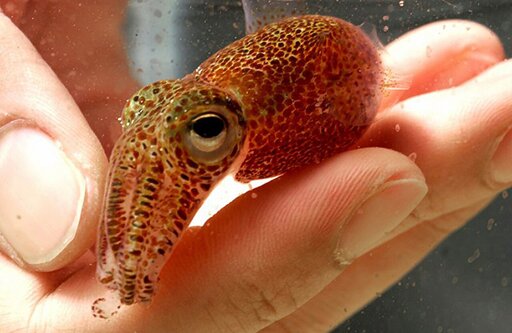
The Hawaiian bobtail squid, a small, multi-colored native of coastal waters in Hawai’i, uses bioluminescence to camouflage itself and evade predators. However, the costume change is only possible through an exclusive symbiotic relationship with a bacterial partner, Vibrio fischeri, which the squid recruits from the ocean environment. A new study, published in Proceedings of the National Academy of Sciences, led by researchers at the University of Hawai’i (UH) at Mānoa revealed that the benefit of the partnership extends far beyond light-production: the bacteria were found to play a vital role in the healthy development of the squid.
From Biology News - Evolution, Cell theory, Gene theory, Microbiology, Biotechnology via This RSS Feed.
You must log in or # to comment.