

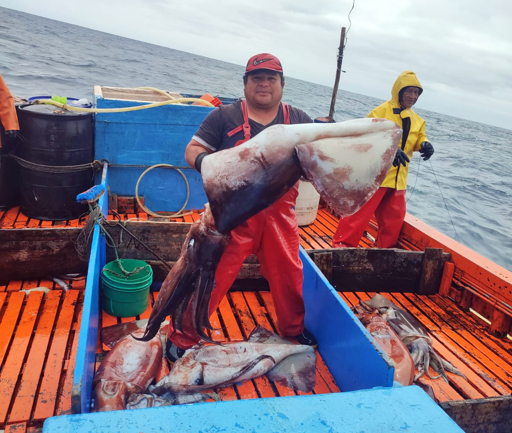
A recent annual meeting of the fisheries regulator for the South Pacific tackled a familiar challenge: how to manage one of the world’s largest squid fisheries before mounting pressure turns it into a depleted one. The meeting produced some new safeguards, though much of the hard work still lies ahead, reports Francesco De Augustinis. The South Pacific Regional Fisheries Management Organization (SPRFMO) oversees fishing across roughly 59 million square kilometers (22 million square miles) of the South Pacific high seas, trying to impose order on a region double the size of Africa, where distant-water fleets pursue species ranging from jack mackerel to jumbo flying squid. The latter dominated this year’s talks. Fishing for jumbo flying squid (Dosidicus gigas) has expanded rapidly over the past two decades. The number of squid-jigging vessels operating in SPRFMO waters rose from 14 in 2000 to more than 500 last year, almost all of them flying the Chinese flag. Meanwhile, reported catches have fallen markedly, from more than 1 million metric tons in 2014 to about 600,000 metric tons in 2024. Scientists worry that fishing pressure is outpacing knowledge of the stock. In response, SPRFMO members agreed to lower the maximum number of vessels allowed to fish for squid in the region, from 766 to 651, and reduce the fleet’s combined tonnage. Dave Gershman of The Pew Charitable Trusts, attending the meeting as an observer, called the decision a recognition that the fishery needs closer oversight. Yet the measure may have little immediate effect: the…This article was originally published on Mongabay
From Conservation news via This RSS Feed.