

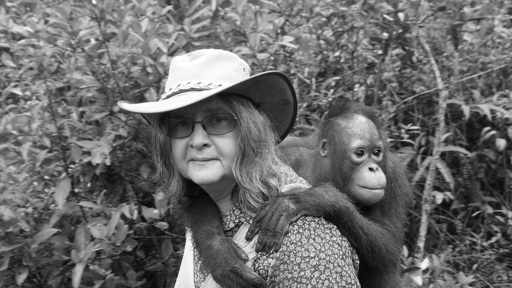
In the early 1970s, orangutans occupied an ambiguous place in science. They were known to exist, of course, but remained poorly understood, rarely observed, and difficult to study in the wild. Their forest habitat in Borneo and Sumatra was still vast, though already beginning to change. Logging roads were extending into areas that had long resisted access. The outlines of a larger problem were visible, even if its scale was not yet clear. At the same time, a small group of researchers was beginning to reshape how great apes were studied. Fieldwork, rather than captivity, became the preferred approach. Long-term observation replaced short expeditions. The premise was simple but demanding: to understand animals that were hard to find, one had to remain in place long enough for them to become familiar with human presence. Into this setting came a young graduate student with an interest in human evolution and a determination to study orangutans in their natural habitat, despite doubts that such work was feasible. With limited funding and little infrastructure, she established a research station in a remote peat swamp in Indonesian Borneo in 1971. Over time, that station would become one of the longest-running field sites for any wild mammal. Galdikas in the field. Photo courtesy of Orangutan Foundation International (OFI). Birutė Galdikas spent the next five decades working from that base. Her early years were marked less by discovery than by persistence. Finding orangutans could take weeks. Observing them required learning to move through dense forest and…This article was originally published on Mongabay
From Conservation news via This RSS Feed.