

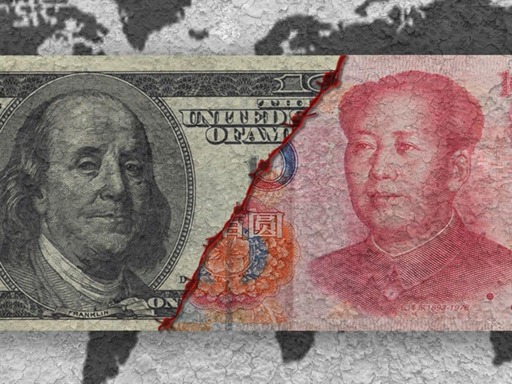

Deutsche Bank has warned in a new report that the rise of the petroyuan poses a clear challenge to the U.S. currency. The petrodollar system, built on a 1974 agreement between the U.S. and Saudi Arabia, faces a “perfect storm” from the ongoing war on Iran initiated by the US/UK/Israel, the bank said.
The bank said that the foundations of the “security-for-oil-pricing arrangement” between the US and the GCC states have been shaken.
The current conflict has arguably shaken some core foundations of the petrodollar regime: the security-for-oil-pricing arrangement. US military assets and bases in the Gulf have come under attack in the war.
Oil infrastructure in the Gulf has also been hit. And the US ability to provide the maritime security to ensure the global flow of oil has been challenged with the closure of Hormuz. The US security umbrella has been fundamentally tested.
The legacy of this conflict for the dollar could be the ways in which it tests the foundations of the petrodollar regime.
The dollar has not strengthened much in this crisis because of rising US fiscal risk from military spending and the sell-off of US Treasuries by Asia and the Middle East to defend their currencies, the report said.
“The conflict could be the catalyst for erosion in petrodollar dominance and the beginnings of the petroyuan,” the bank said, pointing out reports that Iran is allowing the passage of ships through the Strait of Hormuz if oil payments are made in yuan. China, a long-time partner of Iran, is also the nation’s biggest oil customer.
Just as the 1973 oil embargo led to diversification away from Gulf oil and reserve-building in places like Canada and the North Sea, a similar effect may happen this time. Europe, Asia, and many parts of the Global South will be the ones this time, looking at ways to reduce dependence on imported fossil fuels.
Reduced global oil trade would also create more room for the pricing of goods and services to shift away from the dollar, the report said.
Featured image via OMFIF
By The Canary
From Canary via This RSS Feed.