

Trump’s blockade of Cuba continues, with the collaboration of supposedly “progressive” Latin American governments such as Claudia Sheinbaum’s in Mexico or Lula’s in Brazil. What are you hearing about daily life on the island?
Life is getting harder by the day. The government has announced measures very similar to those of the “Special Period” [after the Soviet Union collapsed] in the 1990s. Universities are closed and operating remotely. Hospitals are operating at minimum capacity. Public transport has mostly stopped, including between provinces.
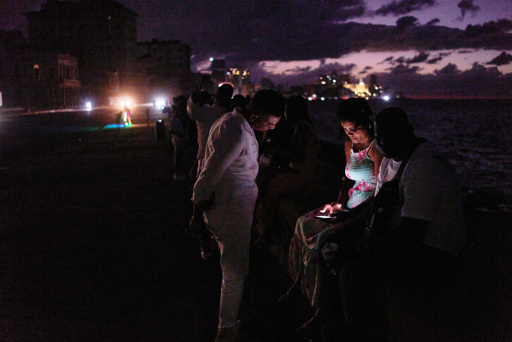
I have family in Havana and in Camagüey [in the middle of the island]. A few months ago, blackouts were common in the Eastern provinces — now there are blackouts across the country. At best, people get two or three hours of electricity per day. The situation has been deteriorating for years. With the tightening of the oil blockade, everything has worsened dramatically.
Inflation is out of control. Basic goods have reached unbearable prices. My mother is a doctor with more than 30 years of experience, and she earns the equivalent of around US$10 per month, while the bare minimum amount of food costs at least US$30.
Healthcare is a particularly painful example. Cuba still has many trained doctors, but medicines have practically disappeared for most people. Pharmacies are empty. Equipment is broken. My mother recently underwent cancer surgery, and the machines needed for follow-up tests were not available anywhere on the island.
Cuba’s dependency on imported oil means that the new sanctions hit everything: transport, food, electricity, healthcare. Psychologically, it’s devastating. People have gone from thinking day by day to thinking hour by hour. When will the electricity come back? Should I cook at 4 a.m. if power returns? How do I get to work? What happens if I get sick? How do I store food?
There is a deep sense of exhaustion. The government talks about “creative resistance,” but people can’t even hear those messages if there is no electricity.
The Nuestra América solidarity flotilla just arrived in Cuba, breaking through the blockade. How have Cubans reacted?
The flotilla is an important gesture of international solidarity, bringing medicine, food, and solar panels — things people urgently need. But it also shows the limits of symbolic solidarity. What Cuba really needs is oil. Breaking that blockade requires more than humanitarianism — it requires political action.
I’ve also heard Cubans complaining that the flotilla is used by the government for PR purposes. There are official meetings far removed from everyday reality. [The Spanish left-reformist politician] Pablo Iglesias is staying at a five-star hotel in Havana.
After denying it for months, the Cuban government admitted it has been in talks with U.S. imperialism about offering concessions to Trump. What changes are they considering?
Nothing official has been made public. People are left to speculate, although the latest news has confirmed what many already assumed. From what has been hinted at, the discussions revolve around further economic openings and possible political restructuring.
On the economic side, changes have been happening for years. A recent decree allows non-resident Cubans to invest and own businesses. This is not really new — it continues the gradual capitalist restoration that began in the 1990s and accelerated under Raúl Castro and the current president, Miguel Díaz-Canel.
This process has been criticized from multiple angles. Leftists point out that the reforms deepen inequality and expand a new bourgeois layer without solving the structural crisis. At the same time, they don’t even satisfy the demands of foreign capital. There has also been talk of compensating former property owners whose assets were expropriated after 1959.
Figures like Marco Rubio openly talk about regime change. Imperialism’s goal is clear: a government more aligned with U.S. interests. The Cuban state denies this, but the fact that such discussions are even happening shows how much pressure there is.
Cuba’s excellent health care system is an example of what is possible under a non-capitalist economy. But there is very little democratic participation in the planned economy. What does Cuba’s economic system look like in daily life?
The bureaucracy runs things their way — you can see that in the Havana skyline. Massive new hotels sit empty. Residents deal with water shortages and have to wonder: are they taking our water to flush hotel toilets?
Tourism was the bureaucracy’s main bet. Maybe they were thinking: If the system collapses, then they have something to sell to the Yankees and save themselves. GAESA [the military’s business conglomerate] famously does not report to the public about its activities — it acts like a massive private corporation.
People feel disconnected from the system because they are not in control. The project calls itself socialist, but it alienates workers from the means of production — and that is doomed to fail.
A big part of Cuba’s working class is in the private sector — or they at least have to work part-time in private businesses to afford the basics. Privatization has also taken over big swaths of what the government used to produce and distribute. Basic goods are available only for those with cash — and whoever lacks it has to hustle.
How could Cuba have prepared against Trump’s offensive?
Cuba, a small island, just 90 miles from U.S. shores, would never have an easy time withstanding the pressure of imperialism. But there were choices. Energy independence should have been a priority long ago — Cuba has enormous solar potential. Resources that went into building hotels could have been invested in energy infrastructure.
Beyond that, there is a political question. A more democratic economic system, in which workers actually participate in decision-making, would have allowed us to identify problems earlier and come up with better responses. Instead, decisions have been concentrated in a bureaucratic layer, limiting both initiative and accountability.
Cubans appear to be very polarized: If you oppose imperialist aggression, then you support the government of Díaz-Canel; if you criticize the Cuban Communist Party, then you tend to place hopes in Trump. Is there space for independent leftists?
There is criticism, but it rarely leads to meaningful change. People who join the party hoping to change it from within end up playing the bureaucratic game. Critics have to tune down what they say in the name of “unity” or risk getting labeled “contrarevolucionarios.”
Many people understandably have developed negative views of socialism and communism. They say these might be good in theory, but have been used to justify wrongdoing — and these days don’t even offer bread. You find working-class and poor people chanting anti-communist slogans — not because they have far-right, reactionary views, but because they are frustrated by a system that calls itself communist.
So it’s difficult for leftists to bring up ideas of socialism based on workers’ democracy.
How much political repression does an average young person in Cuba experience?
It varies. Everyday criticism is common, especially among young people. The atmosphere is not as repressive as in previous decades. But people who organize openly or challenge the government can face visits from officials, intimidation, or pressure at work or university. A friend who supported protests against internet price increases was fired from his job, for example. But the state often relies more on social pressure than open violence.
At the same time, there’s a noticeable gap between how repression in Cuba is portrayed abroad and what I’ve experienced here in Berlin. The level of police militarization I’ve seen at pro-Palestinian protests in Berlin is far worse than I’ve ever seen in Cuba.
Do you see any progressive possibilities for Cuba?
I have to remain hopeful. I might be a bit of a dreamer here, but what else can I do?
The main obstacles to progressive change is U.S. imperialism. We desperately need an end to the blockade so oil can flow. The governments of Mexico, Colombia, and Venezuela must stop obeying Trump. EU governments need to speak out against the siege.
Ultimately, though, Cuba’s only hope lies in the workers of the world. Cubans have great difficulty thinking and organizing right now, when life has been halted by constant blackouts and many don’t have enough to eat. Protests in the United States, in Europe, and in Latin America are necessary to break the blockade.
The post “Cuba’s Only Hope Lies in the Workers of the World” — Interview with a Cuban Immigrant appeared first on Left Voice.
From Left Voice via This RSS Feed.