

We’re now 13 months into the most recent outbreak of measles in Mexico, and the numbers remain alarming. In a recently published report, the Secretary of Health acknowledged a total of 33,892 probable cases in the country, 13,408 of which have been confirmed, along with 35 confirmed deaths.
Efforts to mitigate the current crisis will be temporary and superficial so long as the federal government does not seriously rethink and retool its health system to prioritize its most marginalized and most vulnerable populations.
Chihuahua, where the first cases emerged, leads in the number of deaths by a wide margin with 21. The next closest is Jalisco with 4, while Mexico City and Durango each have 2. But the data only tell part of the story.
The demographic profiles of the deceased and the uneven distribution of infection and vulnerability point to a systemic problem—not just an epidemiological one. Its roots go back decades and demonstrate deep and widespread social inequality, ones that the government seems unwilling, or at least too dysfunctional, to attend to.
The country will almost certainly succeed at keeping this epidemic from ballooning into a full-blown, COVID-style emergency (if only because measles is a known quantity, a vaccine for it already exists, and the campaign to stamp it out has already been underway).
Even so, all efforts to mitigate the current crisis will be temporary and superficial so long as the federal government (in tandem with the states) does not seriously rethink and retool its health system to prioritize its most marginalized and most vulnerable populations. And that, as many experts are saying, will take a degree of coordination heretofore unseen.
The Usual Victims in All-Too-Familiar Territory
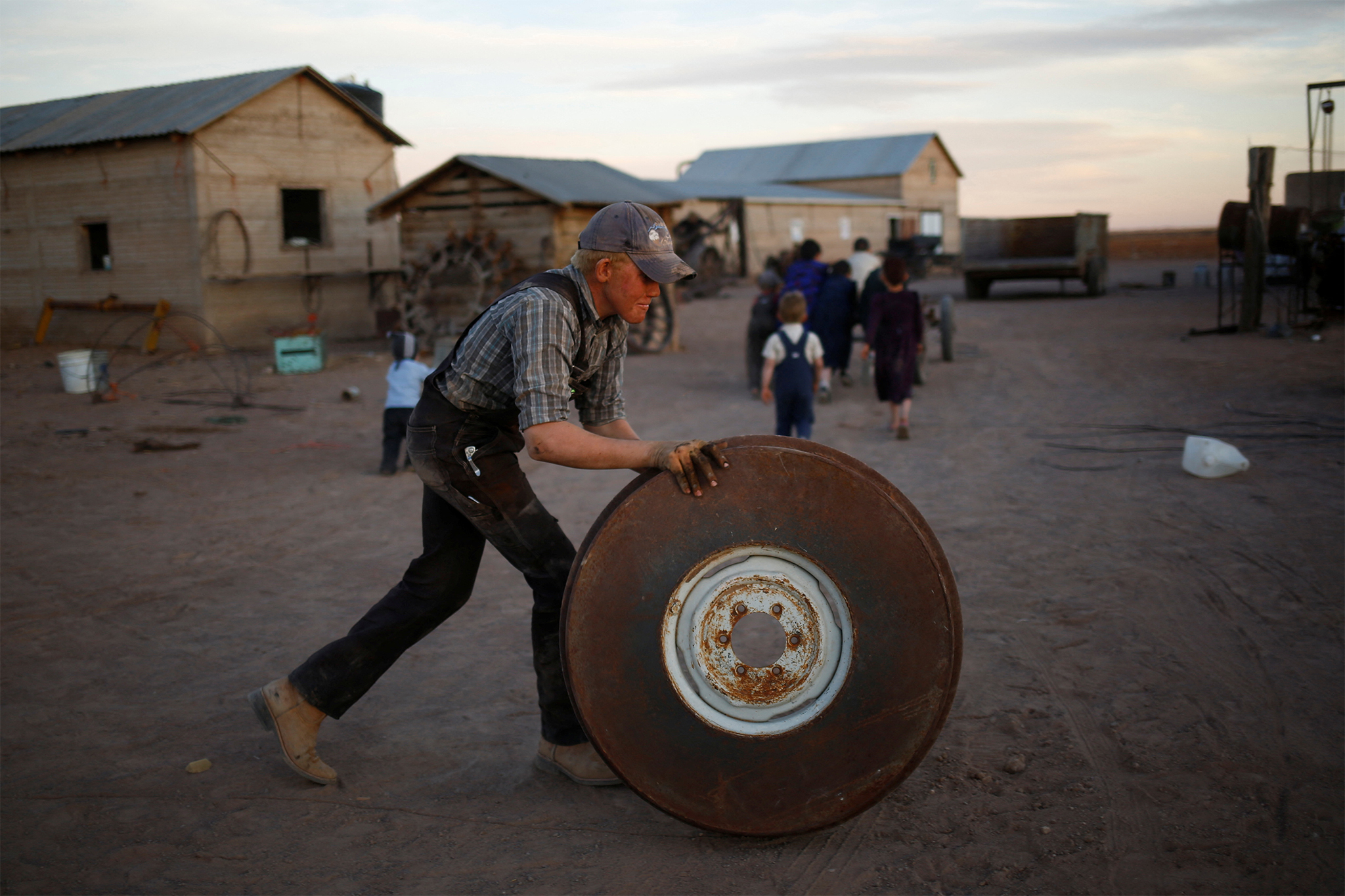
The shortcomings of the existing healthcare system were brought into sharp relief in the earliest days of the outbreak, in Chihuahua. Members of the Mexican Mennonite community brought the infection back with them after attending an international Mennonite conference in Canada in 2024. They spread it on their passage through the US via Seminole, Texas, before finally returning to Chihuahua—which is home to the largest Mennonite communities in the country.
“In this community, they essentially decide to let the rest of the children get sick naturally, because they believe this will give them natural immunity,” says Leticia Ruiz, Director of Prevention and Disease Control in the Chihuahua State Health Department. According to Ruiz, the Mennonite community let the infection ride its course—not out of religious but rather personal conviction against vaccines and an erroneous confidence in “natural immunity”. (At least in the United States, the Mennonite Church has no central doctrine condoning or condemning vaccines, but defers to the individual.)
That said, Ruiz estimates that general vaccine coverage is “well below 50%” in the community. “It’s only when a child needs to be hospitalized that we realize these beliefs among families and within the community—that vaccination isn’t necessary and that natural immunity is part of nature.”
Though Ruiz and her team swiftly and effectively attended to the more densely concentrated affected zones (overcoming barriers to communicating with the primarily German-speaking Mennonites), the outbreak eventually escaped containment and quickly spread through the migrant day laborer population—starting with those workers in the employ of the Mennonites. “These [Mennonite] communities rely on hiring people from outside to work in the fields, and they get sick.”
The Mennonites’ insularity disintegrates at the site of labor transaction, as Jose Luis Gonzalez and Cassandra Garrison have observed: “[Their] interaction with the outside world is mostly restricted to their relationships with local people who work for them as laborers in the community or to trips into town to buy goods.” That means that, like essential workers in the United States, these farm workers and day laborers found themselves on the frontlines of the emergency, unprepared and un-cared for.
As the unvaccinated are at particular risk of contracting and suffering complications and death from measles, the disparity between the Indigenous and non-Indigenous population illustrates major policy flaws.
And, as Dr. Andrés Castañeda Prado, Federal Coordinator of the National Coordination of the National Public Security System (SNSP), emphasizes, this population is structurally positioned to bear the brunt of all kinds of social pressures, but specifically medically-related ones.
“They’re…people in vulnerable situations because they face issues of malnutrition, deprivation, of course, lack of social security, and years of neglect by the system.” Hailing overwhelmingly from the country’s south and southeast, these internal migrant workers go where the work is, often at the mercy of exploitative employers and hazardous conditions. “They have a higher risk of infection,” as they confront compounding risks: traveling in crammed trucks, on trains, and overcrowded work and living arrangements.
To reach the immediately affected workers, many of whom are Indigenous, Ruiz and her team deputized community leaders as coordinators who could facilitate the vaccination of “60,000 day laborers, 20,000… on the move.” And that was in the early days. Ruiz’s team ramped up vaccination to “almost 700,000 over those three critical months—that’s what triggered a significant drop” in infections. But physically reaching the most vulnerable, as well as targeting messaging to them, was no easy task, considering their transient behavior and the geographic remoteness of the population.
The Indigenous population in Mexico is often the first to suffer at the hands of state violence, and the last to receive any kind of social benefits that might justify the existence of big government, and medical attention is no different. Language and location barriers, lack of medical coverage and education, and stigma make it hard for medical workers to reach this group, as was seen notably with COVID vaccination distribution and uptake). To this day, the government isn’t doing nearly enough to bridge the gap.
And, as the unvaccinated are at particular risk of contracting and suffering complications and death from measles, the disparity between the Indigenous and non-Indigenous population illustrates major policy flaws in the federal and state governments response, ones that put the entire population at risk.
Slipping Through Ever-Widening Cracks: The Jalisco Case
If the outbreak’s path through Mennonite communities and migrant workers exposed socioeconomic vulnerabilities, its spread to Jalisco revealed another kind: political negligence.
Lemus and company can tout their state-of-the-art IMSS-Bienestar-insulated teaching hospital & Social Security alternative until they’re blue in the face, but it won’t do a bit of good if they don’t put them to use in a timely, efficient manner.
As the infection spread from state to state along commercial and migratory routes, it revealed in its wake the “inequality gaps [in]…vaccination, failed campaigns, [and] failed epidemiological surveillance,” in Jalisco, says Deputy Mariana Casillas Guerrero. For her, the measles resurgence in her state (which, as of late February, has reported 2,662 cases or 59% of all cases in the country) is not “just bad luck,” but a powder keg that’s been waiting to blow.
Insofar as Jalisco has become the new epicenter of the outbreak, Casillas Guerrero does not mince words: the ruling center-left Movimiento Ciudadano (MC), the current Governor Pablo Lemus Navarro, and its previous governor Enrique Alfaro (who resigned from the MC a week into his governorship) are all to blame, at least in part, for putting inter-party politics above the wellbeing of the jaliscienses.
“There is public evidence that the state executive, in this case Pablo Lemus, has refused to join the IMSS-Bienestar program, and Congress itself has also had to urge the governor to sign this agreement to guarantee medications and care for the entire population right now.”

Deputy Mariana Casillas Guerrero, Photo: @MarianaCasGe
Casillas Guerrero is referring to Governor Lemus’s renewed rejection (following in his predecessor’s footsteps) to participate in the federal agency Health Services of the Mexican Social Security Institute (IMSS-Bienestar) opened by former president Andrés Manuel López Obrador in 2022 in his attempt to extend universal medical access to those who don’t receive coverage through their employers or the state (like the day laborers working the Mennonite farms). Lemus points to a perceived lack of medication (hardly the case) and dignified working conditions for medical professionals (debateable) in the agency as his justification for keeping Jalisco’s system separate and not committing a “historic error.”
Casillas Guerrero doesn’t buy it. For her, Lemus’s resistance isn’t about policy—it’s politics. “Jalisco has been holding onto this administrative exemption as if it were a political banner—but more than political, it’s an electoral banner,” implying the MC party’s a priori resistance to Morena’s platform. (Incidentally, the MC party’s victories can in large be attributed to longstanding anti-AMLO sentiment in the region.)
Moreover, Lemus’s tough talk rings hollow considering that he and his state had plenty of lead-time before the outbreak to assemble a preventative program—and they failed to take advantage of it. “The Pan American Health Organization did warn us that there was a massive spike in cases in this specific region from 2025 to 2026, and it was a problem we’d been grappling with since late last year.” The National Committee for Epidemiological Surveillance sent out a warning in February of 2025 on the brewing crisis that should have sounded alarm bells, and yet they officials sat on their hands for months.
So Lemus and company can tout their state-of-the-art IMSS-Bienestar-insulated teaching hospital and Social Security alternative until they’re blue in the face, but it won’t do a bit of good if they don’t put them to use in a timely, efficient manner.
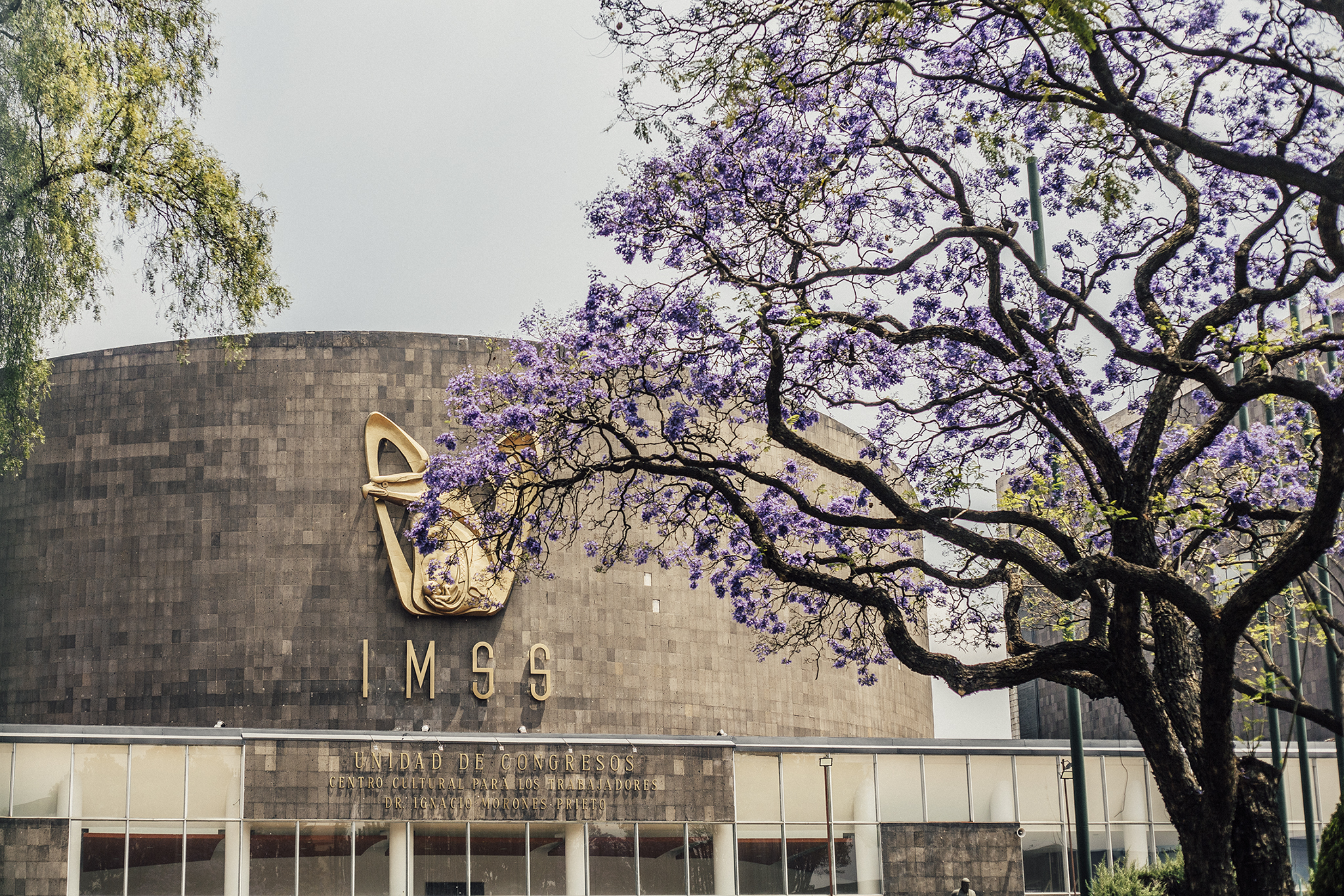
Centro Médico Nacional Siglo XXI, Mexico City Photo: Jay Watts
A Far Cry from How Things Used to Be, and a Long Way to Go
The truth is that, viewed in its historical context, IMSS-Bienestar—while by no means a perfect institution—still represents a huge leap forward for Mexico’s healthcare system, one accomplished in a very short period of time. “What we have done,” says Ulises Rangel Cruz, former deputy director of Strategic Information Coordination at IMSS-Bienestar, “is make the largest investment in medical infrastructure in the last 36 years.” He goes on to enumerate:
“IMSS-Bienestar reclaimed more than 100 hospitals that had been abandoned, since the PRI and the PAN paid for hospitals and left them as unfinished structures, half-built; they left 300 hospitals unfinished, and during the COVID pandemic, we reclaimed them. We equipped them, put them into operation, and continue to open new hospitals. We have granted permanent positions to more than 56,000 healthcare workers who previously had precarious contracts in the states. In other words: no administration had ever granted permanent positions to doctors. Today, they earn a salary three times higher than what they received when state governments were in charge. This is the first time the Mexican government has created a health services institution for people without social security. Previously, there was no federal institution of this kind.”
In the 80s, long before AMLO and Morena’s ascent to power and the rollout of the Fourth Transformation, the Mexican healthcare system was subject to a punishing regime of neoliberalism known as the “Washington Consensus”. The mandate’s enforcers carried out decentralization en masse of an already fragmented healthcare system, outsourcing the national project to 32 subnational, under-resourced, uncoordinated health systems whose level of care differed dramatically from state to state. The uninsured population who came to depend on the balkanized institution were hardly in a better place when it comes to access and quality of care than they were before.
Then in the 90s and early 2000s, the federal government doubled down on decentralization, footing the bill of the decades of fragmentation through technocratic and “market-oriented” reforms. Things like per capita financing to persuade and assuage state governors, and a benefits package (CAUSES) that prioritized medical intervention over prevention—eschewing the, arguably, most critical phase of healthcare.
AMLO, through the IMSS-Bienestar program, sought to reverse this process without having to rebuild the structures from scratch. The program offers states the option to voluntarily enter into agreements to transfer to the federal program the full responsibility for providing healthcare to the uninsured, including infrastructure, personnel, and financial resources. And for all the strides the IMSS-Bienestar has made in centralization, it is still guilty of privileging specialists and hospitals at the expense of preventative community care—creating internal medical care deserts that exist in the shadows of the national institution.

Centro Médico Nacional Siglo XXI, Mexico City Photo: Jay Watts
The Federal Fix That Isn’t (Yet)
That’s all to say that, as Castañeda Prado points out, the existence of the IMSS-Bienestar is not a panacea. That’s partly because, though it has played a major role in the fight against this outbreak of measles, it can’t act in isolation.
“The responsibility for setting public policy lies with the different units,” he says. “Vaccination policy is under the unit called CeNSIA [Centro Nacional para la Salud Integral de la Infancia y la Adolescencia] epidemiological surveillance policy is set by the General Directorate of Epidemiology; and the responsibility for public health lies with the state health services and the health jurisdiction, and the provision of medical care lies with the various providers.”
Really making good on universal medical coverage comes down to a question of sufficient vision—that envisages what community care looks like in practice—and the necessary will to implement and defend that vision.
So the healthcare landscape is still fragmented. But, as Castañeda Prado assures, efforts are being made within the SNSP to coordinate and connect the dots. “They’re called health coordination centers for wellbeing—that aims to bridge the gap between the community’s healthcare needs and healthcare providers.” He sees “incentives, a budget, and metrics” as being three planks in that bridge to assure adherence to local, state, and national objectives, and also that the resources, the hospitals, infrastructure, medications, are all put to good and efficient use.
But really making good on universal medical coverage, he says, comes down to a question of sufficient vision—that envisages what community care looks like in practice—and the necessary will to implement and defend that vision. And ultimately that mandate has to come from the top down, and translated and transmitted through on-the-ground community work. Castañeda Prado concedes that community health isn’t always a winning platform electorally: “it doesn’t win votes; it’s not visible.”
Invisible or not, it’s indispensable. And it “isn’t carried out by doctors and nurses at the clinic,” as Castañeda Prado reiterates. “It’s done in the community, with health promoters, social workers, and local governments. And there really isn’t a strategy or policy in place to support that.”
Of course, this stymied interplay gets at the perennial tension between big government central planning and local, grassroots implementation. The two are mutually co-dependent, but, as we see in the case of the country’s response to the measles, so often either in conflict or operating in siloes, to the detriment of the most marginalized. If this current crisis is to serve as a “wake up call for policy makers” as Casillas Guerrero says it ought to, it’s a call that will have to be heard as much at the top as at the bottom, and heeded in concert.

Seth Garben is a writer, poet, musician, filmmaker, playwright, and activist/organizer based in the US and Mexico City. He is a member of the Democratic Socialists of America and a core team lead with immigrant rights group Danbury Unites for Immigrants. He composes and performs music in Mexico City and internationally as Goldy Head.
-
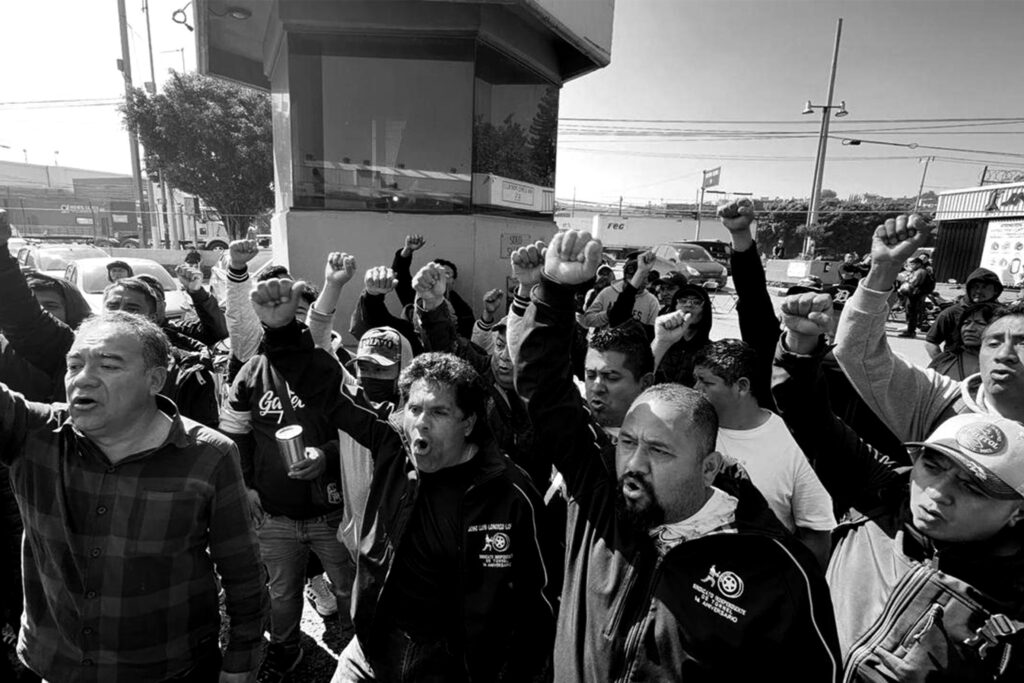
Hit & Run: Tornel Rubber Company Didn’t Attend Labour Conciliation Hearing
March 25, 2026March 25, 2026
On March 18, striking workers on the picket line at a Tornel Rubber plant were attacked by an armed shock group of over sixty men. Four workers were shot.
-
Failing the Stress Test: What the Measles Resurgence in Mexico Reveals About a Fragmented Health System
March 25, 2026March 25, 2026
Surveying the land, 13 months into Mexico’s most recent outbreak.
-

People’s Mañanera March 24
March 24, 2026
President Sheinbaum’s daily press conference, with comments on electoral reform, PAN, femicide, and diesel prices.
The post Failing the Stress Test: What the Measles Resurgence in Mexico Reveals About a Fragmented Health System appeared first on Mexico Solidarity Media.
From Mexico Solidarity Media via This RSS Feed.