

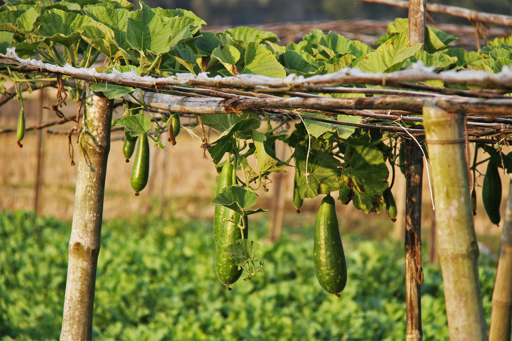
Cucumber and bitter gourd plants climbed over bamboo trellises, their fruits swaying gently in the breeze, while Milan Tanchangya, a 43-year-old farmer, plucked the cucumbers using a knife and placed them in a basket. Only a few years ago, he used this land for jhum, the traditional multi-crop shifting cultivation method of Indigenous communities in southeastern Bangladesh’s Chittagong Hill Tracts (CHT) comprised of Rangamati, Bandarban and Khagrachhari districts. But declining yields forced him to look for new ways to feed his seven-member family. To make ends meet, he started a different cultivation system, locally called machan — a method that uses bamboo trellises, allowing vegetables to grow above the ground. This method of cash crop farming not only protects crops from pests and viral diseases but also has more seasons of vegetable production than Milan’s previous jhum plots. “If I can manage the trellises well, I can harvest several crops a year, and the soil remains intact,” Milan said from his land, which has already grown a green canopy, in Suwalok union’s Amtali area, Bandarban district. He said machan farming has transformed life for him and other farmers in the hills as vegetables such as bitter gourd, cucumber and beans now provide steady incomes, while also reducing soil erosion on steep slopes as they’re raised crops. “I now earn an additional 70,000 takas [$570] to 80,000 takas [$651] every year,” he said. Vegetables grow on bamboo machan trellises along hill slopes in the Sualok area of Bandarban Sadar upazila. Image…This article was originally published on Mongabay
From Conservation news via This RSS Feed.