

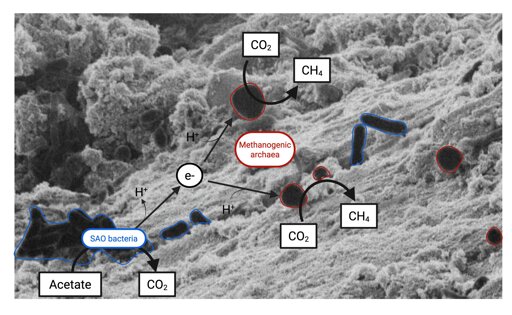
Deep below the surface in coastal sediments, microorganisms use conductive particles as tiny natural “wires” to exchange electrons. This enables them to convert organic carbon into methane in a way not previously documented. The mechanism is described in a new study in Nature Communications led by researchers from the University of Southern Denmark (SDU) in collaboration with Aarhus University.
From Biology News - Evolution, Cell theory, Gene theory, Microbiology, Biotechnology via This RSS Feed.
You must log in or # to comment.