

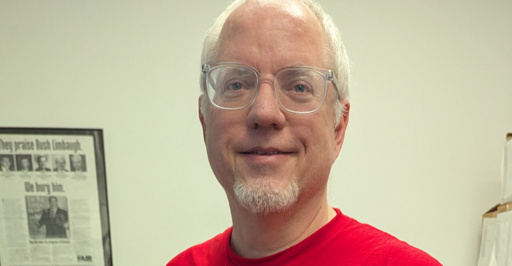
Janine Jackson interviewed FAIR’s Jim Naureckas about the Trump administration’s assault on the First Amendment for the March 20, 2026, episode of CounterSpin*. This is a lightly edited transcript.*
https://media.blubrry.com/counterspin/content.blubrry.com/counterspin/CounterSpin260320.mp3
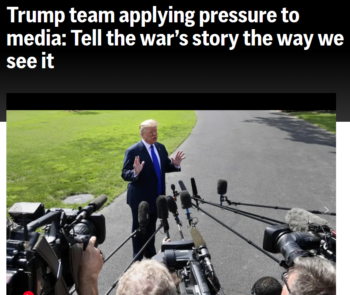
AP (3/17/26)
Janine Jackson: When FAIR started in 1986, US news media were harming people through nightly stories blaring about crime in the streets and silent on crime in the suites, through a top-down depiction of US social struggles where the outpowered were always the problem, through a foreign policy conversation tethered to Cold War premises, and the idea that the US can, indeed, must do whatever it wants, wherever it wants. And all of that corrosive messaging supported by media ownership, sponsorship and regulation structures that, at the time, not a lot of people saw as meaningful, much less problematic. That’s why FAIR is here.
Fast forward 40 years: All of the conflicts we were told we were either making up or exaggerating are out in broad daylight. The president is overtly handing control of the country’s media outlets to a tiny group of MAGA billionaires. The Trump-appointed head of the public interest–defending regulator is stating that any outlets that don’t toe the Trump line, wherever that is today, could lose their broadcasting license for that reason.
And the so-called elite, traditional, legacy media aren’t ringing alarm bells, perhaps because they’re busy right now carrying water for Trump’s illegal war, today it’s on Iranians, with warnings from the Washington Post of “the danger of lobbying some bombs without seeing this through,” and homilies like that from the New York Times that “military action, for all its awful costs, can have positive consequences.”
There is lots of informed, impassioned debate going on right now about the various nightmares unfolding in and from the US. What does it mean that that’s happening largely outside the still-influential news media outlets that have long shaped public understanding? FAIR editor Jim Naureckas has been thinking and talking about this. Welcome back to CounterSpin, Jim Naureckas.
Jim Naureckas: Thanks for having me back on.
JJ: It’s at least a little funny how people who still use “Communist” as a debate-ending epithet are now apparently fully behind the idea that the US should only allow media who are willing and eager to say “Trump = America = God = goodness” to speak. The word “surreal” might be overused, but this is some mind-bending stuff. So what’s the landscape, for folks who maybe have checked out (and no wonder)? What are you seeing? What are the dangers that you want to call out?
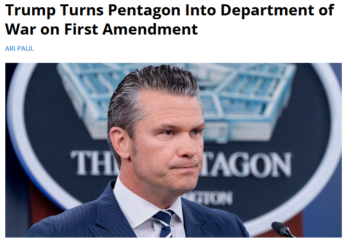
JN: Yeah, surreal is the right word, I think. It’s worth pondering the fact that to Pete Hegseth, the self-styled “secretary of war,” Fox News is to the left. They’re left-wing America haters who are rooting for Trump to fail, and are called out from the podium at Pentagon briefings as that kind of bad actor.
And that really just shows you that it’s not enough to actually be pro-Trump, to love Trump. You have to be unwavering in your support of Trump, and unquestioning in every aspect of reality as it is dictated by Trump, in order to be considered real journalism.
This is a Pentagon that has kicked out every self-respecting reporter who refused to sign a statement saying that they would not do their job. And so the seats are largely filled with the far right outlets, like One America News Network and Real America’s Voice and the Pillow Guy’s outlet.
These are the people who are taking down the wisdom of Pete Hegseth, because the actual reporters got kicked out of the building. There’s a couple of them there to be harangued by Hegseth. And as the attack on Iran continues to not be the slam dunk that they all assured themselves it would be, he gets more and more angry, and more and more bitter in his denunciations.
He kicked photographers out of the press briefing because he didn’t like the way that photographs of him looked. I think he thought they made him look crazy.
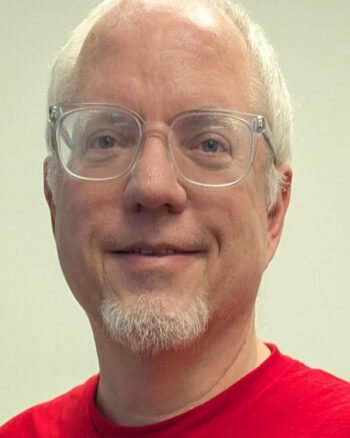
Jim Naureckas: “The regulatory system is being used to steer media ownership towards billionaires who are going to be friendly to Trump.”
And so there’s a comical aspect to it, but also it’s terrifying, because the threats he’s making are being backed up by the president of the United States, who has accused reporters of treason for not supporting his war vigorously enough. And FCC chair Brendan Carr, who is openly saying that if you don’t report the news the way we want it to be reported, you’re going to lose your license.
And meanwhile, the regulatory system is being used to steer media ownership towards billionaires who are going to be friendly to Trump. We’ve got CBS, now CNN, TikTok are all in the Ellison family’s hands, because Ellison is a MAGA billionaire, and therefore he should have these critical pieces of the media system in his hands.
And reporters are leaving CBS in droves, because people who want to actually do their jobs are finding that they cannot. They’ve installed a commissar at CBS, which was one of the things that Trump was praising them for, for having a person there to call out bias. And bias obviously, in this case, means criticism of the great leader.
JJ: I think it’s important to acknowledge that some reporters were asked to sign a loyalty oath and they said, “You know what? No, I’d rather just leave.” But we don’t hear so much about them, and I don’t think we’re hearing necessarily about the importance of that, about the way that reporters who want to be reporters are being driven out of the profession.
And I think some people are surprised at the fast collapsing, the caving. I think about Target, that they were told, “Hey, companies should stop doing DEI.” And Target was like, “What? Hey, DE-what? You say jump, we say how high.”
And I think it’s disheartening for people to see journalistic institutions that they thought were bulwarks instead suggest, some of them, that they’ve actually just been waiting for someone to release them from their responsibility to comfort the afflicted and afflict the comfortable. The White House can pitch, but somebody’s got to catch.
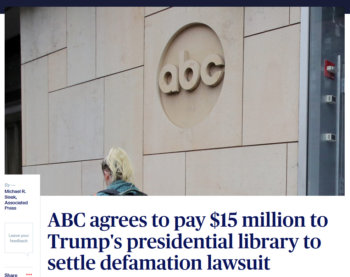
AP (via PBS, 12/14/24)
JN: It really does highlight the weakness of our media system. To have a media system that is built on profit as the highest goal is incredibly fragile, because it’s very easy for the government to affect the profits of corporations, which is why you have these lawsuits. Another part of the assault in the process is Trump suing for millions or billions of dollars whenever he is upset about a news report. There is no legal logic behind these at all. There’s no way you can construe the things that he’s suing about as actual valid torts under our legal system, let alone given the protections of the First Amendment; they’re supposed to shield journalistic outlets from exactly this kind of pressure from the people in power.
But because these corporations have no real interest in the First Amendment, in journalism, in an informed public, they have an interest in keeping their stock prices high, they do the math. They say, “If we give $15 million to Trump’s library, then maybe he’ll get off our back and that will be good for our stock price.” It doesn’t actually work that way, because once you’ve paid him, he sees that he can roll you, and he can continue to make absurd demands on you; but they are not going to stand up if the price to be paid is some kind of reduction in their quarterly earnings.
Journalism is an incredibly important part of a democratic system. You need to have an informed public in order to make informed judgments about who should be representing us. To tie that to crass money-making, to companies that, by law, are required to have maximizing profit as their sole goal, it’s very dangerous. And we’re seeing the results of that.
JJ: And that’s the conflict, of course, that FAIR has been calling attention to for some 40 years now. And I’ll just ask you, finally, because as we have been thinking about this for decades, we are seeing, I won’t say unprecedented, but it’s wild, this full-court press from Trump, from Hegseth, from Brendan Carr and the various acolytes against the First Amendment, which you used to at least pretend fealty to… and yet, and yet, and yet things are happening. People are being given tools to resist. Worker organizations within media outlets are finding their feet and their voice. Droves of us are looking outside so-called legacy media for our news and for our perspectives. I mean, it’s a battleground, but that’s because folks are kind of realizing that we have to fight.
JN: Yeah. FAIR has always been calling for people to support independent media. That is now more important than ever. The failure of the media conglomerates to stand up for the business that they make their money from just makes that perfectly clear.
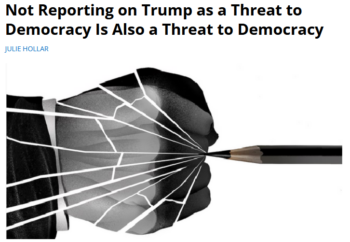
And even, like, the New York Times, which is not heavily invested in broadcasting, so it doesn’t have the threat of the FCC hanging over it; it is owned by a family that has rigged the way that stocks are owned, so they really have no danger of being bought out. But they are so wedded to an ideology that prevents them from saying, “This is a vital danger; this is a serious issue, that we may not have democracy if we don’t take steps to keep it,” that they are effectively useless in the fight against creeping fascism.
And so I do think that we need to find the outlets that are talking about these problems seriously and support them. They need resources to do the work that needs to be done.
JJ: We’ve been speaking with Jim Naureckas; he’s editor here at FAIR and FAIR.org. Thank you so much, Jim, for joining us this week on CounterSpin.
JN: Thank you.
From FAIR via This RSS Feed.