

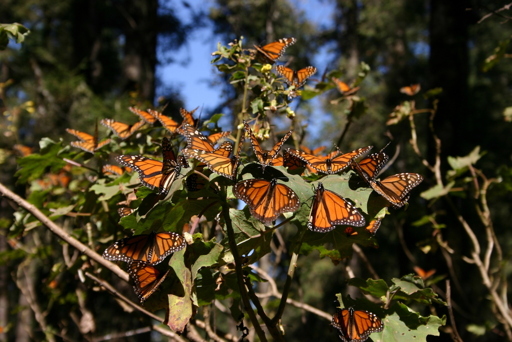
Monarch butterfly populations in North America have been in dramatic decline for several decades. But in a glimmer of hope for the iconic orange-and-black species, the 2025 population estimate was roughly 64% higher compared to the previous year. Scientists split migratory monarchs (Danaus plexippus) into two populations — western and eastern — depending on which side of the Rocky Mountains they fall on. Both are considered endangered on the IUCN Red List but neither have been formally listed on the U.S. endangered species list. Eastern monarchs have declined by 80% since the 1980s, and the western population by more than 95%, edging them toward extinction. Nonmigratory populations, found throughout the neotropics, aren’t considered endangered. The entire population of eastern monarchs overwinter in the oyamel fir (Abies religiosa) forests of central Mexico. Researchers estimate their population based on how much forest the butterflies occupy. Over the winter of 2024-2025, monarchs covered just 1.79 hectares (4.42 acres); a year later, it was 2.93 hectares (7.24 acres). That works out to more than 61 million monarchs, says Wendy Caldwell, executive director of the monarch butterfly conservation nonprofit Monarch Joint Venture. “It is variable; however, 21 million monarchs per hectare is a generally accepted estimate in the current literature,” she told Mongabay by email. It can take four generations of monarchs to complete the migration journey from Mexico to Canada or the northern United States and back. Much work has gone into protecting the monarch’s winter habitat in Mexico. “One of the greatest achievements…This article was originally published on Mongabay
From Conservation news via This RSS Feed.