



Secretary of Defense Pete Hegseth poses next to Jeff Bezos
For more leaked documents (and to support my work obtaining them), please become a paid subscriber
The Pentagon has quietly dictated to spy satellite companies what to say about the Iran war, exercising censorship over what the American public is allowed to know.
Military sources tell me that the level of secrecy surrounding the specifics of the Iran war is unprecedented, with barely any data being released about the level of bombing, the targets being attacked, or the assessed effects. Now the Trump administration is trying to further control what private companies say in a behind-the-scenes effort not been previously reported.
As the American and Israeli bombing of Iran commenced on February 28, the military promptly issued guidance to satellite operators of what “language and terms to avoid” when describing damage caused by Iran to American bases in the Middle East, according to a copy of the guidance leaked to me.
“Avoid language that implies battle damage assessment (BDA) or operational conclusions,” one slide produced by U.S. Space Force says. It goes on to warn against using phrases like “Target destroyed,” “Target eliminated,” and “Structure rendered inoperable.”
The guidance includes the following examples of what to say and what not to say.
Incorrect Example: “Strike successfully destroyed the facility.”
Correct Example: “Imagery shows the structure largely collapsed with debris covering the building footprint.”
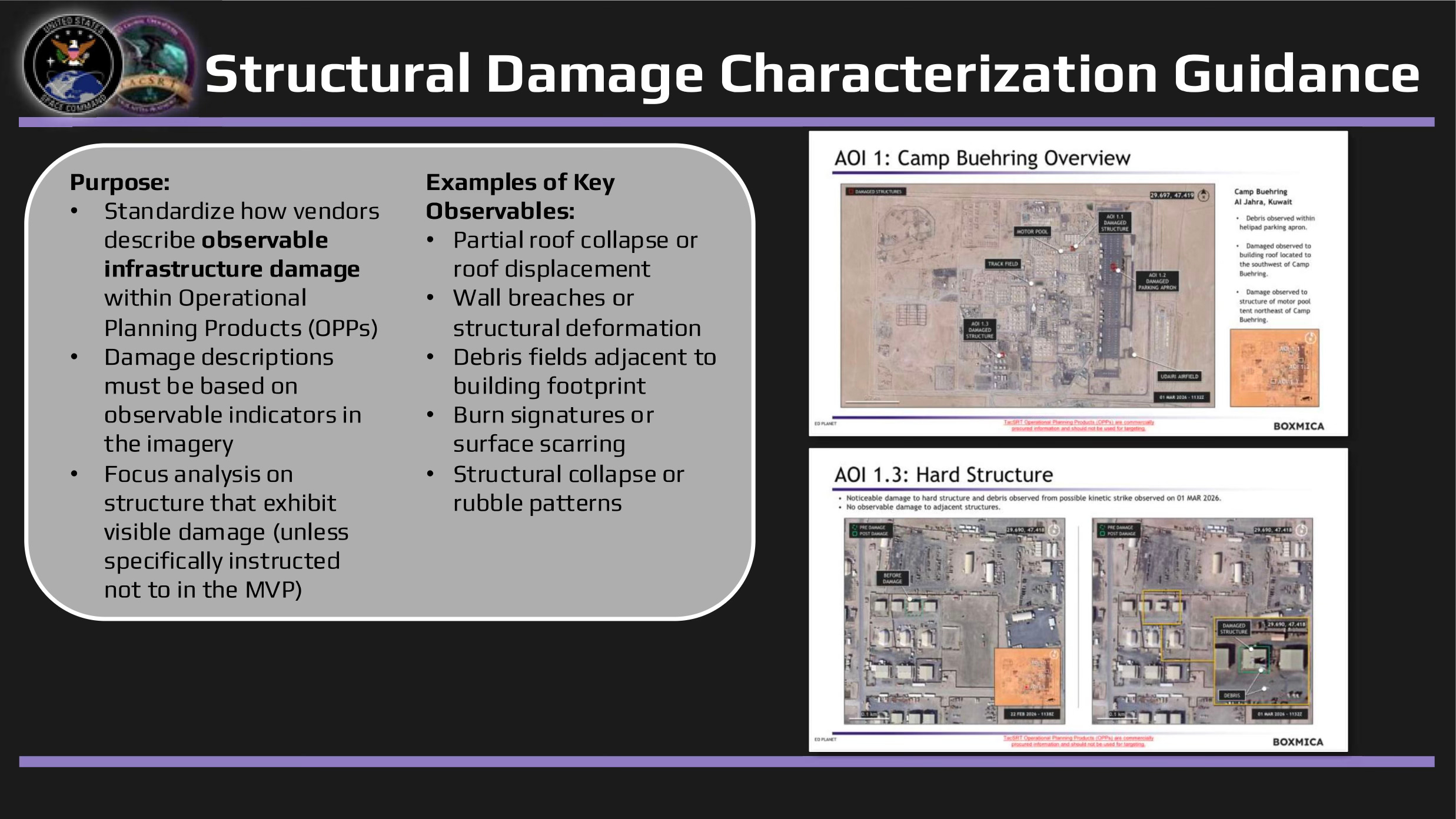
Leaked Space Force guidance
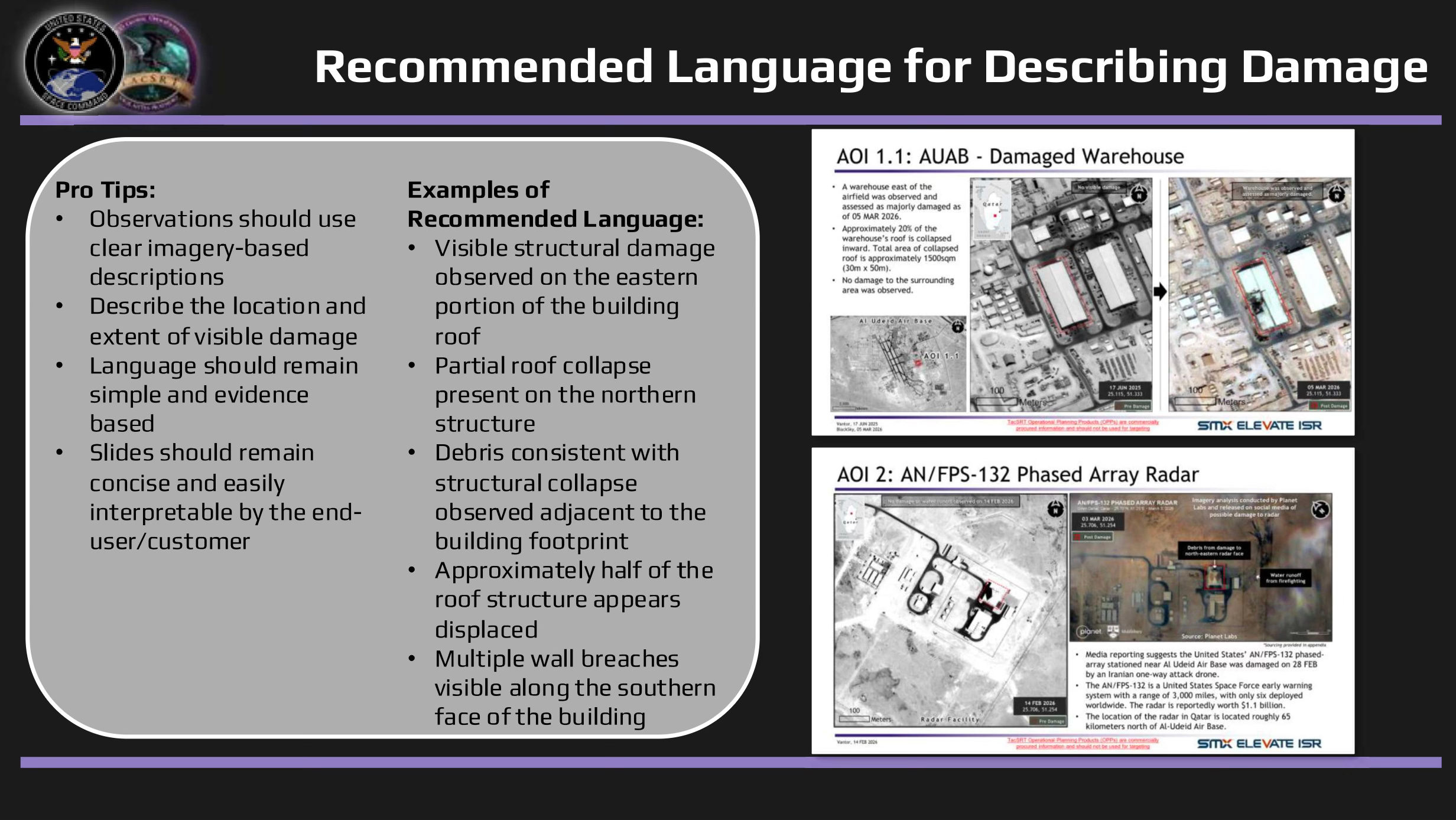
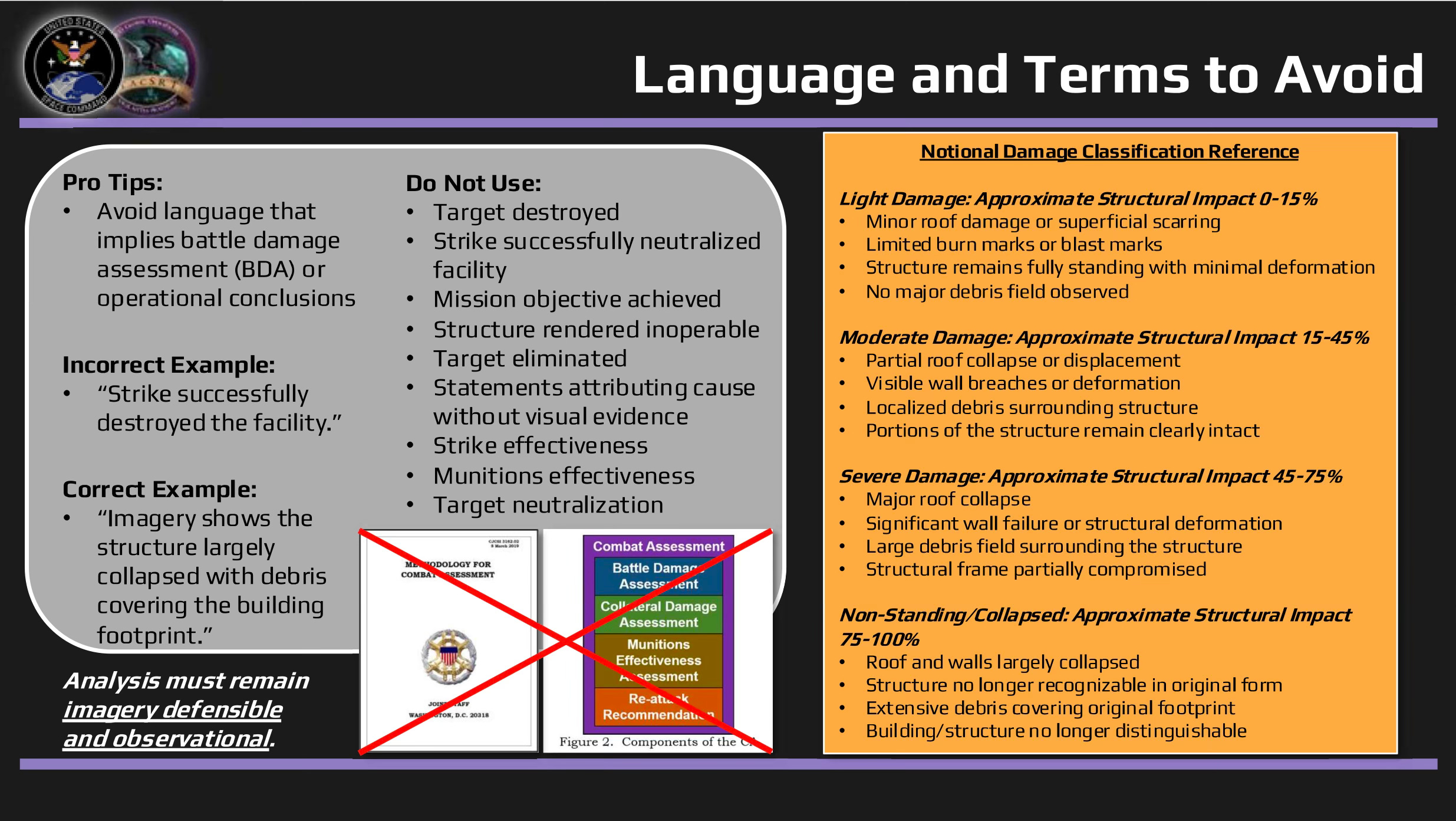
About 100 American companies are licensed by the U.S. government to operate their own reconnaissance satellites, a $6-7 billion a year industry that serves military and commercial customers with everything from methane detection to bomb damage assessments. Most of the revenue of these companies comes from the military services and the federal government. The “big four” — Maxar Intelligence, Planet Labs, BlackSky Technology, and Spire Global — operate some 350 imaging and interception satellites.
While the Pentagon “guidance” to the commercial companies is framed as an advisory, the companies comply because their contracting relationships with the government make them afraid to bite the hand that feeds them. As a result, private companies are increasingly becoming a controlled and auxiliary Little Brother to the U.S. intelligence machine, a trend I reported on last year.
Space Force has issued the guidance I obtained to virtually all commercial satellite companies in the form of written requests, sources say. This includes not just companies in the classified space but even those that work on the collection and dissemination of public or “open source” materials that inform the news media, academia, think tanks, and other groups.
“While there’s a case to be made that they [the companies] should fight it, almost everyone makes the vast majority of their revenue from government contracts in this industry and after Anthropic, nobody is interested in putting up a fight,” a source familiar with the guidance told me. “I think it’s also another layer of trying to make things [about the war] seem less bad than they are.”
Since February, Anthropic has refused to allow its AI model, Claude, to be used for certain missions involving mass domestic surveillance and autonomous weapons. The Pentagon in response has threatened to invoke the Defense Production Act to force the company’s cooperation.
Pentagon pressure has already yielded results.
Planet Labs, one of the largest commercial satellite imaging companies in the world, has blocked public access to imagery of the entire Iran war theater by imposing a 96-hour delay on February 28, then extending it to a 14-day blackout on March 10. The company claims the decision was its own, made after consulting military and intelligence experts.
This kind of soft censorship is not unique to the Trump administration, nor is it a partisan phenomenon. When I first reported on the rise of Little Brother as articulated in a little-noticed intelligence community directive on coordinating with “Non-State Entities,” it was Biden’s Director of National Intelligence Avril Haines who signed it.
The directive ordered spy agencies to “routinize” and “expand” their partnerships with private companies, and even authorized these relationships in cases of greater “risk” to the government due to security or legal concerns.
Whether it is in artificial intelligence, cyber security, unmanned vehicles, and now remote sensing by satellites, corporations have grown so powerful that they are starting to rival nation states in terms of resources. But Little Brother is happy to cooperate with Big Brother.
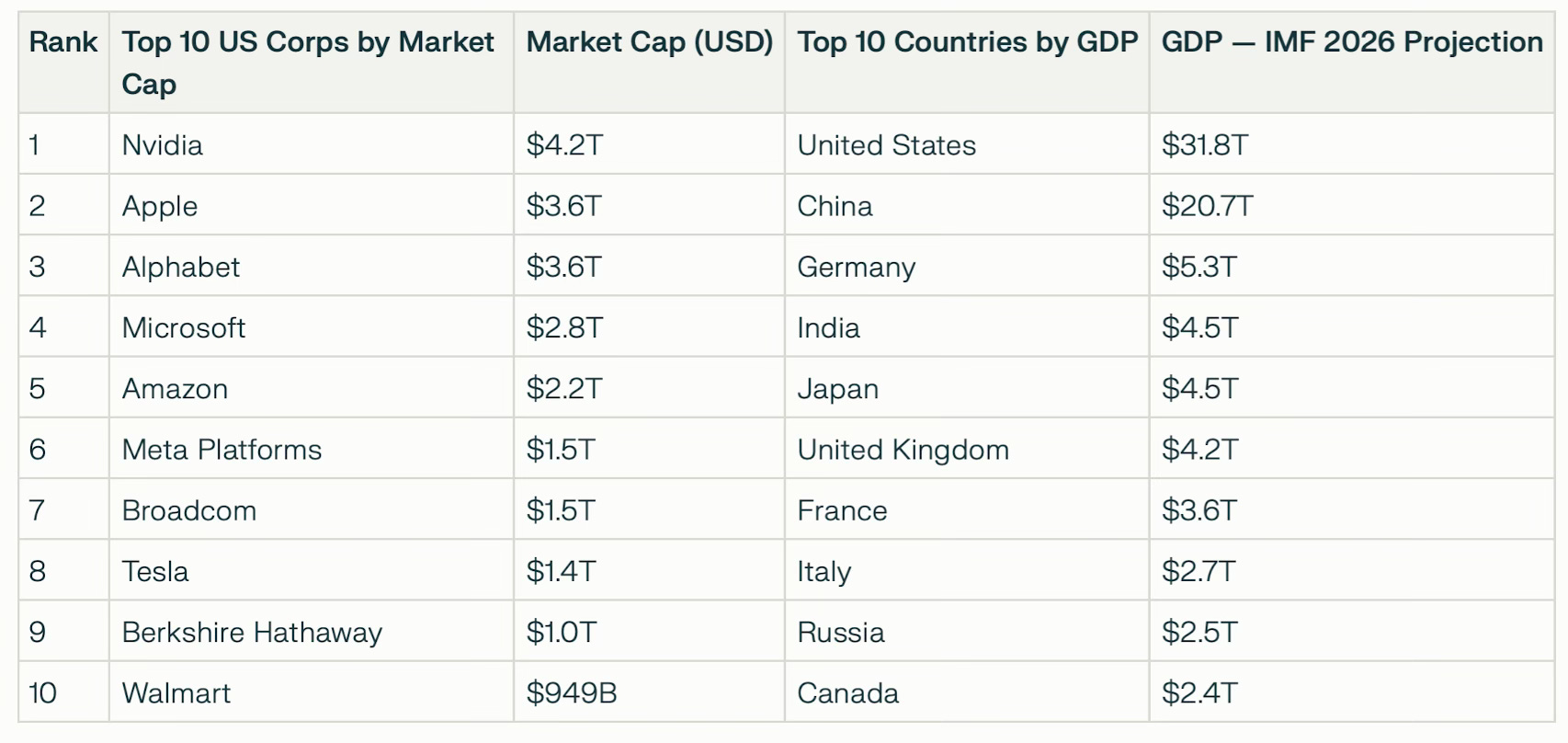
Sources: Market caps from Motley Fool (data as of March 23, 2026, citing company earnings filings); GDP figures from IMF World Economic Outlook.
Subscribe for news that wasn’t cleared by the Pentagon
— Edited by William M. Arkin
From Ken Klippenstein via This RSS Feed.