

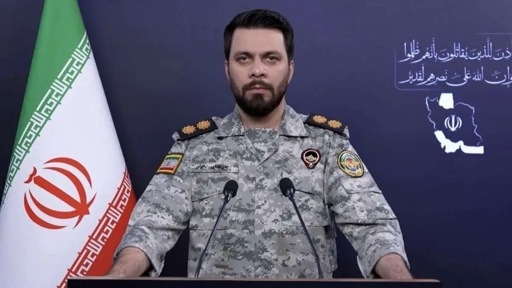
Iran warned it will completely shut down the Strait of Hormuz if its power plants are targeted in US-Israeli attacks. It also repeated that power plants in countries in the region that host US military bases will also be “legitimate” targets of its retaliation.
The statement was issued by Iran’s Khatam al-Anbiya central military headquarters on Sunday, March 22, following US President Donald Trump’s threat on Saturday about targeting Iran’s power plants if it fails to open the Strait of Hormuz in the next 48 hours.
Iran announced previously that the strait is open for all except for the allies of the US and Israel.
“We are determined to respond to any threat at the same level as it creates in terms of deterrence. If you hit electricity, we hit electricity,” Khatam al-Anbiya claimed.
Earlier, Trump had threatened that “if Iran doesn’t fully open, without threat, the Strait of Hormuz, within 48 hours from this exact point in time, the US will hit and obliterate their various power plants, starting with the biggest one first.”
However, in yet another social media post on Monday, Trump made a u-turn. He announced the postponement of the “strikes on Iranian power plants”, claiming his administration had a “very good and productive conversation” with Iran for the last two days which will continue in the coming days.
Iran has denied that it held any talks with the US. It claimed Trump’s statement was part of his efforts to lower global energy prices.
Iran’s Ministry of Foreign Affairs also asked the countries trying to intervene to end the war to approach Israel and the US instead, as they were the ones who initiated the war.
The US and Israel have already bombed Iran’s South Pars gas field and Kharq Island, in an attempt to hurt the country’s energy production and exports. Kharq Island is the main outlet of Iranian energy exports.
Iran, in retaliation, has attacked Israel’s Haifa refinery and several energy production centers in Qatar, Bahrain, and the UAE.
On Monday, Iran also warned that if its civilian infrastructure is targeted by the US and Israel it will completely shut down the regional communication channels.
Over 1,500 Iranians have been killed, including its head of state Ayatollah Ali Khamenei, and several other top political and military leaders and over 20,000 have been injured in the US-Israeli attacks since February 28.
Scores of US security forces, Israelis, and some residents of the Persian Gulf countries have also been killed and thousands injured in Iranian retaliations.
Global energy crisis
The closing of the Strait of Hormuz and attacks and counter attacks on energy production units in the region have already had a grievous impact on global energy prices, with prices of crude crossing USD 100 per barrel.
Due to higher prices and disruptions in supplies to various countries, particularly in Asia, governments have been forced to restrict domestic consumption and implement various emergency measures.
The war and blockade of the strait has disrupted the supply chain of various raw materials and market access, leading to sections of economic activities being shut down in various countries, causing unemployment.
In several countries, those that are mostly dependent on imported energy and the export of goods to West Asia, such as Bangladesh, the war is expected to cause a severe economic crisis.
According to the International Energy Agency (IEA), a Paris-based intergovernmental organization, the war on Iran has already caused an unprecedented energy crisis.
The effects of the present crisis are more severe than the combined effect of oil shocks in 1973, 1979, and the gas crisis due to the Ukraine war in 2022, claimed Fatih Birol, head of the IEA on Monday.
International community calls for end of the war
Meanwhile, there is a renewed global push to end the war on Iran, with anti-war demonstrations in different parts of the globe.
Members of the Kilusang Mayo Uno (KMU) held a protest at the US embassy in Manila on Monday, demanding the end of US warmongering in West Asia.
On Monday, China reiterated its calls for the end of the war and the start of negotiations to resolve any possible dispute.
Read more: China says assassination of Iranian leadership “unacceptable”, calls for the end of the war
If allowed to continue, the war will create a “vicious cycle” and may cause irreparable damage to the region claimed Lin Jian, spokesperson of the Chinese Ministry of Foreign Affairs.
Last week a Chinese envoy visited various countries in West Asia in an attempt to seek peace in the region.
The post Trump “postponed” strikes on Iranian power plants after warnings of regionwide retaliations appeared first on Peoples Dispatch.
From Peoples Dispatch via This RSS Feed.
So his handlers agreed that it would have been a really stupid move, instead of just a normal stupid one?