


Trump backs off threat to target Iran’s energy infrastructure. Strikes on Iran continue. Iran death toll surpasses 1,500. U.S. and Israel strike Iran’s Natanz nuclear facility. Iranian missile strikes hit southern Israel. Iran denies responsibility for reported Diego Garcia missile attack. U.S. advances $23 billion in arms sales to Gulf allies. Countries scramble to resolve Hormuz closure. Saudi Arabia expels Iranian military attaché. Israel destroys critical bridges, plans more. Israeli double-tap strikes hit rescue workers in southern Lebanon. Israeli strike kills three Palestinian police officers in central Gaza. Settlers torch West Bank villages in coordinated raids. ICE agents to deploy at U.S. airports as TSA staffing shortages worsen. Trump celebrates the death of Robert Mueller. California sheriff seizes ballots in election probe. Second nationwide blackout hits Cuba as fuel blockade deepens crisis. Dozens killed in strike on hospital in East Darfur as attacks on healthcare mount. Shelling kills civilian in Afghanistan despite Eid truce with Pakistan. U.S.-Ukraine talks continue in Florida as peace prospects remain uncertain. Ecuador’s most-wanted “narcoterrorist” accuses President Daniel Noboa of collusion with organized crime groups.
NEW from Drop Site: Cuba offers compensation deal in talks with U.S. amid push for broader economic opening, official tells Drop Site’s Ryan Grim in an exclusive interview.
This is Drop Site Daily, our free daily news recap. We send it Monday through Friday.
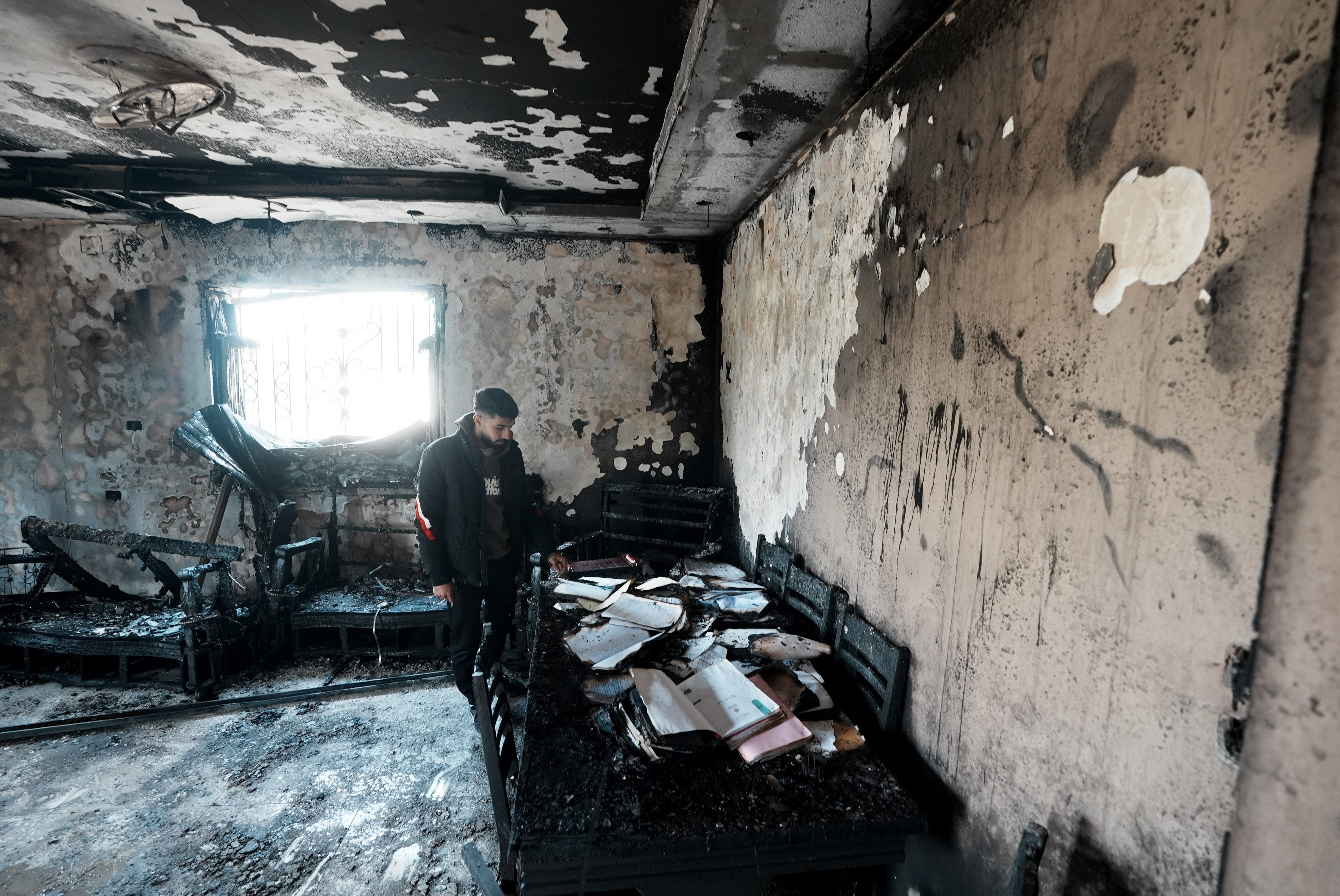
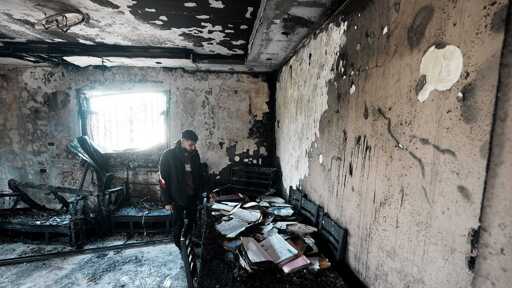
Israeli settlers attacked Deir al-Hatab in Nablus, setting fire to Palestinian homes and vehicles. Photo by Issam Rimawi/Anadolu via Getty Images.
War on Iran
-
Trump backs off threat to target Iran’s energy infrastructure: President Donald Trump on Monday retreated from his threat to target Iran’s energy infrastructure.
- On Saturday, Trump warned he was giving Iran 48 hours to open the strait of Hormuz or the U.S. would “hit and obliterate” power plants in Iran starting with “the biggest one first.” Iran responded that if the U.S. followed through on the threat it would strike electricity plants and vital infrastructure across the Middle East and mine the “entire Persian Gulf.”
- In a social media post on Monday, Trump said the U.S. and Iran have held “very good and productive conversation regarding a complete and total resolution of our hostilities in the Middle East” over the past two days. “Based on the tenor and tone of these in depth, detailed, and constructive conversations, which will continue throughout the week, I have instructed the department of war to postpone any and all military strikes against Iranian power plants and energy infrastructure for a five day period, subject to the success of the ongoing meetings and discussions,” Trump wrote in all caps.
- Iranian state-affiliated media denied there were direct or indirect discussions with the White House, saying instead Trump backed down out of fear of an Iranian retaliation. Iran’s Foreign Ministry made a statement over the weekend that restoring security in the Strait of Hormuz requires “an end to military aggression,” and full respect for Iran’s “legitimate interests.”
-
U.S.-Israeli attacks on Iran: Israel launched new attacks on Tehran on Monday saying it has “begun a wide-scale wave of strikes” targeting government infrastructure as the U.S.-Israeli war on Iran continued into its fourth week:
- In Tabriz, six people were killed in two separate attacks on Monday, according to Fars News, including four killed in a strike on a residential unit in the Marzdaran area, and two killed in a park in Rabe Rashidi. A U.S.-Israeli strike on a radio station in Bandar Abbas city killed one person.
- On Sunday, rescue crews recovered the bodies of two children from a residential building struck in Tabriz, as footage showed emergency teams searching through collapsed structures for survivors.
- Multiple air strikes targeted the IRGC’s Dezful air force in western Iran on Saturday. The Dezful air base is home to Iran’s F-5 fighter jets.
-
Iran death toll surpasses 1,500: Iran’s health ministry reported on Saturday that more than 1,500 people have been killed since the start of the war.
-
Head of IEA warns of energy crisis: The head of the International Energy Agency, Fatih Birol, said on Monday that the global energy crisis caused by the U.S.-Israeli war on Iran is equivalent to the combined effect of the two oil shocks of the 1970s, and the fallout of Russia’s invasion of Ukraine. “No country will be immune to the effects of this crisis if it continues to go in this direction,” Birol said at Australia’s National Press Club in Canberra on Monday.
-
U.S. and Israel strike Iran’s Natanz nuclear facility: U.S. and Israeli forces targeted the Natanz enrichment complex on Saturday, one of Iran’s key nuclear sites, according to Iran’s atomic energy organization. Officials reported no radioactive leakage or danger to nearby populations. The strike, part of an expanding campaign against Iran’s nuclear infrastructure, drew calls for restraint from the International Atomic Energy Agency and condemnation from Russia.
-
Iranian missile strikes hit southern Israel near nuclear site: Iranian ballistic missiles struck the Dimona area in southern Israel on Saturday, home to Israel’s main nuclear facility. Another Iranian missile directly hit a residential building in the nearby desert town of Arad. More than 180 people were injured across the two attacks.
-
Iran denies responsibility for reported Diego Garcia missile attack: Tehran told reporters from Al Jazeera that it is not responsible for missile launches toward the U.S.-U.K. base on Diego Garcia on Saturday, and denied any involvement in the attacks on the base that occurred on Thursday and Friday. Ballistic missiles were reportedly fired toward the base but failed to hit it, with one reportedly intercepted and another falling short. NATO Secretary General Mark Rutte similarly told CBS that the alliance “cannot confirm” Israel’s assessment that missiles fired toward Diego Garcia were Iranian. Rutte defended the war as necessary and urged Americans to support Trump, saying he hoped the public would back the effort to “make the whole world safe.”
-
Missile interceptions in the Gulf: Saudi Arabia said it intercepted a missile targeting Riyadh on Sunday, while another struck an “uninhabited area.” The UAE said it intercepted a ballistic missile near Al Dhafra Air Base in Abu Dhabi, where one person was injured by falling debris.
-
Gulf states escalate their response to the war: UAE Foreign Minister Abdullah bin Zayed said on Sunday the country “will never be blackmailed by terrorists,” referring to Iran. The United Arab Emirates, Saudi Arabia, Bahrain, and Qatar are allegedly pushing to continue the war until Iran’s military capabilities are decisively degraded, warning that ending the conflict now would be a “strategic disaster,” according to senior officials speaking to The Times of Israel. On Monday, Qatar’s Ministry of Foreign Affairs released a statement, following phone calls from Foreign Ministers of Saudi Arabia, Kuwait, UAE and Egypt, emphasizing “combined efforts for an immediate halt to any escalatory acts,” and a return to dialogue.
-
Saudi Arabia expels Iranian military attaché: Saudi Arabia announced the expulsion of Iran’s military attaché, his deputy, and three additional embassy staff, on Saturday, declaring them persona non grata and ordering them to leave the country within 24 hours.
-
U.S. advances $23 billion in arms sales to Gulf allies: The Trump administration has advanced roughly $23 billion in weapons sales to the United Arab Emirates, Kuwait, and Jordan without congressional approval, according to the Wall Street Journal. The arms sales included more than $16 billion for air-defense systems, munitions and radar equipment for the three countries plus an additional $7 billion in weapons to the UAE. For some of the sales, the State Department issued emergency waivers to bypass the standard 30-day congressional review period.
-
Countries scramble to resolve Hormuz closure: Leaders from 22 countries, including the UAE, United Kingdom, France, Germany, and Japan, said on Saturday that they are preparing joint measures to protect shipping through the Strait of Hormuz and limit global economic fallout, citing ongoing “preparatory planning” and support for an International Energy Agency decision to release strategic petroleum reserves. No specific plans for a mission to reopen the waterway were announced and the statement was not clear whether the mission would begin before or after the conclusion of the current war. Iran’s representative to the UN’s International Maritime Organization, Ali Mousavi, said on Sunday that the waterway remains open to most vessels, but requires coordination with Iranian authorities for safe transit, reiterating that restrictions apply to countries Iran considers adversaries. Gulf countries alone are estimated to be losing more than $2.3 billion per day due to disruptions in the Strait of Hormuz, with oil exports falling by nearly 60% from around 25.1 million barrels per day to 9.7 million, according to Anadolu Agency.
-
Asian countries respond to oil crisis: Asian refiners began exploring purchases of Iranian crude after the U.S. issued a 30-day sanctions waiver allowing imports of oil already at sea, Reuters reports. Up to 170 million barrels of Iranian crude are currently afloat, offering short-term relief, though traders say banking restrictions and U.S. sanctions rules may slow deals. India, in particular, has been consulting with Tehran and the U.S. to improve its access to Iranian oil assets. The Japanese government said on Saturday it would not pursue direct negotiations with Iran for exclusive access through the Strait of Hormuz, despite Iranian Foreign Minister Abbas Araghchi offering “safe passage” to countries not involved in attacks on Iran. Foreign Minister Toshimitsu Motegi said Tokyo will instead coordinate with the United States and European allies on maritime security. Japan remains highly exposed to energy market disruptions, relying on the Middle East for roughly 93% of its crude oil imports.
-
Yemen’s Ansar Allah warns against Hormuz escalation: Ansar Allah warned on Saturday that U.S. actions risk widening the conflict and cautioned against military escalation in the Strait of Hormuz, saying regional states that bring in foreign forces would be “the first to lose,” according to a statement carried by Saba News. Yemen said it is monitoring developments and “will not stand idly by,” signaling it might take action if the conflict expands.
-
Graham urges seizure of Iran’s Kharg Island: During an appearance on Fox News Sunday, Senator Lindsey Graham (R-S.C.) called on President Donald Trump to seize or blockade Iran’s Kharg Island, arguing it could cut off roughly 90% of Iran’s oil revenue and “end the war.” “We did Iwo Jima. We can do this,” Graham said.
-
Bessent says U.S. is “jujitsuing” Iran with limited sanctions relief on oil: Treasury Secretary Scott Bessent told Meet the Press on Sunday that the U.S. is “jujitsuing the Iranians” by allowing the sale of roughly 140 million barrels of Iranian oil already at sea, aiming to prevent China from buying it at steep discounts and increasing its oversight of oil flows. Banking sanctions remain in place, he added, which may prevent Iran from accessing up to $17 billion in potential revenue from the released oil.
-
IAEA chief says strikes cannot eliminate Iran’s nuclear program, urges diplomacy: Appearing on Face The Nation on Sunday, International Atomic Energy Agency Director General Rafael Grossi said U.S.-Israeli strikes have set back Iran’s nuclear program but are unlikely to eliminate it, and warned that enriched uranium stockpiles and technical expertise are likely to survive the war. Grossi called the damage to sites like Natanz, Fordow, and Isfahan “relatively marginal.”
-
Iran says it arrested alleged “American-Zionist” operatives in multiple provinces: Iranian authorities said they detained 25 people in Markazi and Golestan provinces on Sunday accused of coordinating with Israeli-linked networks, sharing military information, and planning attacks, according to Fars News. Officials said weapons and equipment were seized, and 15 suspects have been referred to the judiciary.
Lebanon
-
Casualty count: The death toll from Israel’s assault on Lebanon has risen to at least 1029—with 2786 wounded—since March 2, according to Lebanon’s Health Ministry. Over a million people have been displaced.
-
Israel destroys critical bridges: An Israeli airstrike destroyed another bridge on the Litani River in Lebanon on Monday. The strike on the bridge in the southern village of Qaaqaaiyet al-Jisr cut a main link between the city of Nabatiyeh and the al-Hujair valley region further south.Israeli forces also destroyed the Qasmiyeh Bridge north of Tyre on Sunday, which served as a primary link between southern Lebanon and Beirut, and the strike on it effectively cut off large parts of southern Lebanon from the rest of the country. Israel has ordered the military to destroy all bridges over the Litani River deemed usable by Hezbollah. Katz said the operation also includes “accelerating the destruction of Lebanese homes in border villages” and expanding ground operations to seize key positions. Lebanese President Joseph Aoun called Israel’s new targeting of bridges in the south “a prelude to a ground invasion.” Israel’s Finance Minister Bezalel Smotrich stated Monday that “Just as we control 55 percent of Gaza, we must do the same in Lebanon,” adding that the Litani River must “become the border between us and Lebanon.”
-
Israeli double-tap strikes hit rescue workers in southern Lebanon: Israeli strikes on Saturday hit rescue vehicles responding to an earlier attack in Deir al-Zahrani in southern Lebanon, injuring at least 21 people, including two women. A second strike on the area wounded nine more health and rescue workers, who “narrowly escaped death,” Lebanon’s Health Ministry said. Israeli strikes have targeted at least 128 medical facilities and ambulances and killed at least 40 healthcare workers since March 2, according to the Ministry.
-
Israeli army says citizen killed by errant Israeli artillery fire: The Israeli army said on Monday that an Israeli citizen in Misgav Am near the border with Lebanon was killed by its own artillery fire and not a Hezbollah attack. “The shells were fired at the wrong angle and not according to procedures,” the Israeli military said. “As a result, five shells hit the Misgav Am ridge instead of enemy targets.” Hezbollah on Sunday said it targeted “a gathering of Israeli enemy soldiers with a rocket barrage” in Misgav Am.
The Gaza Genocide, Israel and the West Bank
- Casualty count: Over the three days of the Eid holiday, nine Palestinians were killed—one due to wounds sustained in earlier attacks—and 30 were injured in Israeli attacks across Gaza. The total recorded death toll since October 7, 2023 has risen to 72,263 killed, with 171,944 injured. Since October 11, the first full day of the so-called ceasefire, Israel has killed at least 687 Palestinians in Gaza and wounded 1,845, while 756 bodies have been recovered from under the rubble, according to the Palestinian Ministry of Health.
- Israeli strike kills three Palestinian police officers in central Gaza: An Israeli strike on Sunday hit a police vehicle in central Gaza, killing three Palestinian officers and wounding eight, according to local reports. The attack comes amid repeated Israeli attacks on police units in recent weeks, in which it has targeted civilian law enforcement to disrupt basic governance and sow chaos. One more person was killed in a separate attack in Gaza City, according to Al-Shifa hospital.
- Settlers torch West Bank villages in coordinated raids: Dozens of Israeli settlers carried out coordinated attacks across at least 15 Palestinian villages in the occupied West Bank on Saturday, setting homes and vehicles on fire and assaulting residents. The attacks were reportedly “retaliation” for an incident in which an Israeli settler died in an accident with a Palestinian driver. At least nine Palestinians were injured in the attacks, with incidents recorded in Jalud, Fandaqumiya, Silat ad-Dhahr, and Qaryut. Over 15 Palestinians were detained and no settlers were arrested. An additional 10 Palestinians were injured on Sunday in attacks by rampaging settlers on four Palestinian villages in the Nablus area. Finance Minister Bezalel Smotrich used the funeral of the settler killed in the accident to advocate for unimpeded settlement of the West Bank, saying that, “We will erase the lines, the definitions, and the letters, and we will settle our land in all its expanses.”
United States
By Julian Andreone, with Ryan Grim. Have a tip on Capitol Hill? Email Andreone at Julian@dropsitenews.com.
-
ICE agents to deploy at U.S. airports as TSA staffing shortages worsen: White House border official Tom Homan confirmed on Sunday that Immigration and Customs Enforcement agents would begin deploying to major U.S. airports to assist with security and crowd control amid long TSA lines caused by a partial Department of Homeland Security shutdown. Officials said the agents, who are the beneficiaries of separate, unimpacted funding, will not conduct screenings but will support operations like managing exits.
-
Trump celebrates the death of Robert Mueller: After it was announced on Saturday that Robert Mueller, the former director of the FBI and special counsel who investigated potential Trump connections to Russia during the 2016 presidential campaign, had died, Trump posted the following response to Truth Social: “Robert Mueller just died. Good, I’m glad he’s dead. He can no longer hurt innocent people.”
-
California sheriff seizes ballots in election probe: Riverside County Sheriff and Republican candidate for governor Chad Bianco announced on Friday that he had seized more than 500,000 ballots from a November 2025 special election, saying he is investigating a possible counting discrepancy, a move election officials dispute. California Attorney General Rob Bonta called the action unprecedented and wrote in a response to the seizure that the move was “unacceptable” and “sets a dangerous precedent [that] will only sow distrust in our elections.”
-
Controversial new rule bars immigrants from becoming truck drivers: A new federal rule that bans roughly 200,000 immigrants—including refugees, asylum seekers, and DACA recipients—from obtaining or renewing commercial driver’s licenses is facing legal challenges and backlash from states and labor advocates. The policy, which could remove tens of thousands of drivers in key logistics hubs, threatens to worsen chronic labor shortages in trucking, an industry already marked by low pay and high turnover, and could disrupt supply chains and increase consumer costs. Read more about this in the latest from Harold Meyerson at The American Prospect here.
Other International News
- Cuba offers compensation deal in talks with U.S. amid push for broader economic opening: Cuban Deputy Foreign Minister Carlos Fernandez de Cossio told Drop Site’s Ryan Grim that the country is willing to negotiate a “lump sum” compensation agreement for American claims over nationalized property as part of a broader deal to lift U.S. sanctions and allow expanded investment during a sit-down interview with Drop Site on Saturday. The move would require a more “holistic” deal with concessions from the U.S., according to de Cossio. “We believe the Cuban people and the Cuban nation requires, or deserves, to be compensated for the damage done by the economic blockade, by the invasion, by terrorism, by assassinations, by actions, violent actions against the economy,” he told Drop Site. Read more from Cuba in the latest from Grim and José Luis Granados Ceja here.
- Second nationwide blackout hits Cuba as fuel blockade deepens crisis: Cuba suffered a second nationwide blackout this week as a U.S.-imposed oil blockade has left the island without significant fuel imports for more than three months, crippling electricity generation and basic services, according to multiple reports. Power grid failures have affected millions, with fuel shortages disrupting aviation, waste collection, and daily life, as shipments have been blocked, diverted, or delayed and tanker traffic to the island has largely stalled.
- Dozens killed in strike on hospital in East Darfur as attacks on healthcare mount: On Friday night, at least 64 people, including 13 children, two nurses, and a doctor, were killed in a strike on Al Deain Teaching Hospital in East Darfur’s capital, according to the World Health Organization, with 89 others injured and key departments damaged. The attack adds to a broader pattern of attacks on healthcare facilities during the war—with the WHO reporting more than 2,036 people killed in such attacks over the past three years. No perpetrator was yet identified for the strike on Al Deain as fighting between the Sudanese army and RSF forces intensifies in the region.
- Iraqi armed groups agree to 24-hour ceasefire to allow U.S., NATO withdrawal: On Sunday, Iraqi resistance factions agreed to a 24-hour ceasefire at the request of the United States and NATO to facilitate a withdrawal from Victoria Base in Baghdad, according to Al Mayadeen, with the pause conditioned on no strikes against Popular Mobilization Forces positions. NATO also confirmed it withdrew personnel from its mission in Iraq following recent attacks.
- Kataib Hezbollah suspected in Baghdad intelligence HQ attack: On Sunday, Iraqi sources said the pro-Iran militia Kataib Hezbollah is the main suspect in a drone attack on the National Intelligence Service headquarters in Baghdad that killed one officer and damaged communications systems, as authorities continue their investigation. Prime Minister Mohammed Shia’ al-Sudani condemned the strike as a “shameful terrorist act” and ordered a full probe, while officials warned that accountability will depend on political will to rein in armed groups.
- UAE restructures covert supply routes to Sudan’s RSF, report says: The United Arab Emirates is reorganizing its covert arms supply network to Sudan’s Rapid Support Forces, according to a report in Le Monde, relying on three shifting corridors through Libya, Chad, and a developing route via Ethiopia and the Central African Republic. The Libya route, tied to Khalifa Haftar, remains the primary channel, while pressure and strikes along the Chad corridor have disrupted deliveries.
- Shelling kills civilian in Afghanistan despite Eid truce with Pakistan: On Sunday, Afghanistan’s Taliban government said a Pakistani mortar shell killed one civilian and injured another in Kunar province, despite a recently agreed truce for the end of Ramadan. Afghanistan also accused Pakistan of violating the truce on Thursday, killing two. Read Drop Site’s coverage of the escalating cross-border war, here.
- Sanctioned ICC judge says U.S. measures cut off access to basic services: On Sunday, French International Criminal Court judge Nicolas Guillou said U.S. sanctions imposed after the court’s arrest warrant for Benjamin Netanyahu have left him unable to access basic financial and digital services. Guillou said he can no longer use platforms including Amazon, Airbnb, Booking, or Expedia, and reported disruptions to deliveries. French officials say efforts to lift the sanctions have received no response.
- U.S.-Ukraine talks continue in Florida as peace prospects remain uncertain: On Sunday, Ukrainian and U.S. officials concluded a second day of talks in Florida on ending the war with Russia, with President Volodymyr Zelenskyy citing possible progress on prisoner exchanges but giving no details on next steps. The discussions were held without Russian participation, as Washington presses Kyiv on potential elections and broader terms for a negotiated settlement.
- Russia and Ukraine trade strikes ahead of U.S.-led peace talks: On Saturday, Russian and Ukrainian attacks killed at least four people, with a drone strike in Zaporizhzhia killing two civilians and shelling in Russia’s Belgorod region killing two others, officials said. The violence came ahead of U.S.-Ukraine talks aimed at reviving stalled negotiations in Miami, as the war nears its fourth year and diplomatic efforts remain overshadowed by the escalating conflict with Iran.
- Ecuador’s most-wanted “narcoterrorist” accuses President Daniel Noboa of collusion with organized crime groups: William Alcívar, leader of the Los Tiguerones gang now living free in Cataluña, claimed in an interview with El Mundo he helped deliver votes and financing for Noboa’s election before being cast aside. Alcívar further alleged that the government staged the widely publicized attack on a TV station on January 9, 2024 to justify a crackdown. The accusations add to growing scrutiny over the Noboa family’s alleged links to drug trafficking routes to Europe.
More from Drop Site
- Eyeing Office: Episode 4: Julian Andreone talks with Kaylee Peterson, running for Congress in Idaho
- Programming note: You can sign up here to get updates from us on our WhatsApp channel.
If you want to continue getting this newsletter, you don’t have to do anything. But if this is too much—we do try to be mindful of your inbox—you can unsubscribe from this newsletter while continuing to get the rest of our reporting. Just go into your account here at this link, scroll down, and toggle the button next to “Drop Site Daily” to the off setting. It looks like this:

From Drop Site News via This RSS Feed.